How to Choose Bedroom Tables for Your Home?

Choosing bedroom tables looks simple until a drawer blocks the wardrobe or a lamp leaves no reading space. The right piece must fit your room, routines, and available floor area. Measure the bedside zone before browsing. Record its width, depth, and distance from the bed. A table that looks elegant online may feel bulky beside a narrow mattress.

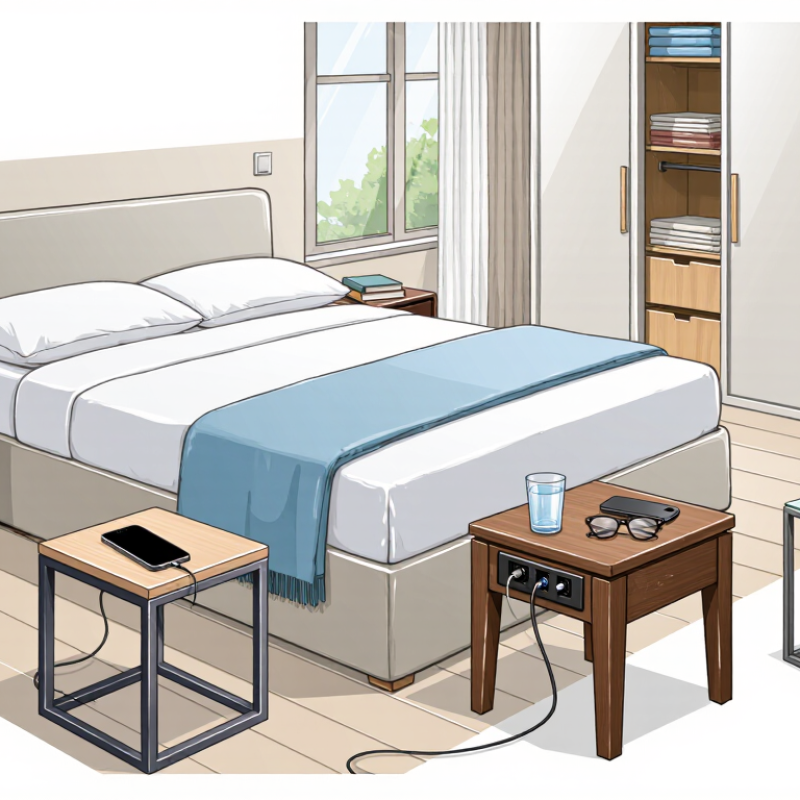
Furniture designer Charles Eames offered a useful principle: “The details are not the details. They make the design.” That idea applies strongly to bedroom tables. Check drawer movement, surface height, edge finishing, and hardware quality. A table near the bed should usually sit close to mattress height. This makes books, glasses, and water easier to reach at night. Consider cable openings if you charge a phone beside the bed. Small details matter.

Material choice also affects comfort and durability. Solid wood can add warmth, while metal and glass may create a lighter visual effect. However, finishes can scratch, stain, or show dust differently. I once favored a beautiful narrow table, then realized its shallow drawer could not hold everyday items. That mistake changed how I assess storage. Style still matters, but practicality should lead. Think about cleaning, lighting, ventilation, and safe movement around corners. For renters, freestanding bedroom tables offer flexibility. For smaller rooms, wall-mounted designs can preserve valuable floor space. The best choice may not be the trendiest one. It should quietly support your morning and evening habits.
How to Choose Bedroom Tables for Your Home?

Define Bedroom Table Types and Their Standard Functions

How to Choose Bedroom Tables for Your Home?

Bedroom tables should be chosen by function, not appearance alone. A nightstand sits beside the bed and holds a lamp, glasses, medication, or a phone. Its surface should match the mattress height, or stay slightly lower for easy reach. A bedside table with drawers protects small items from dust and visual clutter. A dresser stores folded clothing, while a dressing table supports grooming and may require a mirror, stool, and stronger lighting. A narrow console can display objects, but it is not a practical clothing cabinet.

The American Academy of Sleep Medicine recommends seven or more hours of sleep for adults. Therefore, bedroom tables should support a calmer nighttime routine. Keep charging cables, bright screens, and loose objects away from the pillow area when possible. The Environmental Protection Agency also advises reducing indoor pollutants through ventilation and low-emission materials. Solid wood, sealed surfaces, and smooth metal are easier to clean than deeply textured finishes. Still, a beautiful table can fail. A shallow drawer may look elegant but waste usable space.

Tips: Measure the bed, walking path, and door swing before buying. Leave about 60 centimetres for comfortable movement where space allows. Check drawer clearance beside curtains or radiators. Choose rounded corners in smaller rooms. Test the table at night, not only in a bright showroom. One mistake is common: buying storage before deciding what must be stored.

Measure Bed Height: Keep the Tabletop Within 2 Inches of the Mattress

How to Choose Bedroom Tables for Your Home?

Measure the bed before choosing a bedside table. The tabletop should sit within two inches of the mattress, according to common ergonomic furniture guidance. This small difference matters when reaching for a lamp, water, or reading glasses at night. A table that is too low forces your shoulder downward. One that is too high can make reaching awkward, especially from a soft mattress.

The American Academy of Sleep Medicine recommends at least seven hours of sleep for most adults. A practical bedside setup can support that goal by keeping essentials accessible without encouraging unnecessary movement. The 2023 American Time Use Survey also recorded about eight hours per day spent sleeping, personal care, and related activities among adults. Your table will be used often. Make it stable.

Measure from the floor to the top of your mattress, including the topper. Then compare that number with the table height. For example, a 26-inch mattress usually suits a table between 24 and 28 inches. I once selected a table by appearance alone. It looked elegant, but its drawer sat below my hand. That mistake was avoidable.

Leave enough clearance for bedding and walking space. Keep cords short and lamps weighted. The Consumer Product Safety Commission continues to report thousands of furniture tip-over injuries annually, so stability deserves more attention than style. This rule is helpful, not absolute. Test the reach from your actual sleeping position before buying.

How to Choose Bedroom Tables for Your Home?

Measure the distance from the floor to the top of the mattress. For comfortable access, keep the tabletop within 2 inches above or below that height.

Recommended table-height ranges are calculated as mattress-top height ± 2 inches.

Choose Table Dimensions Using a 24–30 Inch Bedside Circulation Zone

How to Choose Bedroom Tables for Your Home?

Choose Table Dimensions Using a 24–30 Inch Bedside Circulation Zone

A bedside table should support movement, not obstruct it. Measure 24–30 inches from the bed’s outer edge to the nearest wall, cabinet, or furniture. This zone gives most adults enough room to walk, change bedding, and open drawers comfortably. In a narrow bedroom, 24 inches may work, but 30 inches feels noticeably easier.

Measure the bed frame, not only the mattress. A thick frame can reduce usable floor space by several inches. Mark the proposed table with painter’s tape, then walk around it at night. Leave enough clearance for the bedroom door and wardrobe doors to open fully. Keep it simple. A crowded path quickly becomes frustrating.

Table height matters too. Choose a surface close to the mattress top, usually within a few inches. This keeps a lamp, phone, or glass of water within easy reach. Select the width according to the remaining wall space, but avoid filling the entire circulation zone.

I once chose a table that looked balanced in a floor plan; in daily use, its deep drawer caught my knee. That mistake changed my approach. Real movement deserves more attention than a perfect visual arrangement.

Consider drawer depth, leg placement, and rug thickness. These details can quietly reduce walking clearance. If the room serves children, older adults, or anyone with limited mobility, use the wider end of the 24–30 inch range. A small table with open space often performs better than a larger table packed with storage.

Select Materials and Finishes for Durability, Safety, and Indoor Air Quality

When choosing bedroom tables, inspect the material where your hands and eyes meet it daily. Solid wood can endure years of wiping, but quality varies with moisture and joinery. Engineered wood offers stable panels, yet exposed edges may swell after spills. Run your fingers along corners. They should feel smooth, not sharp or splintered. A sturdy table should not wobble when a lamp is switched on. I once overlooked a loose drawer runner, and the nightly rattle became surprisingly irritating. Small faults matter.

For indoor air quality, ask how the panels, adhesives, and finishes were made. Prefer products with verified low-emission claims and clear material information. Water-based finishes often produce less odor than solvent-heavy coatings, but “low odor” does not prove safety. Ventilate new furniture in a dry, airy room before placing it beside the bed. Let it breathe. Avoid heavily scented treatments that can mask chemical smells. This advice is practical, though household sensitivity differs.

Safety also depends on finish performance. A scratch-resistant surface reduces peeling and cleaning damage, while a matte texture can hide fingerprints. However, rough finishes collect dust and need more careful cleaning. Choose rounded edges, stable feet, and drawers that stop before pulling out completely. Check the table’s height against your mattress and reach. Materials are only part of the decision. Your room’s humidity, cleaning habits, and personal sensitivities deserve equal attention.

Check Stability Against ASTM F2057 and Verify Storage Accessibility

How to Choose Bedroom Tables for Your Home?

Check Stability Against ASTM F2057 and Verify Storage Accessibility

A bedroom table should feel stable before you judge its color or finish. Push gently against each corner. Watch for rocking, sliding, or lifting feet. A heavy appearance does not guarantee safe performance. ASTM F2057 mainly addresses clothing storage units and tip-over risks, so its scope matters. A typical bedside table may not fall under every requirement. Check the product documentation, test evidence, and the latest applicable edition.

For taller units, inspect whether drawers can open together without making the table unstable. Load them with realistic items, such as books, chargers, and folded clothing. Then repeat the check on a hard, level floor. If the furniture includes an anchoring system, install it correctly instead of treating it as optional. I once trusted a wide base too quickly. That judgment was incomplete. Wall conditions, drawer weight, and uneven flooring can change the result.

Storage access deserves the same attention. Open each drawer fully while standing beside the bed. Can you reach the back without twisting your wrist? Do handles catch clothing or hit the mattress? Check whether a child could easily climb or pull on an open drawer. Soft-close hardware feels refined, but it is not a substitute for stability. Measure the clearance around the table, especially near doors and walking paths. A beautiful table that blocks movement becomes frustrating very quickly.

How to Choose Bedroom Tables for Your Home? - Check Stability Against ASTM F2057 and Verify Storage Accessibility
Evaluation Dimension What to Check Practical Measurement or Requirement Recommended Evidence Selection Result
ASTM F2057 Applicability Confirm whether the product is a clothing storage unit covered by the current ASTM F2057 edition. Units intended for clothing storage and measuring 27 in (686 mm) or more in height may fall within the standard’s scope. Confirm the current edition, product type, and scope before relying on the standard. Current manufacturer compliance statement, test report, or laboratory documentation identifying the applicable ASTM F2057 edition. Scope confirmed before purchase
Overall Stability Check whether the table rocks, twists, or lifts when moderate pressure is applied to the front, sides, and corners. Place the unit on a level floor. All intended legs or feet should remain firmly in contact with the floor during normal use. In-store hands-on inspection or installation inspection after assembly. No noticeable rocking or tilting
Anti-Tip Protection Look for a supplied anchoring device and a clear method for securing the unit to a wall or suitable structural point. Use the supplied restraint according to the instructions. Select suitable wall hardware for the wall type; do not rely on drywall alone unless the hardware is specifically rated for that application. Included anti-tip kit, installation instructions, and verified attachment point. Restraint included and installable
Drawer Interlock Determine whether multiple drawers can be opened at the same time and whether this could shift the center of gravity forward. For tall storage furniture, prefer designs with an effective interlock or other anti-tip control that limits simultaneous drawer opening, where required by the applicable safety specification. Product construction details, safety documentation, or physical inspection of drawer operation. Opening sequence does not create excessive forward movement
Base and Foot Design Inspect the width, depth, rigidity, and condition of the base, legs, casters, or adjustable feet. A broader, rigid base generally provides better resistance to tipping than narrow or damaged supports. Lockable casters should remain locked during normal use. Base inspection, assembly check, and caster-lock test where applicable. Base is rigid and properly supported
Table Height Compare the tabletop height with the mattress, seating position, and intended use. For a bedside table, a tabletop approximately level with the top of the mattress is commonly convenient. Measure both heights rather than relying on appearance. Use a tape measure; record mattress-top height and tabletop height in inches or millimetres. Height suits the user and bed
Reach Accessibility Check whether the user can reach the tabletop, drawer pulls, and frequently used items without leaning dangerously over the bed. Place the table where the user can comfortably reach essential items from a normal sitting or lying position without obstructing the walkway. In-room reach test using a lamp, phone, glasses, or medication container. Daily-use items are reachable without overextension
Drawer Opening Clearance Measure the space required for drawers or doors to open fully. Keep the complete opening path clear. Allow additional tolerance for handles, bedding, skirting boards, and nearby furniture; verify the actual drawer-extension depth before installation. Measure the closed depth, fully extended depth, and distance to nearby obstacles. Drawers open fully without collision
Storage Accessibility Match storage locations to frequency of use and user mobility. Place daily-use items in the top drawer or open compartment. Store heavier items in lower compartments and avoid placing heavy objects in high or unstable positions. Load-planning check based on the user’s routine and item weights. Frequently used items are easy to access
Drawer Usable Capacity Measure the internal drawer space rather than relying only on external dimensions. Record internal width, depth, and height in inches or millimetres. Compare these measurements with the actual size of clothing, books, electronics, or bedside accessories. Interior tape measurements and a sample-load test. Internal capacity meets the intended use
Load Distribution Check whether stored contents can be distributed evenly across drawers and shelves. Follow the stated maximum load for each drawer, shelf, and tabletop. Keep heavy contents low and centered; do not overload an extended drawer. Product load labels, instruction manual, or written load limits. Load limits are available and practical
Floor and Wall Conditions Assess whether the installation surface is level and whether the wall can accept the anti-tip attachment. Correct uneven floors with approved leveling methods. Identify wall construction, such as wood stud, masonry, or drywall, before selecting fasteners. Level check, wall-type inspection, and compatible anchoring hardware. Installation conditions support secure anchoring
Clearance and Egress Ensure the table does not block bedroom doors, emergency exits, heating equipment, or the normal walking path. Maintain the clearances required by local building, fire, accessibility, and electrical rules. Do not cover vents or place electrical cords where they create a trip hazard. Room layout check and measurement of the walking route after drawers are fully opened. Walkways and required access remain clear
Edges and Hardware Inspect corners, drawer pulls, hinges, fasteners, and exposed hardware. Prefer securely attached handles, smooth edges, and hardware that does not create sharp or snagging points during normal use. Visual inspection and hand check after assembly. No loose, sharp, or protruding components
Assembly Verification Confirm that every fastener, joint, drawer stop, and anti-tip component is installed correctly. Follow the supplied assembly instructions and recheck fasteners after initial use. Do not modify structural components or remove safety parts. Completed assembly checklist and post-installation stability test. Assembly is complete and secure