How to Choose Solid Wood Chairs for Global Sourcing?

Global sourcing solid wood chairs is not simply a style decision. It is a test of material knowledge, supplier control, and long-term reliability. The same oak sample can behave differently after shipping, storage, and seasonal humidity changes. The FAO Global Forest Resources Assessment 2020 reports that forests cover about 31% of the world’s land area. It also records approximately 420 million hectares of forest loss between 1990 and 2020. These figures make species selection, origin, and replenishment important purchasing questions. Forest coverage alone does not prove responsible supply.

A dependable buying process connects visual inspection with measurable specifications. Buyers should verify wood species, moisture content, grade, finger joints, mortise-and-tenon strength, and finish performance. FSC Facts & Figures reports more than 150 million hectares of FSC-certified forest worldwide, showing the scale of third-party forest verification. However, certification does not replace factory audits or product testing. Request chain-of-custody documents, production photos, inspection records, and a realistic sample. Check the chair under uneven flooring and repeated movement. Small weaknesses often appear there.

No checklist is perfect. A factory may pass an audit yet struggle with inconsistent drying. A beautiful prototype may fail after thirty days in a humid warehouse. Global sourcing teams should compare supplier claims with independent test results and shipment history. The ITTO Biennial Review and Assessment of the World Timber Situation also highlights how timber availability and trade conditions vary by region. That uncertainty deserves attention. The right solid wood chairs combine responsible sourcing, stable construction, transparent documentation, and practical comfort—not just an attractive catalog image.

How to Choose Solid Wood Chairs for Global Sourcing?

Define Solid Wood Chair Types and Global Sourcing Requirements

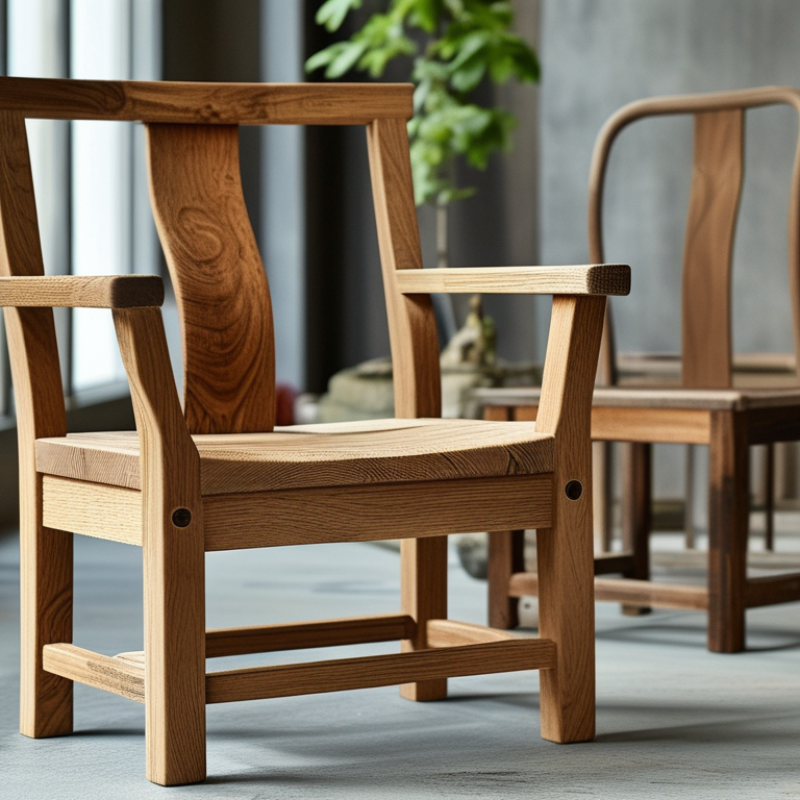
When choosing solid wood chairs for global sourcing, define the chair type before comparing prices. Dining chairs usually need stable joinery and comfortable seat height. Armchairs require wider frames and stronger side supports. Bar stools need accurate footrest height and reliable balance. Bentwood chairs use curved components, while upholstered chairs add fabric, foam, and fire-safety requirements. Solid wood should describe the main structural parts, not merely a thin wood veneer over a composite board. Ask for the wood species, grade, origin, moisture content, and finishing process.

Global sourcing also requires measurable specifications. Request drawings with dimensions, tolerances, load testing, carton details, and replacement-part information. Kiln-dried wood often performs better during international shipping, but the target moisture range should match the destination climate. Many projects use approximately 8% to 12% moisture content, though local conditions can differ. Confirm applicable safety, chemical, packaging, and labeling rules for each market. Independent inspections can check joint gaps, wobbling, sharp edges, finish consistency, and carton damage. A sample may look excellent, yet mass production can reveal uneven color or loose joints. I have learned that clear acceptance standards matter more than attractive photographs.

Tips: Compare at least three samples. Tap joints gently and check movement. Measure seat height yourself. Ask whether repairs are possible after delivery. Verify certification documents through reliable sources, not screenshots alone. Include approved wood samples with the purchase contract. Small details prevent expensive disputes.

Evaluate Wood Species, Quality Grades, and Sustainability Credentials

When sourcing solid wood chairs internationally, begin by matching the wood species to the chair’s working environment. Beech offers fine grain and reliable strength for curved components. Oak provides visible texture and strong wear resistance. Rubberwood can be practical when properly kiln-dried. Tropical hardwoods require stricter origin checks.

Species alone is not enough. Ask suppliers for written grade definitions, moisture readings, and defect allowances. Quality grades can vary between countries, so compare samples against the same criteria. Inspect joints, seat frames, knots, sapwood, and surface repairs. A moisture meter helps. I have rejected attractive samples with hidden end cracks. No grading system is perfect. Allow room for honest rechecking.

Sustainability credentials should be verifiable, not decorative language. Request current forest-management certificates and chain-of-custody records for each shipment. Check whether documents match the supplier, species, and declared origin. Responsible sourcing also considers kiln energy, packaging, repairability, and transport distance. Reclaimed wood may reduce pressure on forests, but its history and treatment must be documented. A certificate does not guarantee every production decision was careful. Keep audit records, photograph inspections, and ask difficult questions before placing volume orders. Maybe the cheapest chair is not the lowest-cost choice.

Check Chair Construction, Ergonomics, Dimensions, and Safety Standards

How to Choose Solid Wood Chairs for Global Sourcing?

Chair construction deserves close inspection before price discussions begin. Check whether the wood is properly dried for the destination climate. Excess moisture may cause warping, while over-dried timber can split around joints. Examine mortise-and-tenon joints, dowels, screws, and corner blocks under pressure. Glue lines should be neat and fully covered. Rock each sample on a flat floor. Small movement can signal larger problems after repeated use. A beautiful prototype may still fail when humidity changes during shipping.

Ergonomics must match the intended user and setting. A seat height of about 430–470 millimeters suits many adults, but it is not universal. Measure seat depth, back angle, front-edge pressure, and armrest clearance. Sit for at least ten minutes. Comfort often changes after the first minute. Ask for drawings with tolerances, not approximate dimensions. Packaging can also affect final size, especially where dining spaces are narrow. I have found that suppliers sometimes measure the frame, not the usable seating area.

Safety checks should include stability, strength, sharp edges, pinch points, and finish durability. Request test samples from normal production, not specially prepared pieces. Confirm testing against the destination market’s current requirements, such as applicable domestic seating standards and chemical restrictions. Keep test reports, material declarations, batch records, and inspection photos together. Requirements differ between countries. Do not assume one certificate covers every market. Even experienced sourcing teams can overlook a small tolerance or finish change. Recheck production samples before shipment.

How to Choose Solid Wood Chairs for Global Sourcing?

Common ergonomic reference ranges for adult dining chairs

These dimensional ranges are practical ergonomic references for adult dining chairs. During global sourcing, also inspect wood joints, fasteners, surface stability, load performance, durability, and product labeling. Final specifications should be verified against the applicable requirements in the destination market, such as EN 12520 or ANSI/BIFMA standards.

Compare Suppliers, Manufacturing Capabilities, Costs, and Minimum Orders

How to Choose Solid Wood Chairs for Global Sourcing?

Global sourcing of solid wood chairs starts with evidence, not catalog photos. Ask suppliers for kiln-drying records, moisture readings, joinery samples, and recent quality reports. Their factory should show sanding, finishing, load testing, and packaging processes. The FAO’s Global Forest Resources Assessment 2020 recorded 4.06 billion hectares of global forest area. Therefore, request species names, origin documents, and traceability details. Vague timber descriptions create avoidable quality and compliance risks.

Compare suppliers through a landed-cost sheet. Include wood grade, labor, finishing, cartons, inspection, inland delivery, freight, duties, and damage allowances. UNCTAD’s Review of Maritime Transport 2023 states that over 80% of world merchandise trade by volume moves by sea. Freight changes can quickly erase a small unit-price advantage. I once focused too heavily on chair prices. That was a mistake. A cheaper chair may require stronger packaging or more frequent replacement.

Minimum order quantities also deserve negotiation. A large MOQ can reduce production cost but tie up cash and storage space. Ask for separate MOQs for each finish, wood species, and upholstery option. Suppliers with CNC equipment may support repeatable dimensions, while skilled handwork can improve curved details. Request a pilot batch of 20 to 50 chairs, if possible, and inspect leg stability, seat comfort, color consistency, and carton strength before scaling. Be cautious with perfect samples. Production variation still happens.

Verify Samples, Certifications, Packaging, Shipping, and Quality Control

When sourcing solid wood chairs globally, treat the sample as evidence, not decoration. I request two finished chairs from the same production batch. One stays in our office for comparison. We check wood species, moisture content, joint tightness, surface feel, and chair stability. A digital moisture meter helps, but it does not replace trained inspection. Small color variation is normal. A loose front joint is not.

Ask the supplier for traceable timber documents and test reports relevant to the destination market. Certification logos alone are insufficient. Check certificate numbers, validity dates, product scope, and issuing body. Confirm finish safety, load testing, and formaldehyde limits where required. Requirements differ by country. Packaging needs equal attention. Foam protects corners, but excessive plastic can complicate disposal. Use corner guards, layered cardboard, and moisture barriers for sea freight. Mark cartons with quantity, handling symbols, and shipment references. Photograph packed cartons before loading. These images often reveal weak strapping.

A written quality control plan should define tolerances before production starts. Inspect first-off samples, mid-production units, and packed goods. Record leg alignment, seat height, scratches, cracks, and carton damage. I once approved a beautiful sample that failed after repeated leaning tests. The mistake was ours. We had checked appearance, not use. Now I require documented stress testing and random carton opening before payment. Independent inspection adds cost, yet one rejected shipment costs more. Leave room for revision. Timber moves with humidity, and factory measurements may change in storage.

How to Choose Solid Wood Chairs for Global Sourcing? - Verify Samples, Certifications, Packaging, Shipping, and Quality Control
Category Verification Dimension Recommended Requirement or Acceptance Criteria Evidence to Request or Test Inspection Timing Priority
Sample Verification Wood species and construction Confirm the declared solid-wood species, component list, and construction method. Do not accept veneered MDF, particleboard, or finger-jointed parts where solid wood is specified. Approved sample, component drawing, material declaration, and cross-section inspection of concealed areas. Pre-production sample High
Sample Verification Moisture content For typical indoor furniture, target approximately 8%–12%, subject to the destination climate and the supplier’s validated process. Readings should be consistent across legs, rails, seat frames, and back posts. Calibrated moisture meter readings from at least 10 locations on the sample and production units. Sample and pre-shipment High
Sample Verification Dimensional accuracy Set measurable tolerances before production. A practical starting point is ±2 mm for overall chair dimensions and ±1 mm for critical joint or drilling locations, unless the approved drawing states otherwise. Approved technical drawing, calibrated tape measure, digital caliper, and dimensional inspection report. Sample approval and during production High
Sample Verification Stability and load performance The chair must stand level without rocking, remain stable during forward and sideways loading, and show no structural cracking, joint opening, or permanent deformation after testing. Internal load-test procedure based on the destination market’s applicable seating standard; test records with load, duration, and result. Pre-production and periodic production testing High
Sample Verification Joint quality Mortise-and-tenon, dowel, or other specified joints must be fully seated, accurately aligned, and free from visible gaps. Glue squeeze-out should be removed without damaging the finish. Visual inspection, joint-gap measurement, assembly torque check, and destructive test on a separately authorized sample if required. During pilot production High
Sample Verification Surface and finish consistency No unacceptable cracks, open knots, rough sanding, sharp edges, color blotches, runs, bubbles, or exposed unfinished areas. Define acceptable natural grain variation in writing. Golden sample, finish reference panel, lighting requirement, and visual defect limit table. Sample approval and final inspection Medium
Certifications Legal timber origin Verify that timber is legally harvested and traceable to the declared source. Documents must cover the actual species, quantity, supplier chain, and shipment period. Supplier declaration, purchase records, harvest or legality documents where applicable, and chain-of-custody records. Before purchase order and periodically High
Certifications Responsible forestry claim If a responsible-forestry claim is used, the certificate must be current, issued to the relevant legal entity, and within the correct product scope. Claim-related invoices and transaction documents should match the order. Current certificate, certificate scope, validity check, supplier authorization, and shipment documentation. Before purchase order and shipment High
Certifications Restricted substances and finish safety Confirm compliance with the destination market’s chemical restrictions. Test coatings, adhesives, upholstery components, and decorative materials when the risk assessment requires it. Recent laboratory report from an appropriately qualified laboratory, material safety data, and coating or adhesive specifications. Before mass production and after material changes High
Certifications Factory management systems A formal quality or environmental certificate can support supplier evaluation, but it does not replace product inspection. Verify certificate validity, site address, scope, and audit status. Certificate copy, issuing-body verification, audit summary, corrective-action records, and factory assessment. Supplier qualification and annual review Medium
Packaging Individual protection Protect finished surfaces from abrasion and moisture using suitable wrapping, corner protection, and separation between chair components. Packaging must not leave marks on the finish. Packaging specification, packaging sample, drop-test photos, and inspection of packed units. Packaging approval and pre-shipment High
Packaging Carton strength Select board grade and construction according to packed weight, stacking height, route, humidity, and handling risk. The carton should resist crushing and puncture during normal shipment handling. Carton specification, board test data, compression or drop-test result, and packed-carton inspection. Packaging development and production High
Packaging Moisture control Use dry packaging materials and prevent condensation during storage and transit. Do not seal visibly damp products or cartons. Add moisture-control measures only after route and climate assessment. Packaging moisture readings, container-loading photos, desiccant plan if used, and storage-condition records. Loading and pre-shipment High
Packaging Marks and documentation Carton labels should show purchase-order reference, item code, quantity, gross and net weight, dimensions, handling marks, and country-of-origin information where required. Approved artwork, carton-label checklist, packing list, commercial invoice, and random label verification. Before shipment release Medium
Shipping Container utilization Calculate the packed cubic volume before ordering. Keep sufficient clearance for safe loading and avoid excessive compression that could damage chair frames or cartons. Packing plan, carton dimensions, loading diagram, cubic-meter calculation, and container loading photos. Before booking and during loading Medium
Shipping Wood packaging compliance Any solid-wood pallets, crates, or dunnage used in international transport should meet the importing country’s applicable treatment and marking requirements, commonly based on ISPM 15. Visible treatment mark, supplier declaration, packing-list notation, and customs documentation where applicable. Before container loading High
Shipping Transit and storage conditions Define protection from rain, standing water, prolonged high humidity, direct sunlight, and extreme temperature changes. Do not store cartons directly on a wet floor. Handling instructions, warehouse photos, container inspection checklist, and route-specific risk assessment. Before shipment and at destination Medium
Quality Control Pre-production inspection Confirm approved materials, production drawings, tooling, finish references, packaging components, and the signed sample before mass production begins. Pre-production inspection report, approved sample, bill of materials, and signed specification sheet. Before mass production High
Quality Control During-production inspection Check wood moisture, dimensions, joint assembly, sanding, finish application, curing, and packing progress. Correct process problems before all units are completed. Inspection checklist, process photographs, moisture readings, defect log, and corrective-action report. Approximately 30%–50% production completion High
Quality Control Final random inspection Inspect finished and packed goods against the agreed specification. Use a documented sampling plan and define critical, major, and minor defects before inspection. Sampling plan, inspection report, defect photographs, carton-count reconciliation, and shipment-release decision. When goods are at least 80% complete and packed High
Quality Control Defect classification Critical defects may create safety or legal risk; major defects affect function, durability, or saleability; minor defects are limited cosmetic deviations that do not affect use. Written defect catalogue with photographs, agreed acceptance limits, and inspection records. Before the first order High
Quality Control Traceability and corrective action Each production lot should be traceable to material batches, production dates, inspection records, and shipment cartons. Corrective actions should include a responsible person and completion date. Lot codes, production records, inspection reports, nonconformity log, and corrective-action evidence. Every production order Medium
Quality Control Change control No substitution of wood species, finish, adhesive, hardware, packaging material, or production site without written approval and a new risk assessment where necessary. Change-request form, revised bill of materials, updated sample, and approval record. Whenever a change is proposed High
Note: Acceptance limits should be finalized in the purchase specification according to the destination market, product design, applicable safety requirements, transport route, and agreed sampling plan. Certification documents and test reports should always be checked for validity, scope, issuing body, and product relevance.