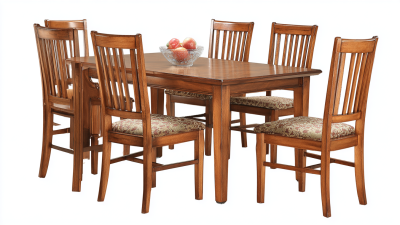
How to Choose Dining Tables with Chairs in 2026?
Choosing dining tables with chairs in 2026 is less about copying a showroom and more about making the set work at home. Measure the room before browsing. Then check the table’s length, width, and height against your daily needs. Leave enough space for chairs to slide back without hitting a wall or cabinet. A beautiful set can feel cramped by dinner.
Dieter Rams, the influential product designer, wrote, “Good design is as little design as possible.” His principle offers a useful test: does each detail improve comfort, function, or longevity? For dining furniture, that means checking chair support, tabletop durability, and whether the finish suits real routines. Think spilled coffee, homework, and a crowded holiday meal. Not just the trend.
This guide explores how to compare table shapes, materials, seating capacity, and styles without overlooking practical details. It also considers budget, assembly, maintenance, and the changing needs of households in 2026. A round table may ease conversation in a compact room, while a rectangular one can suit longer spaces. Still, no shape fixes poor proportions. Check the measurements twice; even experienced shoppers can miss how far a chair pulls out. The best dining tables with chairs are not always the most expensive or dramatic. They are the ones that fit your space, feel comfortable after a long meal, and remain useful as your home changes.
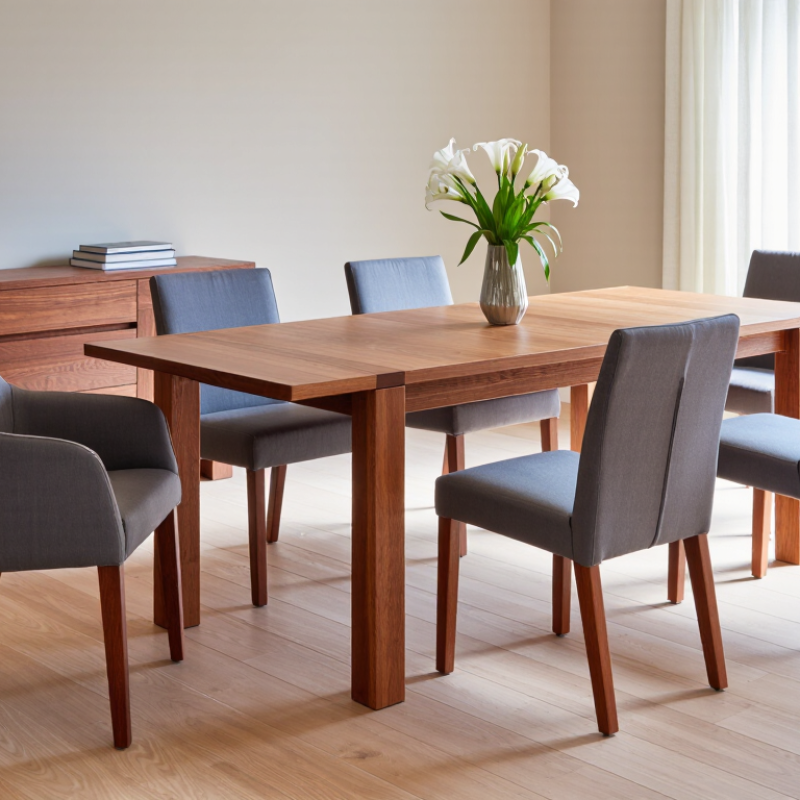
Assess Your Dining Space, Seating Needs, and Daily Habits
Before choosing a dining table with chairs, measure the room while accounting for doors, radiators, and the route to the kitchen. A table may fit on paper but block a drawer once someone pulls out a chair. Houzz’s 2024 U.S. Kitchen Trends Study found that 54% of renovating homeowners changed their kitchen layout. That figure reflects how often circulation needs change, not a rule that every room needs renovation. Still, it’s a reminder to plan the table around real movement. Use masking tape to mark the tabletop and chair footprints. Walk around the outline with chairs pulled back. Small detail. It catches awkward bottlenecks early.
Then match seating to ordinary routines, not just holiday gatherings. The U.S. Bureau of Labor Statistics’ 2023 American Time Use Survey reports that people spent about 1.24 hours per day eating and drinking. That time may include meals away from home, but it shows why daily comfort matters. Consider who sits down most often, whether children need room to move, and if the table doubles as a work surface. A compact round table can ease movement in a tight room; an extendable design can handle occasional guests. Check chair width, seat height, and whether armrests slide beneath the table. I still find chair pullback easy to underestimate. Recheck it before ordering.
Choose a Table Shape and Size That Fit the Room
Measure the dining area before choosing a table. Leave about 36 inches between the table edge and nearby walls or furniture, so chairs can slide back. A rectangular table suits a long room and gives guests clear places to sit. Round tables can soften tight corners and make conversation easier, but they still need enough clearance. In a narrow room, an oval top may provide a useful middle ground.
Tips: Mark the table’s footprint with painter’s tape. Pull out a chair at each place. Walk around the taped area. It may feel smaller than expected.
Plan for about 24 inches of table edge per person; larger chairs may need more. A 48-inch round table often seats four, while a 60-inch rectangle can usually seat six, depending on chair width. Check the table dimensions and chair measurements together, including armrests. If the room doubles as a walkway, choose fewer seats rather than squeezing in one more. I once underestimated how far dining chairs extend when occupied; the floor plan looked generous, but the path to the kitchen felt cramped.
Select Chairs for Comfort, Scale, and Easy Movement
A dining chair should feel comfortable beyond the first few minutes. Sit in it and notice whether your feet rest flat and the seat supports your thighs without pressing behind your knees. A padded seat can help during long meals, but overly soft cushions may feel tiring over time. Small details matter. Check whether the back supports you without forcing an upright pose, and whether armrests slide under the table. They often do not.
Scale affects both comfort and appearance. Measure the table height, apron, and chair seat before buying a set. For many standard tables, a seat height around 18 inches leaves a comfortable gap, but the table’s underside can change that. Allow roughly 24 inches of table edge per person so elbows and serving dishes are not crowded. Then test the actual chairs, if possible. Measurements help, but bodies and chair shapes vary.
Easy movement needs space around the table. Pull each chair out as if someone were sitting down, then check the path behind it. About 36 inches of clearance is a useful target for a walkway, though a tight room may need a different layout. Walk through with a chair pulled back. Notice the snag points. A corner that looks spacious on a floor plan can feel awkward beside a cabinet or doorway. I still find it easy to underestimate that daily shuffle.
How to Choose Dining Tables with Chairs in 2026? - Select Chairs for Comfort, Scale, and Easy Movement
| Dining Setup |
Suggested Table Size |
Typical Seating |
Chair Width to Allow |
Comfortable Seat Height |
Space Behind Chairs |
Movement Tip |
| Compact round table |
36–42 in diameter (91–107 cm) |
2–4 people |
18–20 in (46–51 cm) per chair |
17–19 in (43–48 cm) |
About 36 in (91 cm) from table edge to a wall or obstacle |
A pedestal base can make it easier to position chairs without table legs getting in the way. |
| Small square table |
36 × 36 in (91 × 91 cm) |
2–4 people |
18–20 in (46–51 cm) per chair |
17–19 in (43–48 cm) |
About 36 in (91 cm) for pulling chairs out and sitting down |
Check corner clearance so chairs do not block a doorway or nearby walkway. |
| Four-person rectangular table |
48 × 30 in (122 × 76 cm) |
4 people |
Allow roughly 24 in (61 cm) of table edge per diner |
17–19 in (43–48 cm) |
About 36 in (91 cm); allow more where people regularly walk behind seated diners |
Armless chairs are often easier to slide beneath a smaller table. |
| Six-person rectangular table |
60 × 36 in (152 × 91 cm) |
6 people |
Allow roughly 24 in (61 cm) of table edge per diner |
17–19 in (43–48 cm) |
About 36 in (91 cm), or 42–48 in (107–122 cm) for a busy route |
Measure chair width including arms, not just the seat, if choosing armchairs. |
| Long rectangular table |
72 × 36 in (183 × 91 cm) |
6 comfortably; up to 8 with narrower chairs |
Allow about 24 in (61 cm) per diner; more for broad chairs |
17–19 in (43–48 cm) |
About 36 in (91 cm); 42–48 in (107–122 cm) where circulation passes behind chairs |
Confirm that end chairs have enough room to pull out without hitting walls or furniture. |
| Everyday chair-to-table fit |
Measure the table underside as well as its top |
Match chair count to available edge space |
Leave a little space between neighboring chairs when possible |
Most dining chairs are around 17–19 in (43–48 cm) at the seat; check the table’s apron clearance |
Measure from the table edge to the nearest obstruction |
A table is commonly about 28–30 in (71–76 cm) high. Check the chair arms and seat fit beneath it before buying. |
Planning note: Dimensions are practical starting points, not fixed rules. Actual seating capacity depends on table shape, leg placement, chair width, and the space available in the room. Always check the product measurements and leave adequate room for doors and walkways.
Compare Materials, Construction, and Maintenance Requirements
How to Choose Dining Tables with Chairs in 2026?
Compare Materials, Construction, and Maintenance Requirements
Material choice is only part of the decision; construction determines how well a dining set handles daily use. Solid wood can be refinished, but it responds to indoor humidity. The USDA Forest Products Laboratory’s Wood Handbook documents how moisture changes affect wood dimensions. Check that legs feel steady and joints do not creak when you lean gently on the table. Metal frames resist many everyday knocks, yet thin tubing or rough welds can still weaken a chair. Glass wipes clean quickly, but fingerprints show fast and chipped edges are difficult to ignore.
Maintenance matters because replacement has a footprint. The U.S. Environmental Protection Agency’s 2018 Advancing Sustainable Materials Management report estimated that 12.1 million tons of furniture and furnishings entered the U.S. municipal waste stream. That figure is a useful reminder to look for repairable parts, replaceable chair glides, and finishes suited to your household. A busy family may prefer sealed surfaces over delicate veneer. Still, “low maintenance” is not maintenance-free; even a sturdy table needs prompt spill cleanup and occasional checks for loose fasteners.
Tips: Compare care labels before buying. Ask whether scratches can be repaired, and test a chair on a hard floor. Look closely at the underside. I would not assume a heavier set is automatically better; weight can hide awkward joints, and I have seen attractive finishes wear sooner than expected.
Balance Style, Budget, and Practical Features for 2026
In 2026, choose a dining set around daily routines, not just a showroom look. The 2024 Houzz & Home Study reported median U.S. renovation spending of $24,000 in 2023. That figure covers many projects, not dining furniture, but it shows why a clear budget matters. Set a ceiling for the table and chairs together, then leave room for delivery and care. Measure the room with chair backs pulled out. Aim for about 36 inches of clearance where possible. A beautiful table feels less appealing when it blocks the kitchen path.
The U.S. Census Bureau’s 2023 American Community Survey puts average household size at about 2.5 people. Still, household averages cannot predict your busiest dinner. Consider how often guests actually visit. A round table can soften a tight corner; an extension leaf offers occasional extra seats without taking up space every day. Check chair height against the table, and test how easily chairs slide across your floor. Solid wood can be repaired, while laminate often asks less maintenance. Neither choice is automatically better. A common planning mistake is buying for holidays, then squeezing around oversized furniture all year. Look closely at seams, wobble, and finish samples in daylight. A little doubt helps.
How to Choose Dining Tables with Chairs in 2026?
Balance style, budget, and practical features by comparing table sizes before you buy.
The chart compares calculated tabletop area for example round and rectangular tables. Round-table areas use π × radius²; rectangular areas use length × width. These are example dimensions, not a seating guarantee: chair size, leg placement, and desired elbow room affect capacity. Before purchasing, measure your dining area and leave room to pull chairs out.