What Are the 2026 Top Wood Dining Room Tables?

What will define the best wood dining room tables in 2026? The answer reaches beyond appearance. Buyers increasingly want durable timber, responsible sourcing, practical proportions, and designs that survive changing interiors. A beautiful table still fails if its surface scratches easily or its base blocks comfortable seating.

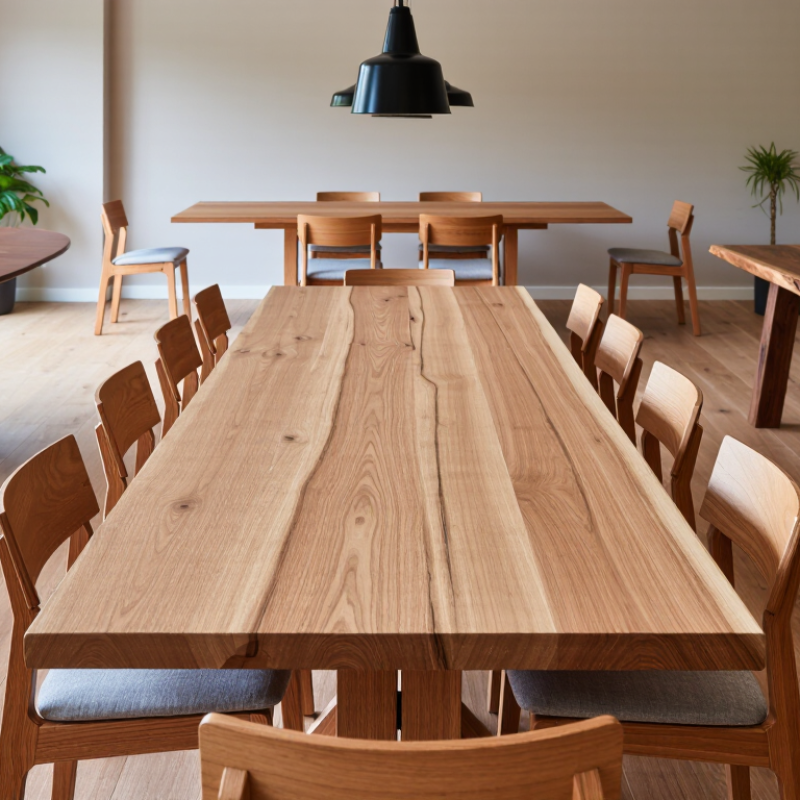
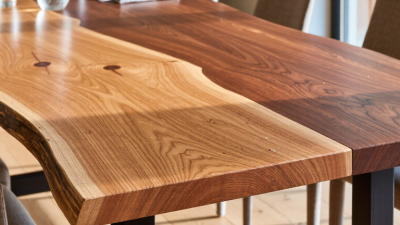
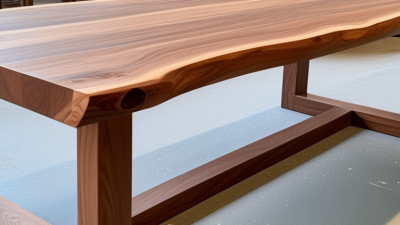
This guide examines the strongest candidates for modern dining spaces. Solid oak remains a dependable choice, with visible grain and strong daily performance. Walnut offers deeper color and a more formal character. Reclaimed wood adds history, although its uneven texture demands careful finishing. Extendable tables may become especially valuable for smaller homes and growing families. Oval tops, sculptural pedestal bases, and softened edges also deserve attention.

George Nakashima, one of the most respected twentieth-century woodworkers, said, “The tree is the most profound teacher.” His words remain relevant. Good furniture should reveal the material rather than hide it. This principle helps separate meaningful craftsmanship from short-lived styling.

The 2026 market will not have one universal winner. Room size, household habits, maintenance expectations, and budget still matter. Some trend-focused tables may look impressive online but feel unstable in person. That is an uncomfortable detail worth admitting.

Our comparison considers joinery, wood quality, finish, seating capacity, repairability, and verified sustainability claims. We also consider real-life use, including spilled drinks, daily writing, and crowded holiday meals. The result aims to guide thoughtful buyers toward wood dining room tables that feel attractive today and dependable years later.

What Are the 2026 Top Wood Dining Room Tables?

2026 Wood Dining Table Trends and Design Innovations

What Are the 2026 Top Wood Dining Room Tables?

The strongest 2026 dining tables combine natural texture with adaptable construction. Grand View Research valued the global furniture market at about $516.5 billion in 2023. It also projects roughly 5% annual growth through 2030. That momentum supports practical innovation, not decoration alone.

Expect oak, walnut, and ash with visible grain and low-sheen finishes. Rounded corners will soften compact dining areas and improve daily safety. Extension leaves will become more discreet, using concealed rails and precision-fitted joints. Some tables will include removable center sections, making storage easier in smaller homes. Clever, but not flawless.

The 2025 Houzz & Home Study shows that homeowners continue investing heavily in renovation projects. Dining furniture must therefore justify its space and cost. Repairable surfaces, replaceable hardware, and solid-wood components answer that concern better than disposable construction. FSC-certified timber may also attract buyers who want clearer sourcing information.

My practical preference is a table with a stable top, readable joinery, and a finish that can be renewed. Fingerprints still appear. Wood still changes with humidity. Designers should explain those realities instead of promising perfection. Industry forecasts often measure market value, not long-term comfort or repair success. Buyers should test the table’s movement, leg clearance, and extension mechanism before choosing a trend-led design.

What Are the 2026 Top Wood Dining Room Tables?

A practical material benchmark for 2026 dining-table design: Janka hardness helps indicate a wood’s resistance to denting and everyday surface wear.

Hard maple and white oak provide strong wear resistance for busy dining rooms, while walnut and cherry offer warmer color and refined grain. Pine remains a lightweight, more budget-conscious option but is softer and more likely to show marks. Janka hardness values are approximate and can vary by species, grade, and growing conditions.

Key Wood Types and Their Qualities for Dining Tables

For 2026 dining tables, wood species matter more than decorative trends. The USDA Forest Products Laboratory’s Wood Handbook reports hard maple at approximately 1,450 lbf on the Janka hardness scale. It resists dents well. Red oak measures about 1,290 lbf, offering strong daily performance with visible grain. Ash reaches roughly 1,320 lbf and feels lighter visually. These woods suit busy dining rooms, especially where chairs, dishes, and children create repeated impacts.

Walnut is softer, near 1,010 lbf, according to the same technical reference. Its deep brown color creates a warmer, quieter room. However, it may show scratches sooner. I would not call that a defect. Patina can become part of the table’s history. Teak offers natural dimensional stability and moderate hardness, making it useful in humid interiors. Still, its surface can feel less crisp than maple or ash.

Wood movement deserves attention. USDA data explains that moisture changes can cause boards to expand, contract, or develop small openings. A well-built table needs properly dried lumber, stable joinery, and a finish suitable for indoor humidity. The FAO’s Global Forest Resources Assessment 2020 states that forests cover about 31% of global land area. Responsible sourcing therefore matters alongside hardness and color. Buyers should request species identification, moisture information, and sourcing documentation. Samples help, too. Color photographs can mislead.

Top 2026 Dining Table Styles for Different Interior Themes

In 2026, wood dining tables are moving toward quieter shapes and more tactile surfaces. For Japandi interiors, choose a pale oak table with a slim top and gently tapered legs. Its visible grain should feel calm, not overly polished. Keep it quiet. A 160-centimeter rectangular table suits four diners while preserving walking space in smaller rooms.

Traditional interiors benefit from richer walnut tones, turned legs, and a satin finish. Look for solid joinery, such as mortise-and-tenon connections, because daily movement can loosen weak frames. In a modern farmhouse setting, reclaimed-looking timber adds warmth through knots, small splits, and uneven color. Those marks should be stabilized, not artificially exaggerated. A matte protective coating helps resist rings from warm bowls and accidental spills.

Minimalist rooms need stronger visual discipline. A round table with a single central pedestal improves circulation and reduces sharp corners near busy pathways. For industrial interiors, smoked oak or dark-stained ash can balance metal lighting and exposed brick. I once used a very dark table in a narrow dining room, and it absorbed too much light. The lesson was simple: test the wood beside your actual flooring and wall color. For coastal themes, lightly finished ash or maple works better than glossy white paint. Test the grain. Natural variation is attractive, but uneven legs and poor sanding are not signs of craftsmanship.

How to Choose the Right Size, Shape, and Finish

The 2026 wood dining table should fit the room, not dominate it. The U.S. Census Bureau reported a 2,411-square-foot median new single-family home in 2023. Open layouts still need breathing space. Leave at least 36 inches between the table edge and walls or furniture. For six diners, choose about 72 inches long. Eight diners usually need 84 to 96 inches. Measure the chairs too. Their arms may steal valuable space.

Shape changes movement. Rectangular tables suit long rooms and larger gatherings. Round tables improve conversation and soften tight corners. A 48-inch round table seats four comfortably, while a 60-inch version can seat six. Square rooms can handle square tables, but extensions add flexibility. The 2024 National Association of Home Builders report shows buyers often prioritize kitchens and storage over formal dining rooms. That matters. A compact, extendable table may serve better than a permanent oversized piece.

Tips: Test the chair clearance before buying. Place masking tape on the floor to outline the tabletop. Walk around it with a loaded serving tray. For finish, choose matte oil for visible grain and easy touch-ups, or a sealed lacquer for stronger spill resistance. ASTM furniture-care guidance supports following the maker’s cleaning instructions. I would avoid chasing perfect uniformity; natural knots, small color shifts, and one imperfect edge can make solid wood feel more honest. Also, wood moves with humidity. A beautiful table can still crack if the room stays extremely dry.

What Are the 2026 Top Wood Dining Room Tables? How to Choose the Right Size, Shape, and Finish

A practical comparison of popular wood dining table configurations, sizes, shapes, finishes, seating capacity, and room requirements for 2026.
Table Configuration Typical Dimensions Comfortable Seating Recommended Room Size Best Shape for the Space Suitable Wood Finish Best Use Key Selection Consideration
Compact Rectangular Table 48–60 in. long × 30–36 in. wide
(122–152 × 76–91 cm)
4 people At least 9 × 10 ft
(2.7 × 3.0 m)
Rectangular rooms and narrow dining areas Clear matte or satin finish to make the room feel lighter Apartments, breakfast rooms, and small households Allow approximately 36 in. (91 cm) between the table edge and walls or furniture for basic chair movement.
Six-Person Rectangular Table 60–72 in. long × 36–40 in. wide
(152–183 × 91–102 cm)
6 people At least 10 × 12 ft
(3.0 × 3.7 m)
Rectangular or open-plan dining rooms Satin oil or low-sheen lacquer for everyday durability Daily family meals and regular entertaining A table around 72 in. long generally provides more comfortable elbow room than a 60 in. table when six adults are seated.
Eight-Person Rectangular Table 84–96 in. long × 38–42 in. wide
(213–244 × 97–107 cm)
8 people At least 12 × 14 ft
(3.7 × 4.3 m)
Long rooms and large dining zones Durable satin or semi-gloss protective coating Large families and frequent dinner parties Measure doorways, stairways, and turning areas before purchase; long solid-wood tops can be difficult to maneuver.
Round Pedestal Table 42–48 in. diameter
(107–122 cm)
4 people At least 9 × 9 ft
(2.7 × 2.7 m)
Square rooms, breakfast nooks, and compact spaces Natural matte finish or satin finish that highlights the grain Small rooms and conversation-focused dining A pedestal base improves legroom because diners are not restricted by corner or perimeter legs.
Large Round Table 54–60 in. diameter
(137–152 cm)
6–8 people At least 12 × 12 ft
(3.7 × 3.7 m)
Square rooms and centered dining areas Satin finish for a balance of visible grain and easier cleaning Social dining and rooms without a dominant traffic path Round tables need substantial surrounding clearance because their widest point extends evenly in every direction.
Oval Table 72–84 in. long × 40–44 in. wide
(183–213 × 102–112 cm)
6–8 people At least 11 × 14 ft
(3.4 × 4.3 m)
Rectangular rooms where softened corners are preferred Matte or satin finish to emphasize the curved silhouette Formal dining rooms and family spaces with circulation needs Rounded ends reduce sharp corners and can improve movement around the table compared with a similarly sized rectangle.
Extendable Wood Table 60–72 in. closed; 84–96 in. extended
(152–183 cm closed; 213–244 cm extended)
6 people closed; 8–10 extended Plan for the extended length: at least 12 × 14 ft
(3.7 × 4.3 m)
Rectangular or oval Matching satin or low-sheen finish on the top and leaves Flexible households and occasional large gatherings Check that extension leaves store securely and that the grain, color, and finish remain visually consistent.
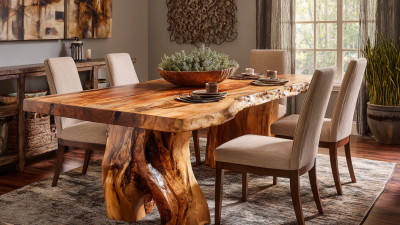
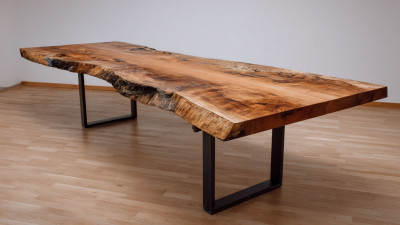
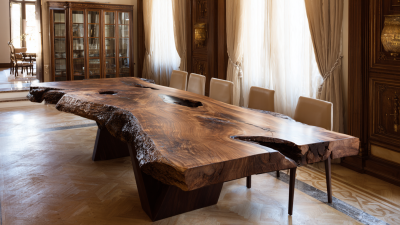
Live-Edge Wood Table 72–96 in. long × approximately 36–44 in. wide
(183–244 × 91–112 cm)
6–8 people, depending on the irregular edge At least 12 × 14 ft
(3.7 × 4.3 m)
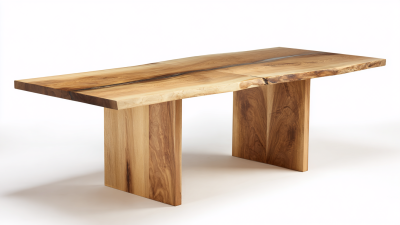
Open rooms where the tabletop can be a focal point Protective matte or satin finish that preserves the natural edge appearance Rustic, organic, and statement dining interiors Measure the usable seating line rather than the widest point, since natural edges may reduce the number of comfortable seating positions.
Farmhouse Trestle Table 72–96 in. long × 38–42 in. wide
(183–244 × 97–107 cm)
6–8 people At least 12 × 14 ft
(3.7 × 4.3 m)
Long rooms and casual dining areas Brushed matte, wire-brushed, or distressed satin finish High-use family dining and relaxed entertaining Trestle supports can provide good legroom, but confirm the location of the base supports before placing chairs.

General planning rule: allow about 36 in. (91 cm) of clearance around the table for chairs and basic circulation, and increase clearance to about 42–48 in. (107–122 cm) along primary walkways. Actual seating capacity varies with chair width, table legs, place settings, and the thickness of the tabletop.

Care, Durability, and Value of Leading Wood Dining Tables

By 2026, the strongest wood dining tables will be judged beyond appearance. Care, durability, and long-term value will matter more than fashion. A well-made table should feel stable when pressed, with tight joints and a balanced top. Solid hardwood often handles years of meals, homework, and family gatherings better than fragile materials. Still, no wood is indestructible.

Daily care is simple but important. Wipe spills quickly, especially coffee, wine, and oily sauces. Use coasters beneath hot dishes and place mats under rough ceramics. A soft, slightly damp cloth usually works better than strong household cleaners.

Keep the table away from direct heaters and intense sunlight. Wood reacts to moisture and temperature. It may expand, shrink, or develop small surface marks.

Small marks are normal. They are not always failure. Many scratches can be softened with suitable oil or professional refinishing, depending on the finish. Check the manufacturer’s care guidance before applying anything unfamiliar. A table with repairable joints and a renewable surface can offer better value than a cheaper table that cannot be restored. However, heavier wood does not automatically mean better construction. Inspect the underside, leg connections, and finish consistency. I would also leave space for seasonal movement, because a perfectly unchanged wooden surface is an unrealistic expectation.