
What Is the Best Type of Wood for Dining Room Tables?
Choosing the best wood for a dining table involves more than comparing colors and prices. A table must handle daily meals, spilled drinks, warm plates, chair movement, and years of conversation. The right material should match your room, lifestyle, maintenance habits, and budget.
Among wood dining room tables, oak remains a dependable choice because its pronounced grain hides small scratches and everyday marks. Walnut offers a deeper, more refined color, while maple provides a lighter surface with a smoother, cleaner appearance. Each species behaves differently. Hardness, moisture movement, grain structure, and finish quality can affect the table’s long-term performance. A knowledgeable furniture maker will also consider how the boards were dried and joined, not only the species name.
Look closely at the details. Run your hand across the surface. Check whether the edges feel secure and whether the finish looks even under natural light. A beautiful sample can still disappoint if the construction is weak. No wood is perfect. Even a carefully made table may develop small seasonal changes, faint marks, or color shifts near a sunny window. That is not always a defect; sometimes it becomes part of the table’s story.
This guide compares popular dining-table woods through practical experience, expert construction principles, and realistic care expectations. It also considers responsible sourcing and finish safety. The best choice may not be the most expensive option. It is the wood that continues to look useful, stable, and welcoming after thousands of ordinary meals.
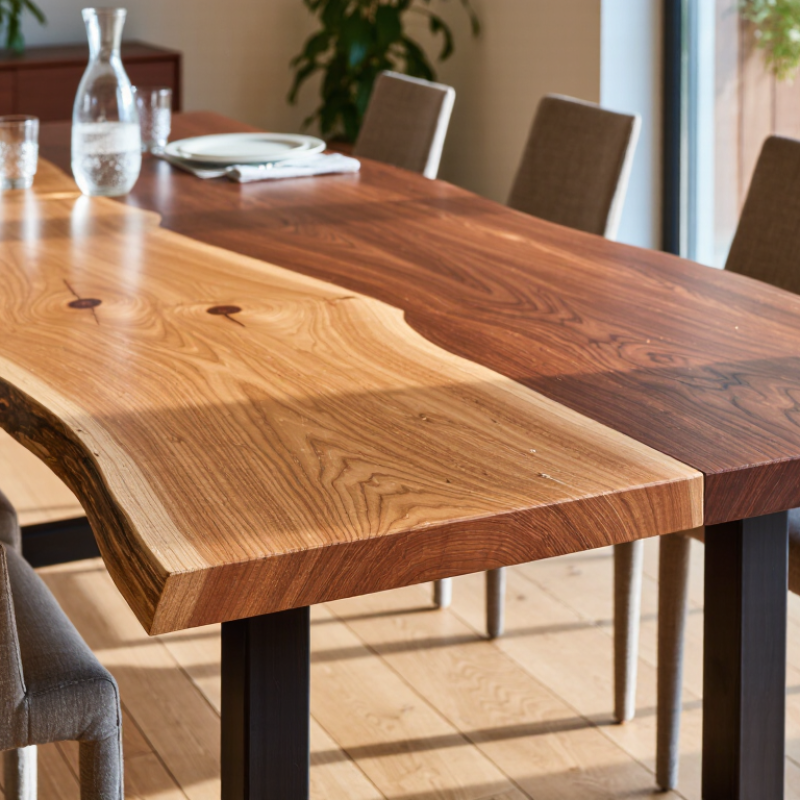
Table of Contents
[Hide]
Understanding Wood Properties for Dining Room Tables
Choosing the best wood for a dining table starts with understanding wood properties, not chasing a single “premium” species. Hard maple averages about 6,450 newtons on the Janka hardness scale, while black walnut averages roughly 4,490 newtons, according to the USDA Forest Products Laboratory’s Wood Handbook, 2021. White oak reaches approximately 6,000 newtons. These figures suggest better resistance to dents, but hardness can make cutting and refinishing more demanding. A table is not a gym floor.
Moisture movement matters just as much. The same USDA report notes that interior wood commonly stabilizes near 6–8% moisture content in heated buildings. A slab installed too wet may shrink, open joints, or develop small cracks after entering a dry dining room. I have seen beautiful boards fail because the maker focused on grain and ignored acclimation. Grain direction, board width, joinery, and finish all affect long-term performance. The National Hardwood Lumber Association’s grading rules also show why clear, stable sections often cost more: defects and usable cuttings influence yield. White oak suits busy households needing strength and visible grain. Walnut offers warmth and easier visual aging. Maple provides a cleaner, harder surface, though scratches may appear more sharply. These are useful tendencies, not promises. Cite: USDA Forest Products Laboratory, Wood Handbook—Wood as an Engineering Material, 2021; National Hardwood Lumber Association, Rules for the Measurement and Inspection of Hardwood and Cypress, 2023.
What Is the Best Type of Wood for Dining Room Tables? - Understanding Wood Properties for Dining Room Tables
| Wood Type | Janka Hardness (lbf, approx.) |
Durability | Dimensional Stability | Grain & Appearance | Maintenance | Best For |
|---|---|---|---|---|---|---|
| Hard Maple | 1,450 | Very high | Good | Fine, generally uniform grain; creamy white to light brown | Low; clean spills promptly and renew the finish as needed | Busy households wanting excellent resistance to dents and wear |
| White Oak | 1,360 | Very high | Very good | Prominent grain; pale tan to medium brown, often with flecking | Low; tolerates regular family use with a quality finish | The best all-around balance of strength, stability, and appearance |
| Red Oak | 1,290 | High | Good | Open, distinctive grain; pinkish tan to reddish brown | Low; finish helps protect the open grain from stains | Durable traditional tables with a warmer, more pronounced grain |
| Ash | 1,320 | High | Good | Bold, straight grain; light cream to pale brown | Low; similar care requirements to oak | Light-colored interiors and tables that need strong everyday performance |
| Beech | 1,300 | High | Moderate | Fine, even grain; pale cream with a subtle warm tone | Moderate; protect carefully from moisture and rapid humidity changes | Smooth, light contemporary designs when indoor climate is controlled |
| Teak | 1,070 | Very high | Excellent | Straight to wavy grain; golden brown that darkens with age | Low; naturally oily, but still requires spill protection indoors | Moisture-prone dining areas, provided the wood is responsibly sourced |
| Black Walnut | 1,010 | High | Very good | Mostly straight grain; chocolate brown with lighter or purplish tones | Moderate; a protective finish helps preserve the color and surface | Elegant statement tables where color and visual character matter most |
| Black Cherry | 950 | Moderate to high | Very good | Fine, smooth grain; warm reddish brown that deepens with light | Moderate; protect from scratches and prolonged direct sunlight | Refined dining rooms where a warm patina and smooth texture are desired |
Note: Janka hardness values are approximate and can vary by species, growing conditions, moisture content, and testing method. For any solid-wood dining table, use coasters, wipe spills promptly, and avoid placing the table near heat sources or in rapidly changing humidity.
Related Posts
-
2025 Trends in Best Real Wood Dining Tables You Need to Know About
-
How to Choose the Best Wood Dining Room Tables for Your Space: A Comprehensive Guide
-
7 Unique Best Wood Dining Room Tables for Timeless Elegance
-
How to Source Real Wood Dining Tables Globally?
-

Ultimate Checklist for Choosing Solid Wood Dining Tables: 10 Key Factors to Consider
-
Advantages of Choosing the Best Wooden Dining Tables for Your Home