
For a café, hotel, or corporate gifting program, a cup is more than a container. It is handled every day, washed repeatedly, and seen by customers at close range. A well-chosen Stainless Steel Cup can offer a durable alternative to fragile drinkware, while giving businesses a practical surface for a clean, consistent brand mark. The details matter: rim comfort, capacity, weight, finish, and whether the cup is single-wall or insulated. Small choices affect real routines.
Materials scientist Dr. Michael F. Ashby’s approach to materials selection offers a useful lens: match a material to the conditions it must handle. A practical working line is, “Choose for the job, not just the shelf.” This is a summary, not a verified direct quotation from Ashby. For buyers, that means checking product specifications and sample quality rather than relying on appearance alone. Look closely at the inside finish, the base, and how the cup feels when wet. Ask suppliers about care instructions and production consistency.
There are trade-offs. Stainless steel can show scratches, and some designs feel heavier than expected. Not every cup fits every business. A sample on a busy counter may reveal what a catalog photo cannot. Still, with sensible selection and clear care guidance, these cups can support repeat use, easier storage, and a more considered customer experience. The less obvious lesson? A durable product only earns its place when people actually enjoy using it.
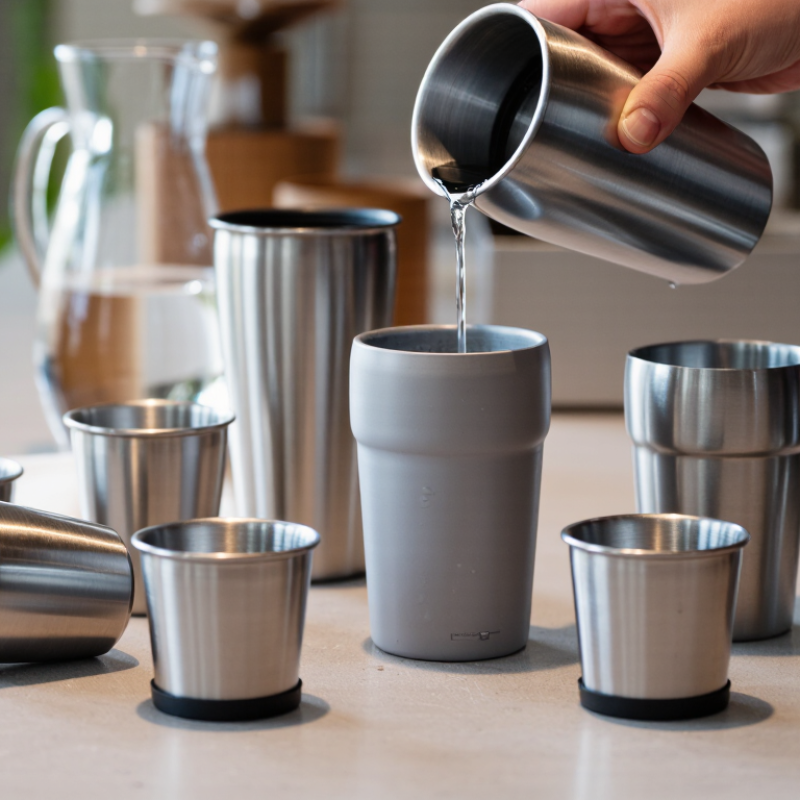
Stainless steel cups are reusable drinking vessels made from corrosion-resistant steel. Many are produced from food-contact stainless steel, often in grades such as 304, though the exact material varies by design and supplier. A cup may have a single wall or two walls with an insulated space between them. The steel itself is durable, but the rim, seams, and interior finish also affect daily use.
Manufacturing usually begins with steel sheets or circular blanks. A press shapes the metal into a cup, sometimes through several deep-drawing steps. The rim is trimmed and rolled smooth; any joints are welded and checked. Double-wall cups require an additional inner shell, and some designs have air removed from the space between the walls to improve insulation. The surface may be brushed or polished, then cleaned to remove processing residue. Small marks matter. A glossy finish can hide fine scratches, so visual inspection alone is not enough. For business orders, check wall thickness, rim comfort, capacity, and consistency across samples. Even well-made cups can feel different in the hand than expected. A physical sample is worth testing before choosing a large quantity.
Why Choose Stainless Steel Cups for Your Business?
Key Properties That Matter in Commercial Use
Stainless steel cups suit busy cafés, offices, and event spaces because they handle frequent use without feeling fragile. Their surfaces resist rust and staining when properly maintained. They also tolerate repeated washing better than many disposable or brittle options. A dropped cup may dent, though. That matters in a crowded service area.
Commercial performance depends on more than the material. Smooth interiors are easier to rinse, while sturdy rims and well-finished seams can reduce wear during daily handling. Double-wall designs help limit heat transfer, but they may cost more and add weight. Steel does not keep every drink at its ideal temperature indefinitely. Check construction details, capacity, and cleaning instructions before ordering in bulk.
Tips: Test a few cups during a real service shift. Notice how they feel when wet, how easily they stack, and whether staff can clean them quickly. Small details can be overlooked on a product sheet.
Specified minimum tensile strength offers one measurable comparison of common stainless steel grades used in sheet products. Strong material can support durable cup construction, while the finished cup’s performance also depends on its design, thickness, and manufacturing.
Values shown are minimum tensile strengths in MPa specified by ASTM A240 for the listed grades; actual properties depend on product form and applicable specifications.
Stainless steel cups can support a business’s daily service while reducing reliance on disposable drinkware. In a busy café, they move from the counter to the dishwasher many times a day. Their resistance to rust and breakage can make them practical for staff rooms, events, and takeaway programs. That matters. Fewer replacements may help control costs over time, though the savings depend on use and care.
Reusable cups can also give customers a tangible reason to return. A clean, sturdy cup feels dependable in the hand, and many stainless steel designs help keep drinks warm or cool. Check the product details: single-wall cups may transfer heat, while insulated models usually cost more. Steel cups can dent, too, and they may feel heavier than plastic. Not every setting suits them. Compare washing capacity, storage space, purchase price, and expected turnover before ordering; a small trial can reveal issues that a catalogue cannot.
Tips: Test a sample during a busy shift. Check rim comfort, stacking, and dishwasher fit. Ask staff what slows service down, then adjust the order size.
Restaurants, hotel breakfast rooms, workplace cafeterias, and event venues use cups through fast, repetitive service. The National Restaurant Association’s 2024 State of the Restaurant Industry projected US restaurant sales of $1.1 trillion and 15.7 million jobs. That scale makes durable, reusable drinkware practical in many food-service settings. Stainless steel cups can handle repeated washing and busy service counters, while their solid feel suits outdoor catering and staff break rooms. Busy rooms need repeatable routines.
Schools are another setting. USDA data show the National School Lunch Program served about 4.6 billion lunches in fiscal year 2023, illustrating the volume moving through school cafeterias. Steel cups may suit supervised dining areas, where collection and washing can be built into the daily routine. Clinics and care facilities can also use them in staff areas or selected dining spaces, provided cleaning procedures and resident needs guide the choice. Fit matters. Steel is not magic: cups can dent, feel heavy to some users, and require reliable washing and storage. A quick check of dishwasher capacity, cup size, and return points can reveal whether they work for a particular operation.
When selecting stainless steel cups for a business, start with the way staff and customers will use them. A café serving espresso may need smaller cups, while an office pantry benefits from larger, stackable sizes. Check the cup’s capacity, weight, rim finish, and whether it fits your dishwasher. Smooth seams and a stable base matter during busy service. Ask suppliers for material and food-contact documentation. Test a sample before ordering in bulk. It may feel like an extra step, but it can reveal awkward lids or cups that tip too easily.
Care routines affect appearance and service life. Follow the supplier’s cleaning instructions, especially for dishwasher use. Wash promptly with mild detergent and a soft sponge; abrasive pads can leave visible scratches. Rinse away coffee and tea residue, then dry cups to reduce water spots. Avoid leaving salty or acidic drinks inside for long periods. Check rims, seams, and interiors regularly for dents, rough spots, or lingering odors. Small checks help.
A common assumption is that stainless steel needs no attention. It still does. Staff may overlook drying during a rush, so place a clean drying rack near the sink and make the routine easy to follow. If a cup develops damage or an odor that cleaning does not remove, set it aside for inspection rather than returning it to service.
| Decision Area | Options and Practical Facts | Business Considerations | Selection and Maintenance Guidance |
|---|---|---|---|
| Material grade | Food-contact cups are commonly made from 304 stainless steel. 316 stainless steel contains molybdenum and offers greater resistance to corrosion in chloride-rich environments. | Grade can affect durability, cost, and suitability for the intended environment. Neither grade removes the need for proper cleaning. | Request clear material specifications and food-contact documentation. Consider 316 where exposure to salts or corrosive conditions is a relevant concern. |
| Wall construction | Single-wall cups have one layer of steel. Double-wall vacuum-insulated cups have two walls with a vacuum space between them, which reduces heat transfer. | Single-wall designs are often simpler and lighter. Insulated designs can help drinks stay hot or cold longer, but performance varies by construction and use. | Choose the construction to match serving needs. Do not assume a cup is insulated or suitable for hot drinks based on appearance alone. |
| Capacity and dimensions | Common cup capacities include approximately 250–350 ml for smaller servings and 400–600 ml for larger drinks. Actual sizes vary by design. | Capacity affects portion sizes, storage, transport, and compatibility with dispensers or cup holders. | Confirm usable capacity, height, rim diameter, and base diameter against menus, storage space, and equipment before ordering. |
| Rim, handle, and grip | Designs may include rolled rims, handles, textured surfaces, or smooth sides. These features affect comfort and handling. | Staff and customer use cases differ. A handle can improve grip, while a compact profile may make storage easier. | Evaluate sample cups with the intended users. Check for smooth, finished edges and a stable base. |
| Lids and accessories | Some cups are sold with lids; lid materials and fit vary. Not every lid is leakproof or suitable for hot liquids. | Compatible lids may help with takeaway service and reduce spills, but can add replacement and inventory requirements. | Verify lid compatibility, temperature limits, and cleaning instructions. Test the assembled cup for fit before purchasing in volume. |
| Cleaning and sanitation | Stainless steel is nonporous, but residue can remain on surfaces, seams, or lids. Cleaning requirements depend on cup design and local food-safety procedures. | Easy-to-clean designs can support efficient daily operations and consistent hygiene practices. | Wash cups and removable parts promptly with suitable detergent, rinse thoroughly, and air-dry completely. Follow the supplier's instructions and applicable food-safety rules. |
| Dishwasher suitability | Dishwasher compatibility depends on the cup, insulation, finish, and accessories. Some insulated products or lids may have specific restrictions. | Dishwasher use can save labor when the product is explicitly designed for it; incorrect washing may damage finishes or components. | Check the care label or supplier documentation for dishwasher guidance. Separate lids and seals when instructed. |
| Stains and odors | Tea, coffee, minerals, or prolonged contact with liquids may leave deposits or odors. These are often related to residue or water conditions rather than a need for harsh cleaning. | Visible marks can affect presentation and customer confidence, especially in hospitality settings. | Clean after use and avoid leaving drinks in cups for extended periods. Use only cleaning methods approved for the product; avoid abrasive tools that can scratch the surface. |
| Durability and service life | Stainless steel resists rust and breakage better than many disposable or fragile alternatives, but it can dent, scratch, or lose components. | Reusable cups can reduce reliance on single-use cups when they are used repeatedly and maintained appropriately. Actual cost and environmental outcomes depend on use and washing practices. | Inspect cups regularly for dents, sharp edges, loose parts, damaged coatings, or poor-fitting lids. Remove damaged items from service. |
| Purchasing and quality checks | Product specifications may include steel grade, capacity, dimensions, weight, insulation type, finish, and care instructions. | Consistent specifications help compare suppliers and reduce variation across locations or service teams. | Request samples and written specifications. Check finish quality, stability, capacity, lid fit, and cleaning guidance before placing a large order. |