
Why Do Buyers Choose a 3D Skin Scanner?
Buyers choose a 3D Skin Scanner to see more than a face in a mirror. A scan can map visible texture, pores, fine lines, and uneven tone in a consistent, reviewable image. In a consultation room, that may mean comparing cheek redness or forehead texture across visits instead of relying on memory. Small details matter.
Dermatologist Dr. Howard Murad has said, “Healthy skin is a reflection of overall wellness.” That broader perspective helps explain why buyers value structured skin assessment: it can support clearer conversations about skin concerns and care goals. For clinics and skincare businesses, three-dimensional views may also make explanations easier for clients to understand. The scanner does not replace a qualified professional’s judgment, and its results should not be treated as a diagnosis.
Practical buyers also consider image quality, operating time, software, staff training, and how easily reports fit into existing appointments. Lighting and camera positioning can affect comparisons, so consistent scanning conditions matter. A polished image can look convincing. It can still miss context.
That limitation deserves attention. A 3D Skin Scanner is most useful when its measurements are interpreted carefully, explained plainly, and paired with a real conversation. Buyers are not purchasing certainty; they are choosing another tool for observing change and setting realistic expectations.
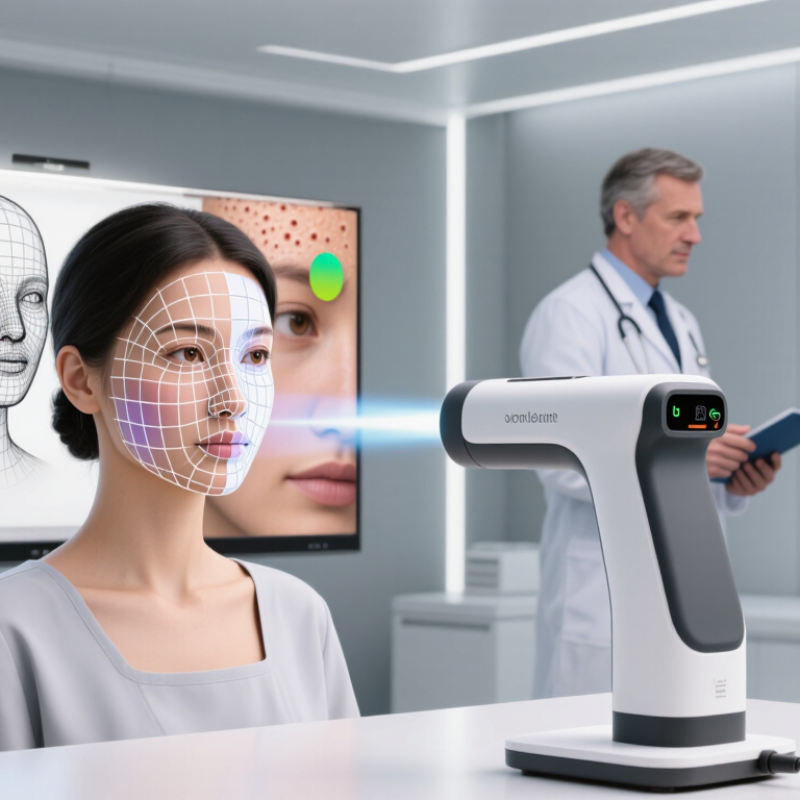
Table of Contents [Hide]
What a 3D Skin Scanner Measures
Why Do Buyers Choose a 3D Skin Scanner?
What a 3D Skin Scanner Measures
A 3D skin scanner captures the skin’s surface from several angles and builds a detailed visual map. It can show texture, pore appearance, fine lines, and changes in facial contours. Tiny differences matter. The image may also record visible color patterns, such as uneven pigmentation or redness. These details can help a trained professional compare areas of the face more consistently than a quick glance in a mirror.
Some systems use additional sensors to estimate features such as oiliness or hydration. These readings depend on the device and should not be treated as universal measurements. A scanner does not reveal every cause of a skin concern, and an image alone cannot diagnose a medical condition. It shows what its sensors can capture under the conditions used.
For useful comparisons, lighting, camera distance, and facial position should stay consistent between scans. A score may look precise, yet small changes in room light or skin moisture can affect the result. That limitation is easy to overlook. Scans are most helpful when interpreted alongside a person’s concerns and, when needed, an assessment by a qualified skin professional.
| Measurement Area | What Is Measured | Typical Output | Why Buyers Find It Useful |
|---|---|---|---|
| Facial surface geometry | The shape and relative position of visible facial surfaces captured from multiple views. | Three-dimensional facial model and surface coordinates. | Helps visualize facial contours and compare changes in shape over time. |
| Wrinkle topography | Visible wrinkle features represented by their surface shape, including relative depth, length, or area where supported by the device. | Surface maps, measurements, or image-based comparisons. | Provides a more structured way to review visible texture changes than a single flat photograph. |
| Skin surface texture | Small variations in the visible skin surface, depending on the scanner’s resolution and analysis software. | Texture maps or calculated roughness indicators. | Can support consistent visual assessments and progress tracking under comparable capture conditions. |
| Pore appearance | The visible size, shape, or distribution of pores in captured skin images, when the imaging system can resolve them. | Image overlays or pore-related counts and indicators. | Offers a repeatable visual reference for cosmetic consultations; results depend on image quality and analysis methods. |
| Facial contours and volume distribution | Differences in surface contour across facial regions, rather than internal tissue or underlying anatomy. | Contour views, regional comparisons, or surface-distance maps. | Helps users explain visible surface changes and compare standardized scans. |
| Before-and-after surface changes | Differences between registered 3D scans captured at separate times. | Overlay images, color-coded distance maps, or regional change summaries. | Makes comparisons easier when lighting, facial expression, positioning, and capture settings are kept consistent. |
| Visible skin color features | Color and tone in photographs, only if the device includes calibrated color imaging; this is separate from 3D surface geometry. | Color images or software-generated visual indicators. | Can add visual context to a consultation, but color readings vary with lighting, calibration, and camera settings. |
| Measurement scope | Capabilities vary by scanner, camera setup, resolution, calibration, and analysis software. A surface scan does not directly measure skin layers beneath the surface or establish a medical diagnosis. | Device-specific measurements and reports. | Buyers should check which features are directly captured, which are software estimates, and how repeatability is validated. |