
Choosing the right Commercial Shelving in 2026 means balancing storage density, access speed, safety, and the realities of daily work. An attractive rack in a product photo may not suit a narrow aisle or a busy stockroom. Retailers often consider gondola shelving for visible displays, while warehouses may need pallet or longspan systems for larger loads. Wire shelving can help airflow and visibility; boltless units can offer flexible storage for lighter goods. Mobile shelving may save floor space, but it can also slow access when several people need items at once. Details matter.
This guide compares common shelving types and explains where each may fit, from shop floors and offices to workshops and distribution spaces. It also covers practical checks: item dimensions, aisle clearance, load ratings, finish, and how often stock changes. A shelf’s stated capacity should be checked against the manufacturer’s specifications and the way weight will be distributed. For fixed or heavily loaded systems, qualified installation advice may be appropriate. There is no universal winner. A system that works neatly for boxed inventory may be awkward for irregular tools or frequently handled products. Even careful planning can miss a small detail, such as a doorway that limits delivery access. The goal is not to buy the most shelving, but to choose a dependable setup that fits the space, products, and staff who use it every day.
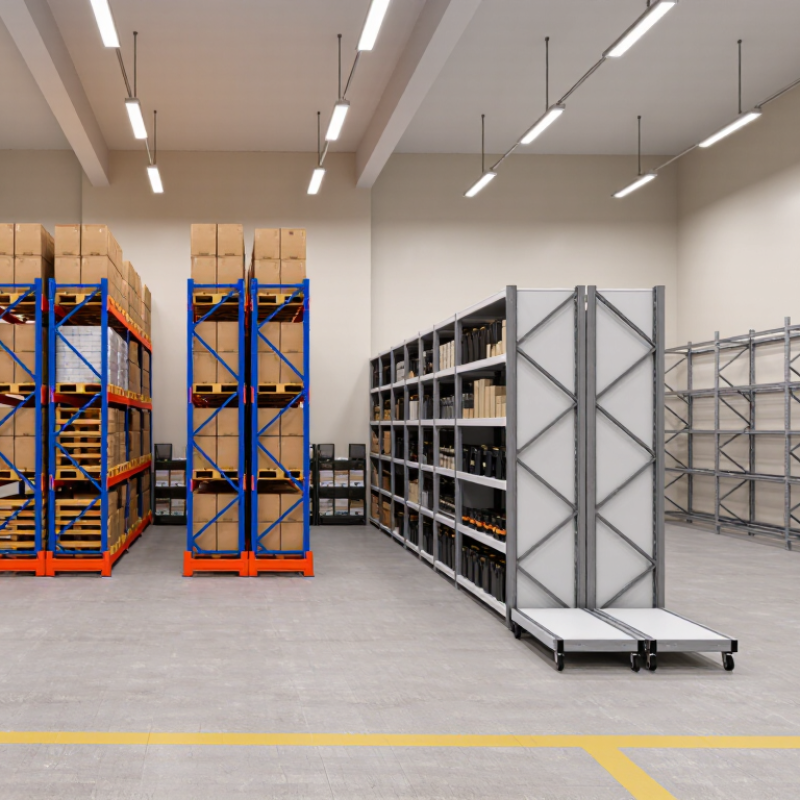
Commercial shelving is a storage system designed for frequent access, heavier use, or changing inventory. It appears in stockrooms, workshops, offices, kitchens, and retail spaces. A shelf can hold cartons, tools, supplies, or display items. The right choice depends on what it must support and how staff move around it.
Common options include adjustable metal shelves, wire shelving, boltless units, and heavy-duty storage racks. Adjustable shelves suit changing stock sizes. Wire shelves allow airflow and make spills easier to spot, while solid shelves can better contain small items. In a stockroom, clear labels and reachable placement can reduce handling time. Check the manufacturer’s stated load capacity, and spread weight evenly; a shelf that looks sturdy is not proof of safe capacity. There is no perfect layout. Aisles that work on paper may feel cramped once carts arrive.
Tips: Measure the floor, doorways, and tallest items before buying. Keep frequently used goods within easy reach, and secure units when required by their design or setting. Recheck shelves after layout changes.
Commercial shelving should match the goods, traffic, and space—not just the available floor area. Pallet racks suit bulky inventory handled by forklifts, while gondola shelving keeps smaller retail items visible and easy to reach. For stockrooms, boltless shelving can support cartons, tools, and seasonal supplies without complex installation. Wire shelving allows airflow and makes spills easier to spot, which can help in food-service storage areas.
Tips: Measure the largest item and the aisle before choosing a system. Check shelf load ratings, and leave room for safe picking. Small details matter.
For archives or compact storerooms, mobile shelving can reduce wasted aisle space, but it needs a level floor and a clear access plan. A fixed unit may be simpler when staff need several shelves open at once. One common mistake is planning around today’s inventory alone. Box sizes change, and busy aisles can quickly feel cramped. There is no universal best type; even a sturdy rack becomes a poor fit if workers cannot reach items safely. Test the layout with real cartons or product samples before ordering.
How Materials and Designs Affect Shelving Performance
Commercial shelving performs best when its material suits the room and its design suits the work. Steel shelving handles demanding storage, but its finish matters in damp or frequently washed spaces. Wire shelves allow airflow and make dust easier to spot. Solid shelves keep small items stable, though they can trap spills. Small details matter. Edge shape, shelf depth, and upright spacing all affect daily access and stability.
Adjustable systems adapt as stock changes, while fixed shelving can feel sturdier for consistent loads. Stainless steel resists corrosion in humid environments, but it may cost more than coated steel. Wood or composite shelves can soften a customer-facing space, yet need care around moisture and heavy goods. Check the manufacturer’s load guidance, and distribute weight evenly. A shelf rated for a certain load is not a reason to stack everything at one point.
Tips: Measure the actual boxes, not just the room. Leave hand clearance near shelf edges, and check that loaded shelves do not obstruct walkways. Revisit the layout after a busy season; the first plan is not always the best one.
Choosing shelving for a commercial space starts with what staff store, move, and retrieve each day. A grocery aisle may need gondola shelving with adjustable shelves and clear product visibility. A stockroom may benefit from heavy-duty steel shelving, while wire shelving can help air circulate around supplies. Long pipes or timber need cantilever racks, not ordinary shelves. Match the system to the load, including its weight and shape.
Measure the space before ordering. Note ceiling height, doorways, columns, aisle width, and the path carts take. Leave room for safe access and routine cleaning. A busy back room may need wider aisles than a quiet storage area. Check each shelf’s stated capacity and account for uneven loads; a heavy box at the edge can create problems even when the total weight seems acceptable. Small details matter.
Start with a layout that reflects real tasks, then test it with staff. A plan can look tidy on paper and still slow down picking. That is easy to miss. Consider modular shelves when stock changes often, or mobile units when floor space is limited and movement can be managed safely. Keep frequently handled items within comfortable reach, and store heavier goods lower. Review the arrangement after a few weeks. The first layout may be wrong.
Representative shelf depths for common commercial shelving types
Shelf depth is a starting point for comparing systems: gondola shelving suits retail displays, wire and boltless shelving work well for general storage, pallet racks accommodate palletized goods, and cantilever racks hold long or bulky items. These are representative dimensions, not universal specifications; confirm the required depth, load rating, and aisle clearance for your space.
Commercial shelving in 2026 is being reshaped by changing assortments, online orders, and pressure to use floor space well. The U.S. Census Bureau reported 2024 e-commerce sales of $1.19 trillion, or 16.1% of total retail sales, up 8.1% from 2023. Backrooms now serve as active picking areas, not just overflow storage. Small shift, big effect. Adjustable shelving and clearly marked locations help teams handle seasonal stock and fulfill orders faster.
MHI’s 2024 Annual Industry Report, produced with Deloitte, found that 55% of surveyed supply-chain leaders expect to increase investment in technology and innovation over the next five years. For shelving, this points toward selective integration: barcode or RFID-compatible locations, connected inventory workflows, and layouts that can change without major reconstruction. Not every shelf needs a sensor. Poor inventory data can still leave an empty facing, even in a highly connected store.
Durability and adaptability are gaining attention, too. Buyers are asking for repairable systems, replaceable components, and materials with recycled content. Yet denser storage is not automatically better. Load ratings, aisle clearance, visibility, and staff reach still matter. A practical mock-up using real cartons can expose awkward reaches that a floor plan misses. That test takes space, but skipping it may cost more.