
Choosing reliable Preschool Classroom Seating manufacturers in China requires more than comparing prices or counting product styles. A suitable chair must support small bodies, active movement, easy supervision, and daily cleaning. It should also fit the classroom’s real dimensions, not just a polished catalog photograph.
Dr. Peter Barrett, a learning-environment researcher and lead author of the HEAD study, reported, “There is a clear relationship between the physical characteristics of classrooms and pupils’ learning progress.” His observation matters here. Seating affects posture, attention, group interaction, and how safely children move between tables. A practical evaluation should examine seat height, rounded edges, material durability, stability, and cleaning performance. Ask for factory photographs, material details, test records, and production samples. Do not rely on promises alone.
The strongest Chinese manufacturers often provide molded plastic chairs, plywood seating, adjustable options, and coordinated tables. Yet “top” is not a universal label. One supplier may excel at custom colors, while another offers stronger quality control or faster sample development. That difference deserves attention. A low-cost chair can become expensive after cracked surfaces, loose joints, or difficult replacement parts appear. Sometimes, buyers overlook the quiet details.
This guide compares manufacturer capabilities through product design, factory experience, safety awareness, customization, communication, and after-sales support. It also recognizes an uncomfortable truth: even a well-made chair can fail when its size does not match children or classroom routines. Careful selection remains essential.
What Is Preschool Classroom Seating?
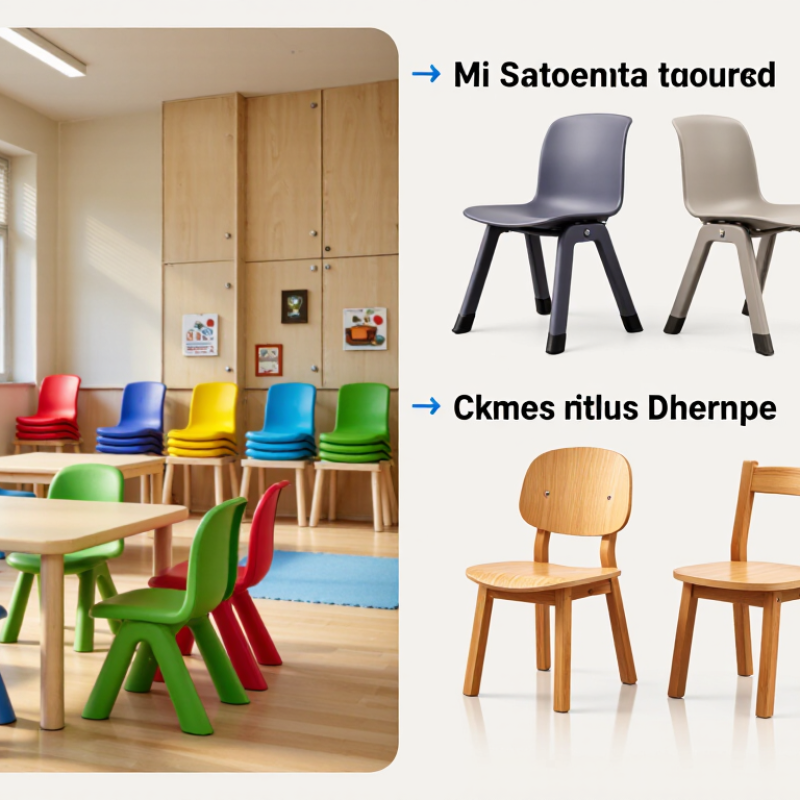
Preschool classroom seating is more than a small chair and table. It is a flexible system supporting movement, play, group discussion, eating, and quiet work. Good seating matches children’s body proportions, rather than copying adult furniture. Feet should touch the floor, knees should bend comfortably, and table edges should not press against a child’s stomach.
The World Health Organization’s 2019 guidelines recommend at least 180 minutes of physical activity daily for children aged three to four. This finding challenges fixed seating layouts. Children need safe opportunities to stand, squat, turn, and change positions. Lightweight chairs, rounded edges, stable bases, and washable surfaces support these routines. The NAEYC Developmentally Appropriate Practice position statement also emphasizes accessible, child-centered learning environments. In practice, adjustable tables and mixed-height seating can serve different bodies and activities.
Details matter. A chair that looks sturdy may still be too deep for a smaller child. A smooth surface may become slippery after cleaning. I would not claim that one seating style fits every preschool. Classroom size, local climate, cleaning habits, and teaching methods change the decision. Manufacturers in China should provide clear dimensions, tested materials, load information, and replacement-part support. A thoughtful sample trial with children and teachers can reveal problems that drawings miss.
Preschool classroom seating includes child-sized chairs and tables designed to support safe posture, group learning, creative activities, and flexible classroom layouts. Seat height should be matched to children’s body size rather than selected by age alone.
How to read the chart: The displayed seat heights are based on the size categories defined in the EN 1729 school furniture standard. For preschool environments, smaller seating sizes generally support younger children, while larger sizes can accommodate older preschoolers. Adjustable furniture, rounded edges, stable bases, easy-clean surfaces, and lightweight construction are also important selection criteria.
A reliable manufacturer should provide clear drawings, material specifications, and production records. Check seat height, edge radius, stability, and weight limits against your local classroom requirements. Ask whether plywood, plastic, paint, and adhesives have recent safety test reports. Do not accept a certificate image without a verifiable report number. Ask for evidence.
Factory experience matters beyond years listed online. Request photos of cutting, sanding, assembly, and final inspection areas. A capable team should explain how it controls splinters, loose joints, sharp corners, and uneven finishes. Review a physical sample before approving bulk production. Sit on it, move it across the floor, and inspect the underside. Small defects often appear there. That matters.
Evaluate communication with practical questions about minimum order quantities, sample fees, packaging, lead times, and replacement procedures. The manufacturer should identify who handles quality checks and how problems are recorded. Independent inspection can verify carton counts, dimensions, colors, and random samples before shipment. However, inspection is not a substitute for strong factory controls. A polished catalog can still hide weak process discipline. In my experience, written answers are useful, but repeated delays or vague replies deserve attention. Some buyers focus too heavily on price and overlook classroom durability. That choice may create higher replacement costs later. References from comparable education projects can reveal whether promised schedules and product performance match daily reality.
China-based preschool seating manufacturers supply chairs and tables for schools, daycare centers, and education distributors worldwide. Leading suppliers often combine molded plastic, plywood, and metal fabrication within one production network. This may shorten sampling time, but it does not guarantee quality. A dependable manufacturer should provide material specifications, load-testing records, factory audit information, and clear production photos. Ask how edges are rounded, joints are reinforced, and surfaces resist frequent cleaning. In a busy classroom, chairs face spills, dragging, and uneven floors every day. Small details matter.
Tips: Request a physical sample before placing a large order. Check its balance on a flat floor. Measure seat height against children’s age groups. Also inspect screws, welds, plastic thickness, and odor after unpacking. A sample may look excellent, yet production consistency can still be weak.
Experienced buyers should discuss classroom layouts, stacking needs, color matching, packaging, and replacement parts with the manufacturer. China-based suppliers may support custom dimensions, logo-free designs, and bulk production, but every promise needs written confirmation. Ask for inspection checkpoints before shipment, including surface checks and random load tests. Do not rely only on attractive catalog images. I have seen practical details overlooked, especially chair feet and carton protection. That mistake can create noise, scratches, and unnecessary returns. A careful supplier will answer technical questions clearly and accept reasonable quality checks.
A practical benchmark table for evaluating preschool classroom seating suppliers without displaying company or brand information.
| Evaluation Dimension | Factual Benchmark or Requirement | Why It Matters for Preschool Classrooms | Recommended Verification |
|---|---|---|---|
| Seat-height range | Common preschool chair sizes include approximately 260 mm, 310 mm, 350 mm, and 380 mm seat heights. These dimensions correspond to the lower chair-size categories used in EN 1729-1. | Correct seat height supports stable foot placement, comfortable posture, and easier movement for young children. | Request a dimensioned drawing and measure the finished seat height from the floor to the highest point of the usable seat surface. |
| Ergonomic dimensions | EN 1729-1 addresses functional dimensions for chairs and tables used in educational environments, including seat height, seat depth, seat width, and backrest dimensions. | A chair can have the correct height but still be uncomfortable if the seat depth or backrest angle is unsuitable. | Compare the supplier’s technical drawing with the required classroom table height and the children’s measured body dimensions. |
| Safety and stability | EN 1729-2 provides safety requirements and test methods for educational chairs and tables, including stability, strength, and durability considerations. | Stable construction reduces tipping, structural failure, and injury risks during ordinary classroom use. | Obtain a test report for the exact model, including the tested configuration, product dimensions, test date, and laboratory details. |
| Edges and accessible parts | Preschool furniture should have smooth, rounded, or otherwise softened accessible edges, with no exposed sharp points, burrs, or hazardous protrusions. | Children frequently touch, climb around, and move close to classroom seating. | Inspect samples manually and check corners, underside surfaces, screw heads, welds, plastic flash, and end caps. |
| Typical construction materials | Common configurations use molded polypropylene or polyethylene seats, plywood or laminated wood panels, powder-coated steel frames, and injection-molded feet or glides. | Material selection affects weight, cleanability, impact resistance, corrosion resistance, and service life. | Request material specifications, coating information, thickness data, and samples from the production batch. |
| Chemical and surface compliance | Applicable requirements depend on the destination market and product classification. EN 71-3 is relevant to toys and toy-like products, but it should not automatically be treated as a complete furniture standard. | Paints, plastics, adhesives, and coatings may require different chemical testing depending on the intended market. | Specify the destination country before testing and require reports that identify the exact materials and finished product. |
| Load capacity | There is no single universal load rating for every preschool chair. The safe working load must be established through the relevant design and testing process. | A clear, model-specific load rating helps prevent misuse and supports safer purchasing decisions. | Ask for the tested load, test method, safety factor where applicable, and written usage limitations for each chair size. |
| Cleaning and hygiene | Non-porous molded plastic, sealed laminate, and properly finished metal surfaces are commonly selected for routine classroom cleaning. | Smooth, sealed surfaces reduce soil retention and simplify daily maintenance. | Request cleaning-agent compatibility information and test the surface for staining, discoloration, peeling, and corrosion. |
| Noise and floor protection | Replaceable rubber, TPE, or nylon glides are commonly used to reduce floor scratching and chair movement noise. | Appropriate glides help protect classroom floors and reduce disruptive sound during group activities. | Check glide attachment, replacement availability, compatibility with the floor type, and performance after repeated movement. |
| Quality-control documentation | Useful documentation includes technical drawings, bills of materials, inspection records, test reports, material declarations, and packaging specifications. | Document control makes it easier to confirm that mass production matches the approved sample. | Match every report and inspection record to the model number, revision, production date, and approved sample. |
| OEM, packaging, and logistics | Minimum order quantities, production lead times, carton dimensions, stackability, and shipping terms are commercial variables rather than fixed industry standards. | Packaging efficiency and stable replenishment planning can significantly affect the delivered cost of classroom seating. | Compare quotations using the same specifications, Incoterm, packaging method, inspection level, spare-parts policy, and delivery schedule. |
Preschool classrooms need seating that supports movement, comfort, and safe learning. Common products include child-sized chairs, stackable chairs, stools, benches, and adjustable tables with matching seats. Chairs with low backs help young children sit independently. Stools work well in art corners and reading areas. Benches can create flexible group seating, but they need rounded edges and stable feet.
Manufacturers commonly use molded polypropylene, beechwood, plywood, steel, and powder-coated metal. Polypropylene is lightweight and easy to clean after paint or snack spills. Solid wood feels warm and resists daily classroom use when properly sealed. Plywood can reduce weight, although weak edge finishing may cause early damage. Steel frames add strength, but exposed metal can feel cold and become noisy on hard floors. Soft foam seats improve comfort, yet fabric may require more careful cleaning.
When comparing China preschool seating manufacturers, inspect material thickness, joint construction, surface coatings, and load-test records. Ask for samples before placing a large order. A sample often reveals wobbling, rough edges, or uncomfortable seat angles. Check whether dimensions match children’s age groups and local classroom standards. Reliable suppliers should provide clear specifications, production photos, packaging details, and quality inspection documents. No material is perfect. Some lightweight chairs are easier to move but may slide during active use. A practical choice balances safety, durability, cleaning needs, storage space, and the daily behavior of real children.
China Top Preschool Classroom Seating Manufacturers?
How to Select the Right Chinese Manufacturer
Selecting a Chinese preschool seating manufacturer requires more than comparing catalog prices. I would begin with factory evidence, not attractive product images. Ask for recent photos of the production line, material specifications, and quality-control records. A capable supplier should explain how it rounds edges, strengthens joints, and prevents sharp screw exposure. Small details matter when children move quickly.
Request a physical sample before discussing a large order. Place it on a hard classroom floor. Check wobbling, seat height, surface smoothness, and cleaning resistance. Measure every dimension against your classroom plan. Some suppliers offer excellent samples but change materials during mass production. This is where written specifications and pre-shipment inspections become valuable. Ask whether testing covers load strength, flammability, chemical emissions, and applicable destination-market requirements.
Communication also reveals manufacturing discipline. Can the contact answer technical questions clearly? Do drawings show tolerances and packaging protection? Confirm production capacity, lead time, replacement parts, and payment terms in writing. I once focused too heavily on unit cost and overlooked carton damage during transport. That mistake changed my evaluation method. Now I examine packaging photos, inspect pilot batches, and keep approval samples. The cheapest quotation is rarely the complete cost. Be cautious when answers remain vague. Reliability needs evidence.