
What Are the Top 10 Types of Racks and Rigs?
Choosing the right racks and rigs affects safety, training flow, storage, and long-term value. This guide examines the top 10 types of Racks Rigs, from power racks and squat stands to wall-mounted rigs and Olympic lifting platforms. Each design serves a different training environment. A six-post power rack may suit a busy performance facility, while a compact folding rack can fit a home garage with limited floor space.
Industry data supports this growing interest. The Health & Fitness Association reported 72.9 million Americans used fitness facilities in 2023. The American College of Sports Medicine also continues to rank strength-focused training among major fitness trends. These findings suggest stronger demand for adaptable equipment, but market popularity does not guarantee suitability. A rack must match ceiling height, flooring, load capacity, athlete experience, and available supervision.
Strength coach Dan John often says, “The goal is to keep the goal the goal.” That principle matters here. A commercial gym may need modular Racks Rigs with multiple pull-up stations, storage arms, and adjustable safety systems. A beginner may need less equipment and clearer movement space. Small details matter. Bolts should feel secure. J-cups should move smoothly. Uprights should remain stable during heavy lifts. The comparison is not perfect, and some categories overlap. Still, reviewing these ten types creates a practical starting point for safer, more informed equipment decisions.
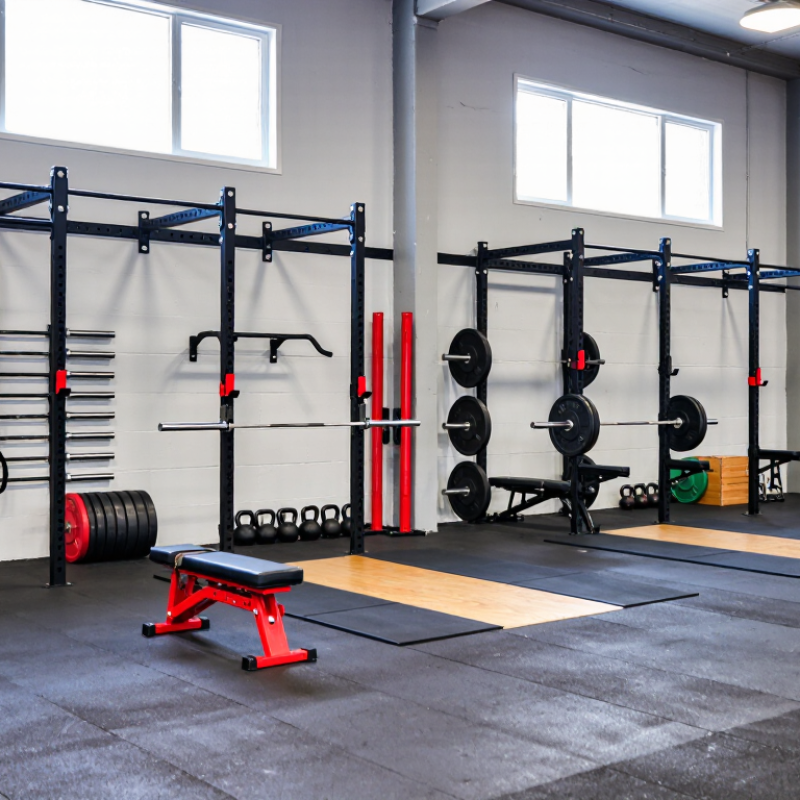
Table of Contents [Hide]
Defining Racks and Rigs: Purpose, Structure, and Key Differences
What Are the Top 10 Types of Racks and Rigs?
Defining Racks and Rigs: Purpose, Structure, and Key Differences
A rack is usually a fixed frame that stores, supports, or organizes items. Its design favors stability, access, and efficient use of vertical space. Common rack types include pallet racks, cantilever racks, drive-in racks, push-back racks, carton-flow racks, mobile racks, archive racks, server racks, pipe racks, and equipment racks. Each type solves a different practical problem. For example, cantilever arms support long materials, while server racks protect dense electronic equipment. In warehouse work, I have seen poor aisle planning reduce a rack’s real value. The frame was strong, but daily access became frustrating.
A rig is more task-focused. It combines frames, mounts, cables, platforms, or adjustable parts for a specific operation. Storage rigs, lifting rigs, camera rigs, lighting rigs, and training rigs show this wider purpose. A rig may move, rotate, suspend, or control equipment. Its structure often changes with the job. A rack mainly holds. A rig usually performs.
The boundary is not perfectly clean. A rack can become a rig when it gains moving parts or active equipment. A rig can also include racks as stable support sections. Safety depends on more than appearance. Engineers check load capacity, connection points, floor conditions, balance, and maintenance records. Labels matter. So do real measurements. I once underestimated clearance around a loaded frame, and the design needed revision. That mistake was useful. Function, structure, and operating conditions must be judged together.
What Are the Top 10 Types of Racks and Rigs? - Defining Racks and Rigs: Purpose, Structure, and Key Differences
| No. | Rack or Rig Type | Primary Purpose | Typical Structure | Common Dimensions | Typical Load or Capacity | Key Difference |
|---|---|---|---|---|---|---|
| 1 | Two-Post Network Rack | Mounting patch panels, switches, routers, and lightweight telecommunications equipment. | Two vertical mounting rails connected by a top frame and base; usually open on all sides. | Standard 19-inch mounting width; commonly 24U to 45U high; approximately 450 to 600 mm deep. | Approximately 90 to 270 kg, depending on the frame and floor anchoring. | Provides easy cable access but less support and protection than a four-post cabinet. |
| 2 | Four-Post Server Rack | Housing servers, storage systems, power distribution units, and other deep computing equipment. | Four vertical posts with adjustable front and rear mounting rails; may be open-frame or enclosed. | 19-inch equipment width; commonly 42U high; about 600 mm wide and 800 to 1,200 mm deep. One rack unit equals 44.45 mm. | Approximately 500 to 1,500 kg for a properly anchored frame or cabinet. | Adjustable depth and four-point support make it suitable for heavy, deep equipment. |
| 3 | Enclosed Network Cabinet | Protecting network equipment from dust, accidental contact, and unauthorized access. | Four-post steel enclosure with doors, removable side panels, cable openings, and ventilation provisions. | Usually 600 mm wide; commonly 600 to 1,000 mm deep; frequently 24U to 47U high. | Approximately 300 to 1,000 kg, depending on the cabinet design and accessories. | Offers physical protection and controlled airflow but requires more floor space than an open rack. |
| 4 | Wall-Mount Rack | Installing compact network, security, telecommunications, and control equipment where floor space is limited. | Small enclosure or swing-frame cabinet attached to a structural wall using a mounting plate or brackets. | Commonly 6U to 18U high; approximately 450 to 600 mm wide and 300 to 600 mm deep. | Usually 30 to 100 kg, limited by the enclosure and wall construction. | Uses vertical wall space instead of floor space and is intended for lighter equipment. |
| 5 | Open-Frame Rack | Providing economical equipment mounting with unrestricted access for installation and maintenance. | Two- or four-post metal frame without doors or side panels; cable management may be added separately. | 19-inch mounting width; typically 12U to 45U high; commonly 300 to 600 mm deep. | Approximately 90 to 450 kg, depending on the number of posts and anchoring method. | Usually costs less and dissipates heat well, but provides minimal environmental protection. |
| 6 | Audio-Visual Equipment Rack | Organizing amplifiers, media players, signal processors, control units, and video equipment. | 19-inch rack enclosure or furniture-style frame with ventilation, cable routing, shelves, and sometimes a removable rear panel. | Commonly 2U to 44U high; approximately 450 to 600 mm wide and 400 to 600 mm deep. | Approximately 100 to 600 kg, depending on shelves, amplifiers, and mounting hardware. | Prioritizes ventilation, cable access, and user operation rather than high-density server installation. |
| 7 | Instrument Rack | Mounting measurement, laboratory, automation, and electronic test instruments in a standardized format. | Rigid 19-inch frame or cabinet with horizontal rails, shelves, slide supports, and optional cable or power modules. | 19-inch mounting width; instrument heights commonly range from 1U to 6U; cabinet depth is often 400 to 800 mm. | Approximately 100 to 800 kg for a complete floor-standing rack. | Designed for precise equipment integration and service access rather than general storage. |
| 8 | Selective Pallet Rack | Storing palletized goods in warehouses while allowing direct access to each pallet position. | Upright frames, horizontal beams, base plates, braces, and optional wire decking or pallet supports. | Typical frame depth is 900 to 1,100 mm; beam lengths are often 2,400 to 2,700 mm; heights commonly reach 3,000 to 9,000 mm. | Approximately 1,000 to 4,500 kg per beam level, subject to engineering and load configuration. | Designed for pallet storage and forklift access, not for mounting electronic equipment. |
| 9 | Cantilever Rack | Storing long, bulky, or irregular materials such as pipes, timber, profiles, and sheet products. | Vertical columns with horizontal arms projecting from one or both sides; arms may be adjustable. | Arm lengths commonly range from 600 to 1,200 mm; column heights often range from 2,000 to 6,000 mm. | Approximately 250 to 1,500 kg per arm, depending on the arm span and column design. | Has no front uprights between storage levels, making long-item loading easier than with pallet racks. |
| 10 | Equipment Test Rig | Holding, operating, and measuring components or systems during testing, calibration, research, and validation. | Purpose-built frame, baseplate, fixtures, actuators, sensors, power systems, and data-acquisition equipment. | No universal size; benchtop rigs are often 600 to 1,200 mm wide, while floor rigs may exceed 3,000 mm in length. | Highly application-specific; capacity may range from a few kilograms to several tonnes. | Unlike a storage rack, a rig is an active test platform designed to apply, control, or measure forces and conditions. |
Note: Dimensions and load figures are representative industry ranges rather than universal specifications. Actual capacity depends on material, span, anchoring, seismic requirements, ventilation, equipment weight distribution, and applicable design standards. Electronic equipment racks commonly follow 19-inch mounting conventions defined by EIA-310 or IEC 60297, while storage racks and test rigs are normally engineered for their specific application.