
China is an important sourcing base for silicone hoses used in automotive cooling, food-processing equipment, medical devices, and industrial systems. Yet “top manufacturer” can mean different things. A polished catalog is not proof of consistent production.
This guide compares ten Chinese suppliers through practical criteria: product range, material options, customization, production capability, quality documentation, and export experience. Buyers should ask about operating temperature, pressure, inner-diameter tolerances, reinforcement, and the intended application. A hose for a compact engine bay may need different wall thickness and bend behavior from a long industrial transfer line. Small details matter.
Reliable comparisons require evidence. Request current test reports, traceability information, sample pieces, and clear explanations of inspection steps. Check whether certifications apply to the specific factory and product; a logo may not cover every hose. A qualified silicone hose manufacturer should explain material grades and limitations without treating every application as interchangeable. That conversation can reveal more than a brochure.
No ranking can replace your own technical review. Supplier data may vary, and public information is sometimes incomplete. That deserves a second look. The profiles ahead are a starting point, not a guarantee of fit. Compare specifications, confirm lead times and minimum order quantities, and test samples under realistic conditions before placing a large order. This approach can help narrow the field while keeping performance, consistency, and communication in view.
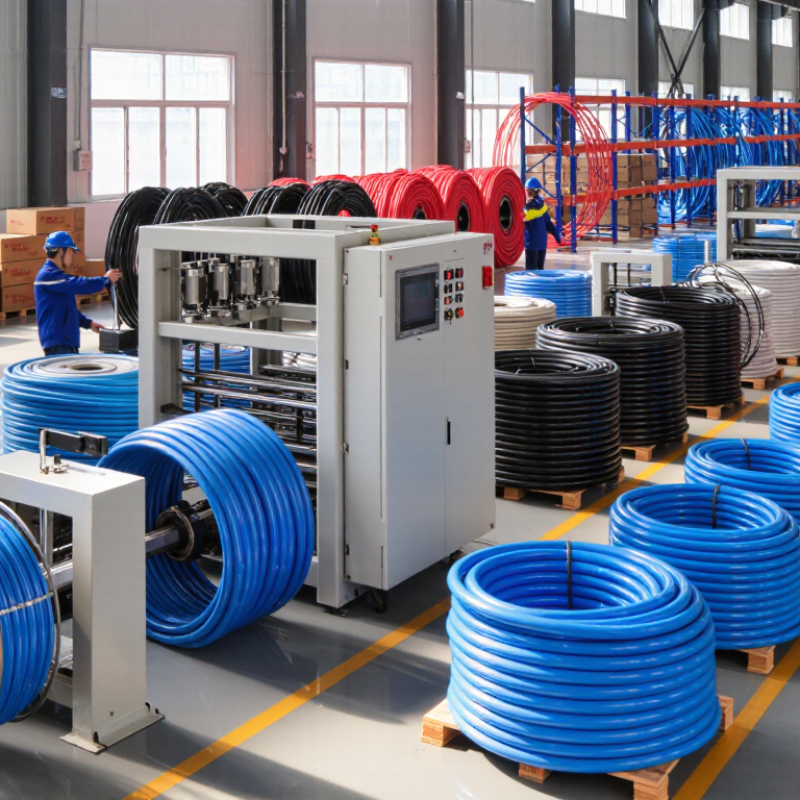
Silicone hoses made in China range from simple straight tubes to molded elbows, reducers, and multi-ply assemblies. Reinforced versions use polyester or aramid fabric to resist pressure and collapse. For hot engine bays, manufacturers may select higher-temperature silicone compounds; fluorosilicone inner layers can improve resistance to oils and fuels. The right construction depends on temperature, pressure, bend radius, and the fluid carried. Small details matter.
Production commonly starts with compound mixing, followed by extrusion or mandrel forming. Workers apply reinforcement layers, shape bends, and vulcanize the hose under controlled heat. Post-curing and dimensional checks help stabilize performance. China’s automotive scale provides useful context: the China Association of Automobile Manufacturers reported 31.28 million vehicles produced in 2024. That figure is not a silicone-hose sales measure, but it indicates the size of a major application sector. Buyers should compare wall thickness, burst-pressure results, and aging-test conditions, not just appearance. Supplier specifications can be hard to compare. Test methods and sample preparation may differ, so a neat-looking hose is not proof of consistent service life.
Choosing a silicone hose manufacturer takes more than comparing quoted prices. Ask how silicone compounds are selected, mixed, and checked between batches. A capable supplier should explain temperature ranges, pressure limits, reinforcement options, and fluid compatibility. Clear answers matter. Compare technical data sheets and test records with your actual operating conditions. A hose near an engine may face heat cycles, vibration, oil mist, and tight bends.
Review production capability, not just catalog breadth. Check how inner diameter, wall thickness, and cut length are measured; small variations can complicate installation. Ask whether samples come from regular production and whether inspection results are traceable to a batch. Useful evidence includes dimensional checks, pressure tests, and documented material controls. A polished sample is not enough. It may hide inconsistent production.
Communication deserves equal weight. Can engineers discuss failure modes, tooling changes, and realistic lead times without vague promises? If possible, test a sample under representative heat and pressure before approving a large order. Keep records of questions, revisions, and agreed tolerances. One caution: a checklist cannot replace hands-on testing, and even a capable factory may need time to adjust. Allow room for that.
Choosing among the top 10 silicone hose manufacturers in China requires more than comparing prices. A capable supplier should explain material grades, production controls, and how each hose suits its intended use. Ask for specifications covering inner diameter, wall thickness, temperature range, and pressure requirements. Small differences matter. A hose that looks smooth may still vary in thickness or flexibility.
For a fair comparison, request recent test reports and samples from the same production process used for bulk orders. Check whether the manufacturer can provide traceable material records, dimensional inspection results, and clear quality procedures. Reinforced hoses, for example, need consistent placement of fabric or wire layers. Ask how defects are identified, not just whether inspection occurs. Details can be overlooked.
The strongest candidates among China’s leading manufacturers should answer technical questions directly and support claims with verifiable documents. Factory visits or live production reviews can reveal practical details, such as storage conditions and how operators handle finished hoses. Compare communication, customization ability, sample consistency, and delivery planning alongside unit cost. A ranking is only useful when its criteria are transparent; without comparable evidence, “top 10” can be a rough guide, not a guarantee.
This company-neutral table lists ten practical criteria for evaluating silicone hose manufacturers. It does not assign rankings or make unsupported claims about individual suppliers. Applicable standards depend on the hose design and end use; confirm requirements with the supplier and the standards publisher.
| No. | Evaluation Dimension | What to Verify | Relevant Standard or Method | Useful Evidence |
|---|---|---|---|---|
| 1 | Quality management | Whether the supplier operates a documented quality management system. | ISO 9001 | Current certificate, issuing body, scope, and validity dates. |
| 2 | Automotive quality systems | For automotive projects, whether the production site has the required automotive quality-system certification. | IATF 16949 | Certificate and confirmation that its scope covers the relevant site and activities. |
| 3 | Material identification | Whether silicone compound grades and material properties are specified and traceable. | ASTM D2000, where applicable to the agreed material specification | Material data sheet, compound identification, and batch records. |
| 4 | Tensile properties and elongation | Whether tensile strength and elongation are tested against the agreed product specification. | ISO 37 | Test reports identifying the sample, method, results, and acceptance limits. |
| 5 | Tear resistance | Whether tear strength is evaluated using a defined specimen and test method. | ISO 34-1 | Test results and the specified specimen type. |
| 6 | Compression set | Whether compression-set performance is measured at agreed conditions relevant to the application. | ISO 815-1 | Report stating temperature, duration, specimen, and measured result. |
| 7 | Resistance to fluids | Whether exposure testing uses the actual fluids and conditions specified for the application. | ISO 1817 | Before-and-after measurements, test-fluid details, temperature, and exposure time. |
| 8 | Dimensional consistency | Whether dimensions and tolerances are documented for the specified hose construction. | ISO 3302-1, where applicable to molded or extruded rubber products | Dimensioned drawing, tolerance table, and inspection records. |
| 9 | Production traceability | Whether finished hoses can be linked to production batches and inspection records. | Defined project or customer requirements | Lot codes, batch records, inspection logs, and a documented nonconformance process. |
| 10 | Application validation | Whether the finished hose is validated against the buyer’s pressure, temperature, dimensions, and service-life requirements. | Application-specific test plan agreed by buyer and supplier | Approved specification, test plan, results, and sample approval records. |
When comparing ten Chinese silicone hose manufacturers, look beyond catalog breadth. Check whether they produce straight lengths, elbows, reducers, reinforced connectors, and custom molded parts. Ask for operating temperature ranges, pressure ratings, wall thickness tolerances, and reinforcement details. A clear datasheet matters. So does a sample that matches it.
Certifications can help assess process controls, but their scope needs checking. Verify the issuing body, certificate number, validity period, and covered production site. For automotive, food-contact, or industrial use, request material declarations and test reports relevant to the application. Do not treat a generic quality certificate as proof that every hose meets a specific requirement. Small detail. Big difference.
Production capability is visible in practical evidence: mixing and curing equipment, mold inventory, in-process inspection, and batch traceability. Ask how the factory handles color consistency, dimensional variation, and urgent repeat orders. A capable supplier should explain lead times and minimum order quantities without vague promises. Compare pilot samples with drawings, then inspect a production batch before committing. No supplier is flawless; even a strong factory may have limits in custom tooling or seasonal capacity. That deserves an honest conversation.
Choosing a silicone hose manufacturer in China starts with your actual operating conditions. Define temperature range, working pressure, pressure surges, and the fluid or gas involved. A hose beside an engine, for example, may face heat, vibration, oil mist, and tight bends at once. Ask which silicone compound and reinforcement suit those conditions, rather than relying on a general product description. Details matter. For vacuum lines, confirm resistance to collapse; for pressurized lines, check reinforcement and pressure-test data. A neat finish alone proves little.
Request a drawing, material specification, and recent inspection records for the exact hose type. Check whether the manufacturer controls inner diameter, wall thickness, hardness, and curing conditions across production batches. A first sample should be measured and tested in your own assembly, especially at bends and connection points. Test it yourself. If your application requires specific compliance, verify current certificates and test reports for the material and production site, not just a broad claim. Compare suppliers using the same specifications and questions. Price and lead time matter, but so does how clearly a supplier explains limits. Some compromises remain; documenting them is better than assuming every hose will perform perfectly.