
China’s large steel sector makes it a significant source of pipe-processing equipment. The World Steel Association’s World Steel in Figures 2025 reports that China produced about 1.005 billion tonnes of crude steel in 2024. That figure shows industrial scale, not demand for any single machine. Buyers still need to assess equipment against their own pipe materials, diameters, and production volumes.
A Pipe end Chamfering Machine prepares pipe edges for welding, fitting, or further processing. In a busy workshop, the difference can be visible: consistent bevels, fewer rough edges, and less manual finishing. Yet published specifications do not tell the whole story. Setup time, tooling changes, operator access, and after-sales support can matter just as much. Small details. Real consequences.
This guide introduces ten manufacturers in China and offers a practical basis for comparison. It considers machine range, stated capabilities, customization, service information, and available company credentials. The list should not be treated as a certified industry ranking; company visibility and product offerings change. A polished catalog can look convincing, but it cannot replace a test cut, verified references, or a clear warranty. Some details may also be difficult to confirm from public information. That is worth keeping in mind. Use the shortlist to frame questions, then compare quotations and machine performance against your actual production requirements.
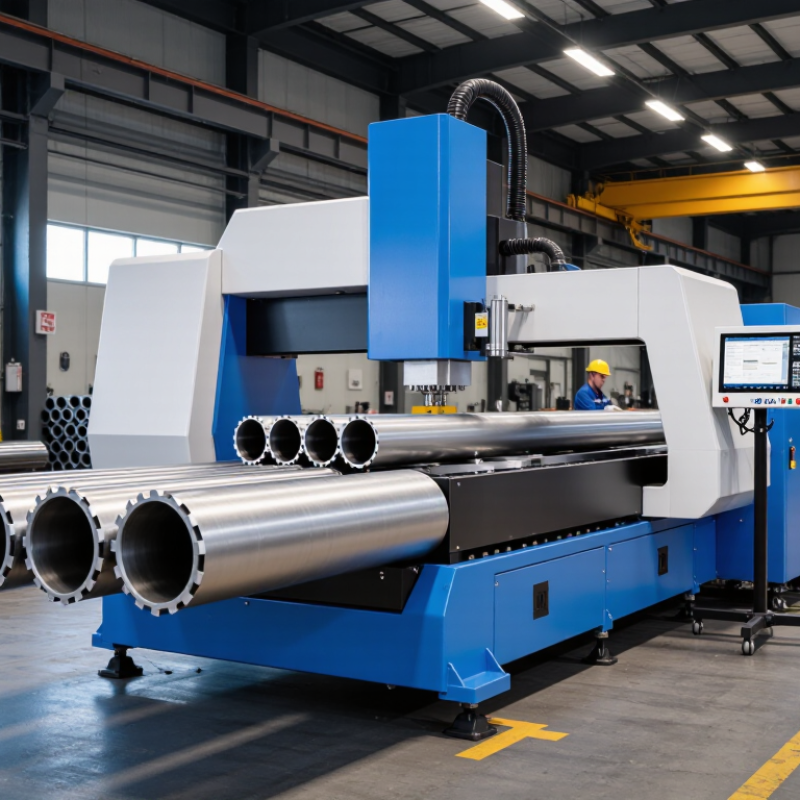
A pipe end chamfering machine prepares the end of a pipe by cutting a sloped edge, or bevel. This removes sharp burrs and creates a cleaner surface for welding, fitting, or assembly. Depending on the design, the machine may hold the pipe still while a cutting head rotates, or rotate the pipe against a fixed tool. Common parts include a clamp, cutting head, feed mechanism, and adjustable tool holder.
The operator selects a suitable cutter and sets the chamfer angle and depth to match the job. A well-adjusted setup can produce a consistent edge across many pipes. It can also reduce hand filing and save preparation time.
Small details matter. A loose clamp may cause vibration, while a worn cutter can leave a rough or uneven bevel. Pipe diameter, wall thickness, and material all affect the setup, so one setting will not suit every task.
The real workshop setup is rarely as tidy as a catalog diagram. Check the first cut with a gauge or visual inspection, then adjust if needed.
Wear eye protection, secure the workpiece, and keep hands clear of moving parts. Even a simple machine needs careful operation.
Pipe end chamfering machines prepare tube edges for welding, threading, or assembly. Manual units suit occasional work and small pipes. Operators rotate a cutter by hand, so consistent pressure matters.
Portable machines can reach pipes already installed, though setup space may be tight. For steady production, pneumatic or hydraulic models reduce operator effort.
CNC and automatic machines add repeatable feed and angle control.
Key features to compare include pipe-diameter range, chamfer angle, cutting-head design, clamping method, and adjustment time. A firm clamp limits vibration; otherwise, the edge may come out uneven. Look for clear controls and accessible cutting tools, especially when crews change pipe sizes often.
Some machines handle stainless steel, while others are better suited to softer metals. Check the stated capacity against the actual wall thickness, not just the outside diameter.
Small details matter. A clean, burr-free edge can make later fitting easier, but no machine removes the need to inspect each cut.
In practice, throughput figures can be optimistic when loading and tool changes are included. Choose based on the material, work volume, and available maintenance skills.
China Top 10 Pipe End Chamfering Machine Manufacturers?
How to Evaluate Chinese Manufacturers
A useful evaluation starts with your own pipe dimensions, material, and production target. Ask each manufacturer to process a sample using comparable settings. Inspect the cut for burrs, consistent bevel angles, and heat marks. Request measured cycle times, not just estimated output. Numbers can mislead. Confirm whether the quoted capacity applies to your pipe’s wall thickness and diameter. A machine that performs well on thin steel may struggle with heavier sections.
Check the machine’s frame, clamping method, tooling access, and adjustment range. Ask for operating and maintenance manuals, a parts list, and clear warranty terms. If possible, watch a live test and verify safety guards and emergency stops. Speak with recent customers who process similar materials. A polished brochure is not proof. Factory visits can help, though a short visit may not reveal long-term service quality. I would keep that limitation in mind.
Tips: Send a written test specification to every supplier. Include pipe size, material, bevel angle, and acceptable finish. Compare the same results across quotes, then clarify what installation, training, and spare parts cost. Keep answers in writing.
Use these ten evaluation criteria to compare suppliers. This is a due-diligence checklist, not a verified manufacturer ranking. Record and verify each supplier’s actual results before making a decision.
| No. | Evaluation Dimension | What to Check | Evidence to Request | Buyer Record |
|---|---|---|---|---|
| 1 | Workpiece range | Confirm the machine’s supported pipe outside diameter, wall thickness, material, and length against your parts. | A written capacity sheet and a trial using representative workpieces. | Record verified limits |
| 2 | Chamfer quality | Check the specified chamfer angle, width, edge condition, and consistency across parts. | Sample parts, measurement records, and the agreed acceptance criteria. | Record measured results |
| 3 | Output and cycle time | Assess cycle time under defined material, dimensions, tooling, and loading conditions. | A timed production trial with the test conditions documented. | Record trial throughput |
| 4 | Tooling and changeover | Check tool availability, expected tool life, replacement procedure, and changeover requirements. | Tooling list, replacement instructions, and quoted consumable costs. | Record costs and changeover time |
| 5 | Machine configuration | Review clamping, feeding, control, guarding, and any required integration with existing equipment. | Configuration drawings, component specifications, and interface details. | Record confirmed scope |
| 6 | Safety and compliance documents | Identify applicable requirements for the destination market and verify documents for the offered machine configuration. | Risk assessment, electrical documentation, and relevant conformity records where applicable. | Record documents checked |
| 7 | Quality control and traceability | Review inspection procedures for assembly, testing, and critical purchased components. | Inspection checklist, test report, and component documentation for the proposed machine. | Record evidence reviewed |
| 8 | Service and spare parts | Confirm support channels, response arrangements, spare-part availability, and service coverage for your location. | Written service terms, spare-parts list, and escalation process. | Record agreed support terms |
| 9 | Delivery and installation scope | Clarify lead time, packaging, commissioning, operator training, and buyer responsibilities. | A project schedule and written delivery and installation scope. | Record dates and responsibilities |
| 10 | Commercial terms and total cost | Compare the complete quoted scope, payment terms, warranty conditions, excluded items, and ongoing costs. | Itemized quotation, warranty terms, and a written list of exclusions. | Record comparable total cost |
Comparison note: Use the same workpiece samples, acceptance criteria, and operating conditions when evaluating multiple suppliers.
China’s pipe end chamfering machine sector includes manufacturers with varied strengths. These ten profiles are comparison types, not a verified ranking of named companies. One focuses on compact manual-feed machines for small workshops. Another builds semi-automatic units for repeat production. A third emphasizes heavy-duty frames for thick-wall pipe. A fourth offers adjustable tooling for different bevel angles. Practical details matter.
A fifth profile centers on CNC controls and stored settings for recurring jobs. A sixth supplies integrated cutting and chamfering lines. A seventh specializes in custom fixtures for unusual pipe diameters. An eighth serves export buyers with multilingual manuals and remote support. A ninth focuses on economical machines with straightforward maintenance. A tenth combines machine production with application testing. Ask each supplier for sample results.
Compare cutting range, motor power, clamping stability, and the finish inside and outside the pipe. Request a trial using your own material; a clean-looking catalog photo proves little. Check tool-change time and availability of replacement inserts. Some suppliers may quote delivery before confirming every fixture detail. That is worth questioning. Small omissions can delay installation, and I would not treat a polished brochure as evidence of consistent production quality.
Reference outside diameters for selected NPS pipe sizes, converted from inches to millimeters.
Pipe outside diameters are based on ASME B36.10M standard dimensions. NPS is a nominal designation, not the measured outside diameter. These reference values help compare machine size ranges; they do not represent manufacturer rankings or specific machine capacities.
Comparing pipe end chamfering machine manufacturers means looking beyond headline speed. Check the supported pipe diameter, wall thickness, material, and bevel angle. A machine built for thin stainless tubing may struggle with heavy-wall carbon steel. Ask how operators change tooling and secure different pipe sizes. Fit matters. Request a sample run using your own material, then inspect the edge for burrs, consistency, and heat marks. Published tolerances are useful, but real results depend on setup and operator skill.
Service can matter as much as machine capability. Compare commissioning, operator training, spare-part availability, and response times for technical support. Ask whether maintenance instructions are clear and whether common tools are enough for routine adjustments. For high-volume production, cycle time and fixture changes may drive the decision. For a small workshop, floor space and straightforward controls may matter more. Match the application carefully. A supplier should explain limitations, not just show its best demonstration. It is easy to overvalue a polished catalog; a site visit or recorded test may still leave unanswered questions. Check those details before comparing quotations.