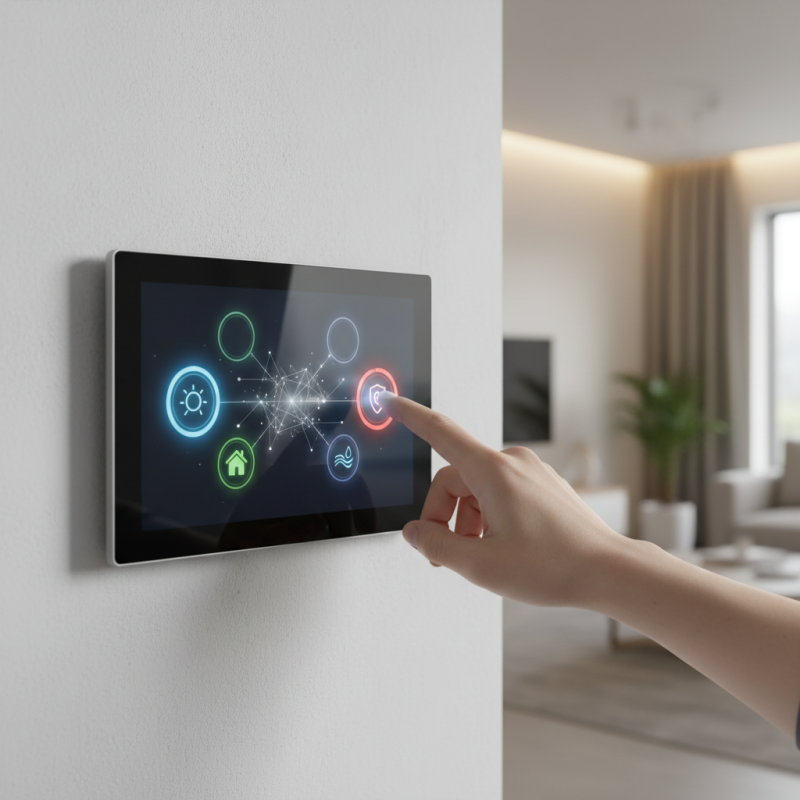
What is a Smart Home Panel and How Does It Work?
In recent years, the concept of a Smart Home Panel has gained significant attention. These devices serve as central hubs in modern smart homes, connecting and controlling various smart devices. A Smart Home Panel provides a seamless interface for users to manage everything from lighting to security systems.
This technology simplifies daily routines and enhances convenience. However, users may sometimes feel overwhelmed by the multitude of features. Not all panels are created equal, and their effectiveness can vary widely. Some homeowners might find certain functionalities lacking or unintuitive. It's essential to consider personal needs when selecting a Smart Home Panel.
As smart technology continues to evolve, understanding its intricacies becomes vital. Knowledgeable users are better equipped to maximize the benefits while mitigating potential challenges. Ultimately, the goal is to create a balanced, efficient home environment that enhances quality of life.
What is a Smart Home Panel?
A smart home panel serves as the central hub for managing smart devices in a home. It integrates various technologies to enhance convenience, security, and energy efficiency. Most modern panels can control lighting, thermostats, security systems, and more, allowing homeowners to manage their environments from a single point. According to a report by MarketsandMarkets, the smart home market is projected to reach $174 billion by 2025, showing its growing significance.
These panels can be voice-activated or app-controlled. This flexibility can cater to different user preferences. Many consumers appreciate having the option to adjust settings from a distance, which adds a layer of convenience. However, issues such as compatibility with older devices can arise. It can be frustrating to discover that not all smart devices work seamlessly with your panel.
Tip: When buying a smart home panel, consider its compatibility with existing devices. Research user reviews for insights into potential integration issues.
Security is another crucial factor. Smart home panels often include features like two-factor authentication to enhance security. Yet, not all panels are created equal in this regard. Users should conduct research to ensure their choice provides adequate protection from breaches.
Tip: Regularly update the software of your smart home devices. Software updates often include critical security patches.
Key Components of a Smart Home Panel
A smart home panel serves as the central hub for managing a connected home. It integrates various smart devices, ranging from lights and thermostats to security systems. According to a recent report by Grand View Research, the global smart home market is expected to grow significantly, with a compound annual growth rate (CAGR) of around 25% from 2021 to 2028. This growth highlights the increasing importance of effective integration within smart home systems.
Key components of a smart home panel include a user-friendly interface, connectivity options, and compatibility with various devices. A touchscreen display allows easy interaction, while wireless protocols like Wi-Fi, Zigbee, and Z-Wave enable communication between devices. Industry research indicates that 70% of homeowners consider ease of use a top priority when selecting smart home technology. However, complexities can arise when devices from different manufacturers are not compatible. This can lead to frustrating user experiences and decreased efficiency.
Data security is another critical aspect. Many homeowners express concern over potential vulnerabilities in their smart home systems. Research from J.D. Power indicates that 60% of consumers worry about hacking and data privacy. Therefore, choosing a system with robust security features is essential. Users must also be aware of regularly updating software to protect their networks effectively. This highlights the need for ongoing education around securing personal data in a smart home environment.
How Smart Home Panels Integrate with IoT Devices
Smart home panels act as command centers for various IoT devices within a household. They simplify control by centralizing functions and reducing clutter. According to a report by MarketsandMarkets, the global smart home market is projected to reach $151 billion by 2024, indicating a growing reliance on connected devices. This trend highlights the importance of efficient integration among devices.
Integration is crucial for seamless operation. Smart home panels communicate with IoT devices through various protocols, such as Zigbee, Z-Wave, and Wi-Fi. Reports suggest that systems utilizing interoperable technology see a 30% increase in user satisfaction. However, challenges still exist. Compatibility issues may arise, leading to frustrating experiences for users. Additionally, many homeowners may struggle with the complexity of setup, which can deter them from fully embracing smart technology.
As more devices enter the market, the demand for standardized integration will only grow. Effective communication between varying systems not only enhances user experience but also builds trust in technology. Ensuring devices work harmoniously remains a project for manufacturers. Ongoing refinement in standards will be key to achieving this goal. Balancing ease of use with advanced functionality will be essential in shaping the future of smart home technology.
User Interface and Control Features of Smart Home Panels
Smart home panels serve as the central hub for smart home devices. They simplify users' interaction with various technologies. Control features often include touchscreens, voice commands, and mobile compatibility. This allows easy access to appliances, security systems, and environmental controls.
The user interface is crucial for usability. Intuitive designs promote user engagement. Some panels utilize icons and color-coded systems for quick recognition. However, not all interfaces are user-friendly. Some may overwhelm users with options or complicated layouts. Kludgy design can lead to frustration.
Customization is another aspect of smart home panels. Users can tailor settings according to their preferences. This flexibility enhances control but can also pose challenges. Beginners may struggle with too many choices. Balancing functionality with simplicity is essential in design. Overall, smart home panels offer exciting possibilities but need continual improvement in usability.
Benefits and Challenges of Using a Smart Home Panel
A smart home panel offers many advantages and challenges for users. It centralizes control of various devices. Imagine controlling lights, thermostats, and security systems from one screen. This convenience can streamline daily routines. It enhances energy efficiency, too. Adjusting settings remotely can lead to savings on utility bills.
However, there are challenges to consider. Many people struggle with installation and setup. Technical difficulties can lead to frustration. Not everyone feels comfortable navigating software updates and compatibility issues. Security risks also exist. A central panel can be a target for hackers if not properly secured.
User experience is not always seamless. Some smart home panels may have limited compatibility with devices. Choosing the right products can be overwhelming. Over time, reliance on a single point of control may lead to dependency. This could pose difficulties during outages or system failures. Balancing convenience with these challenges is essential for smart home users.
Smart Home Panel Usage Statistics