
A Luxury Royal Bed is more than a grand headboard. It brings together structural strength, skilled upholstery, dependable materials, and careful finishing. In a showroom, carved timber, stitched leather, and a smooth drawer runner offer clues—but photographs alone cannot verify construction quality.
China’s National Bureau of Statistics reported that furniture manufacturers above designated size recorded RMB 655.7 billion in operating revenue in 2023. This figure covers the wider furniture sector, not royal beds alone. It provides useful context for China’s manufacturing base, but buyers still need product-level evidence. Ask manufacturers about frame materials, joinery, upholstery specifications, inspection procedures, and customization limits. Details matter. A polished sample may not reflect every production run.
Sleep expert Dr. Neil Stanley offers a practical principle: “The best mattress for you is the one that you find comfortable.” His advice is relevant because a regal appearance cannot replace proper support or personal comfort. This guide examines leading Chinese manufacturers through design, craftsmanship, production capability, and communication—not visual spectacle alone. Some suppliers may show impressive finishes while providing limited technical documentation. That deserves a closer look. The category itself is not consistently measured in public industry reports, so comparisons should remain cautious. For buyers, clear specifications and verifiable factory information matter as much as ornate detailing.
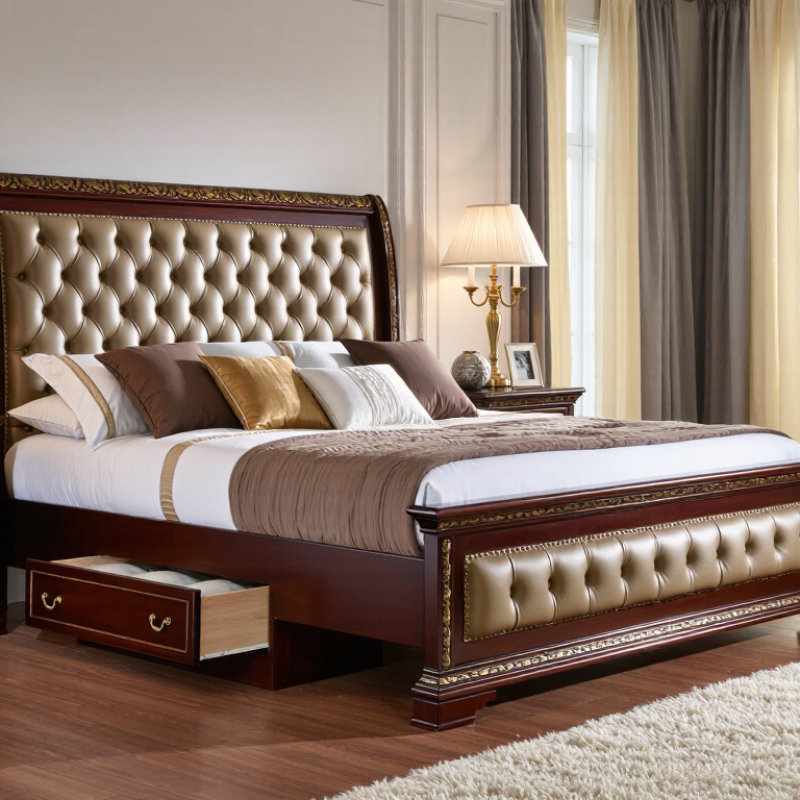
A royal bed is defined less by size than by its proportions, detailing, and finish. A tall, gently arched headboard creates a formal focal point without overwhelming the room. Deep buttoning, carved rails, or restrained metallic trim can add presence. Too much ornament, though, may feel heavy beside patterned walls.
Materials shape both appearance and daily comfort. Solid hardwood frames offer a substantial foundation, while engineered components can help control weight and cost. Upholstered headboards often use layered foam and fabric; ask about construction, seams, and cleaning needs. Look closely at joints and finish samples. Small details matter.
Customization should begin with room measurements and mattress dimensions, not decoration alone. Buyers can adjust headboard height, fabric, wood tone, storage, and bedside clearances. Request drawings or material samples before production, since colors shift under warm lighting. A bespoke bed may not solve every design problem. Sometimes a simpler profile fits better. Check delivery access, assembly requirements, and the maker’s stated care guidance before placing an order.
China’s luxury bed sector includes specialist workshops, integrated furniture factories, and design-led suppliers. Specialist makers often focus on carved headboards, upholstered frames, or detailed woodwork. Integrated factories may handle frames, padding, upholstery, and packing under one roof. Their capabilities vary, so a polished showroom sample does not prove consistent production quality.
OEM services usually follow a buyer’s drawings, dimensions, materials, and finish schedule. ODM suppliers may help develop the design, select components, and prepare prototypes. Both models can cover adjustable bases, custom fabrics, storage features, and export packaging, depending on factory equipment and experience. Ask how the maker checks frame joints, fabric tension, and surface finishes. Request a production sample and written specifications before confirming an order. Details matter. A sample reveals more than a catalogue, though it cannot show how every unit will turn out. Buyers should also discuss minimum order quantities, lead times, inspection procedures, and spare-part support. These checks take effort. In practice, communication gaps can still happen, especially when drawings leave measurements open to interpretation. A clear revision process helps, but it is not a guarantee.
GB/T 3328-2016 is China’s furniture standard for bed dimensions. It gives manufacturers and buyers a shared reference for describing and checking bed size. For a royal-style bed, do not rely on the mattress label alone. The frame may extend beyond it. Measure the assembled bed at its widest and longest points, including projecting rails or a headboard where relevant. Record the floor-to-sleeping-surface height, too; a thick mattress can change the final level. Keep your measurement method consistent with the standard and the supplier’s specifications.
Before ordering, mark the bed’s footprint on the floor with painter’s tape. Leave room for drawers to open and for walking beside the bed. Measure twice. A 200-centimeter mattress does not mean the complete bed is 200 centimeters long. Check doorways, stair turns, and lift openings using the packed dimensions, not only the assembled footprint. Bedside tables can collide with wide side rails, while a tall headboard may cover a wall socket. Ask for the stated external dimensions and confirm whether decorative projections are included. Standard measurements help compare sizes, but they cannot tell you whether a bed will feel right in your room. A taped outline may look generous; once lamps and bedding are in place, the space can feel tight.
Nominal bed-width values referenced by GB/T 3328-2016, shown in millimetres.
These values describe nominal bed-width options, not the external width of a complete bed frame. Check the bed’s usable mattress space and the manufacturer’s product dimensions when assessing fit.
Top Luxury Royal Bed Manufacturers in China
A luxury royal bed should feel substantial, but appearance alone proves little. Inspect the frame, joints, and finish under clear light. Solid wood, engineered panels, upholstery, foam, and hardware each need suitable specifications. Ask for material descriptions and samples that match the finished bed. A practical lesson: hidden joints matter as much as carved details. They carry years of movement and weight.
ISO 9001:2015 relates to a manufacturer’s quality-management system; it does not certify every bed. Check the certificate’s validity, scope, and issuing body. For wood claims, request FSC documentation and verify that its scope covers the relevant materials and supply chain. Load-test records should identify the bed model, test method, applied load, cycle count, and acceptance criteria. Records without these details are hard to compare. Even complete paperwork cannot replace careful inspection.
Tips: Compare documents with the exact model and material list. Check slats, fasteners, and center supports. Ask how defects are recorded and corrected. Small gaps in a report deserve questions, not assumptions. A glossy finish can distract from them.
Supplier-neutral evaluation table. The checks below describe evidence buyers can request; they do not assert that any particular manufacturer holds a certificate or has passed a test.
| Evaluation area | What to verify | Useful evidence to request | Quality-check notes |
|---|---|---|---|
| Solid wood and veneer | Species, component location, moisture condition, veneer or solid-wood construction, and finish specification. | Bill of materials, material declarations, incoming-inspection records, and finish specifications for the quoted model. | Confirm that documents identify the same model and materials as the order. Request applicable regulatory documentation for the destination market. |
| Engineered wood panels | Panel type, thickness, intended use, and any emissions or compliance requirements applicable in the destination market. | Panel supplier declarations, technical data sheets, and current third-party test reports where required. | Check report scope, test method, sample description, and validity against the requirements for the target market. |
| Upholstery and padding | Fabric or leather specification, foam type, seam construction, and relevant fire-safety or chemical requirements. | Material specification sheets, batch or lot details, and applicable test reports for the intended market. | Test requirements vary by country and product use; verify the required standard with the buyer or a qualified compliance professional. |
| ISO 9001:2015 quality management | Whether the manufacturing site has a current ISO 9001:2015 quality-management-system certificate and whether its scope covers relevant operations. | Certificate number, certified legal entity and site, scope, issue and expiry dates, and certification-body verification details. | ISO 9001:2015 is a quality-management-system standard; certification alone does not certify a bed model or guarantee product performance. |
| FSC material claims | Whether a specific wood-based product is supplied with an eligible FSC claim and whether the relevant chain-of-custody scope covers the product and transaction. | Current chain-of-custody certificate details and sales documents showing the applicable FSC claim for the ordered product. | An FSC certificate for a business does not mean every product it sells is FSC-certified. Verify the product claim and certificate status independently. |
| Bed structure and load testing | The exact bed model, configuration, test method, applied loads, cycle or duration, observed failures, and test outcome. | A dated test report identifying the sample, dimensions, construction, hardware, test laboratory, method, results, and any deviations. | Ask which market-specific standard or agreed protocol was used. A result for one design or configuration may not apply to another. |
| Inspection and traceability | Inspection checkpoints, batch identification, nonconformity handling, and final inspection criteria. | Inspection plan, sample checklist, batch records, corrective-action records, and pre-shipment inspection results. | Agree acceptance criteria and sampling arrangements before production; keep inspection records linked to the purchase order and shipment. |
Buyer note: Certificate and test-report status should be checked with the issuing organization or laboratory. Request records for the actual production site, product configuration, and order whenever possible.
When comparing luxury royal bed manufacturers in China, examine evidence behind each claim. Ask for current certificates and check their issuing body, expiry date, factory address, and product scope. A certificate for one material may not cover a complete bed frame. Request a sample specification, including wood species, finish, upholstery, and hardware. Details matter. A carved headboard can look impressive in a showroom, yet loose joints may appear after repeated assembly.
Tips: Get lead times in writing, with separate dates for sample approval, production, inspection, and dispatch. Confirm whether quoted days include holidays or port delays. Ask for warranty terms covering structural failures, finish defects, and replacement parts. Vague promises are hard to use.
Export data can help assess experience, but treat it as supporting evidence, not proof of quality. Compare shipment records by product category, destination, and recency where verifiable records are available. Ask for redacted shipping documents or references that match the manufacturer’s stated export history. Also clarify packaging standards, inspection steps, and who pays for remedies. One point often gets missed: custom designs can change both cost and timing after approval. Build a buffer, and document every revision.