
Choosing the right Sofa Feet can change more than the look of a couch. Their height affects seat comfort, floor clearance, and how easily you can clean underneath. Their material and shape also influence stability and the way a sofa meets the room’s style. Small details matter.
A practical choice starts with the sofa itself. Check its weight, frame construction, and existing mounting points before selecting replacements. Measure the current feet and the available space, then consider whether the new height will make sitting and standing comfortable. A few millimeters can matter. Wood feet can add warmth, while metal options may suit a cleaner, more contemporary look. Neither choice is automatically better; the right fit depends on the furniture and daily use.
Installation deserves attention, too. Confirm that each foot attaches securely and supports the sofa evenly. If the frame or fittings look damaged, pause and seek advice from a qualified furniture professional rather than forcing a match. That extra check can prevent wobbling and avoid damage. Measure twice. Even careful measurements may not tell the whole story, especially with older furniture or unusual frames. This guide explains the main factors to compare, from height and material to fit and floor protection, so you can make a confident, well-informed choice.
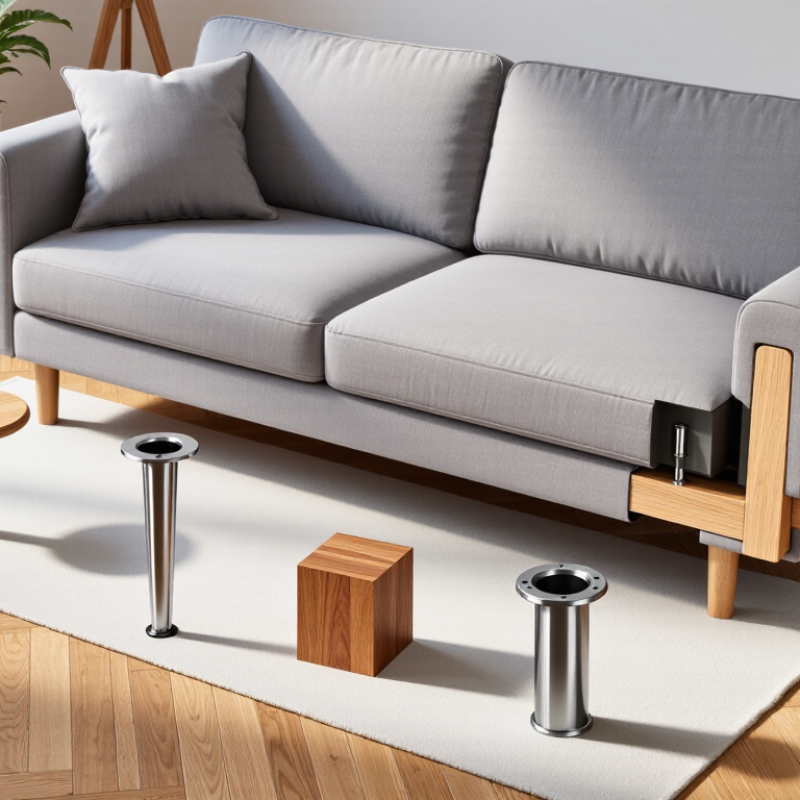
Choosing sofa feet starts with identifying the sofa’s job. A compact loveseat, a sleeper, and a reclining sofa place weight differently. Sectionals also need stable support at connecting corners. Check the frame before shopping: hardwood, engineered wood, and metal each accept different fasteners. Look underneath with a flashlight. Solid mounting blocks or metal plates are useful clues; cracked wood or loose inserts need attention before new feet go on. Small detail, big difference.
Next, identify the attachment system. Common fittings include threaded inserts, hanger bolts, and screw-on plates. Measure the bolt diameter, thread pitch, exposed length, and plate spacing; similar-looking fittings may not match. Check the current foot’s height and base width, too. A taller replacement can alter seat height, while narrow feet may press into softer flooring. EPA’s Advancing Sustainable Materials Management: 2018 Fact Sheet reports 12.1 million tons of furniture and furnishings in U.S. municipal solid waste. That figure is a good reminder to consider repair, not just replacement.
Match the foot material and shape to the frame and room. Wood feet suit many traditional frames, while metal feet can work with reinforced mounting plates. For a heavy sleeper sofa, inspect every attachment point and avoid assuming all four corners carry equal load. I would treat measurements as provisional if the old fittings are bent or corroded. A quick visual check can miss hidden damage. When uncertain, remove one foot and compare its fitting directly with the replacement specification before ordering.
How to Choose the Right Sofa Feet for Your Furniture?
Measure Leg Height, Thread Size, Mounting-Plate Pattern, and Floor Clearance
Start by measuring each existing foot from the floor to its attachment point. Record the height, then check how much taller or shorter replacement feet would change the seat. A few centimeters can affect comfort and make it harder to sit down or stand up. Measure all four corners; older sofas may not sit perfectly level. It is easy to focus on appearance and miss this detail.
For threaded feet, check both the stem diameter and thread pitch. The pitch is the distance between the threads, and a close-looking stem may still not fit. For plate-mounted feet, measure the screw-hole spacing from center to center and note the plate’s shape. Don’t force a mismatched part. It may loosen or damage the attachment point.
Tips: Check floor clearance with the sofa loaded, not just empty. Confirm that feet leave room for rugs, cleaning tools, or floor vents. If you’re unsure about a fitting, compare it with the original part or ask a furniture repair professional. A quick measurement now can prevent a wobbly sofa later.
| Measurement or Check | How to Measure | Example Finding | What to Match or Consider |
|---|---|---|---|
| Leg height | Measure the existing leg from its attachment point under the sofa to the floor. For a replacement, compare the new leg’s usable height from its mounting surface to its base. | Existing leg: 120 mm (about 4.7 in) | Choose a similar height to keep the sofa level and maintain a comparable seat height. A different leg height changes the sofa’s overall height and may affect comfort or fit beneath tables. |
| Thread size | If the leg screws into a threaded insert, measure the screw’s outside diameter and identify its thread pitch. A thread gauge or a hardware specialist can help confirm the pitch. | M8 × 1.25 or M10 × 1.5 are common metric examples; 5/16-18 is a common imperial example. | Match both diameter and thread type. Similar-looking threads may not be interchangeable. Do not force a screw that binds; check the sofa’s insert before ordering. |
| Mounting-plate pattern | For a plate-mounted leg, measure the distance between the centers of the screw holes in both directions. Also note the number and position of the holes. | Four-hole plate with a 50 × 50 mm center-to-center pattern | Match the hole count, spacing, and plate orientation. Measure center to center, not from the outer edges of the holes. Confirm that the plate fits the available mounting area. |
| Floor clearance | Measure vertically from the floor to the lowest part of the sofa frame, skirt, or other component that could touch the floor. | Lowest frame point: 90 mm (about 3.5 in) above the floor | Allow enough space for any required cleaning tool or floor feature. Check the clearance after fitting the legs, especially if the replacement height differs from the original. |
| Attachment method | Inspect how the current leg connects: threaded screw, mounting plate, corner block, or another fixed fitting. | Existing leg attaches to a four-hole plate | Select a replacement compatible with the existing fitting. Avoid drilling new holes unless the frame material, attachment position, and fasteners are suitable. |
| Leg position and stability | Note the number of legs, their locations, and whether any are adjustable or angled. Check that the sofa sits evenly on a level floor. | Four corner legs plus one center support leg | Replace center supports as well as corner legs when needed. Use the correct number and position of supports, and follow the furniture maker’s guidance for load and installation. |
| Floor protection | Identify the floor surface and inspect the leg base for a glide, pad, or other protective contact point. | Hardwood floor with a flat, smooth leg base | Use a suitable non-marking pad or glide for the floor type. Check that it is securely attached and does not make the sofa unstable. |
Tip: Measure the existing fitting before buying replacement feet. Dimensions and thread standards vary across furniture, so example sizes are reference points—not a guarantee of compatibility.
Sofa feet do more than lift the frame; they determine how its weight meets the floor. For a heavy sofa, broad, sturdy feet usually spread pressure better than narrow pins. Check the number and placement of support points, especially beneath long seats or a chaise. A tapered shape can look light, but its narrow contact area may leave dents on softer flooring. Small details matter.
Material should suit both the sofa and the room. Hardwood feet can provide firm support, while metal feet may work well when securely attached and correctly sized. On tile or sealed wood, add non-slip pads to reduce scratching and movement. For carpet, wider feet can help prevent the sofa from sinking unevenly. Felt pads slide more easily, so they may be less suitable where a sofa needs to stay put.
Measure the existing fittings and confirm the attachment method before choosing replacements. A foot that looks right may still sit unevenly or place stress on one corner. Test the sofa gently after installation; watch for rocking and listen for creaks. There is no perfect formula. Floor finish, frame condition, and everyday use all change the result, and I would not assume one material suits every home.
Match foot material and shape to load distribution and floor protection.
Example estimate for a 240 kg loaded sofa with weight shared evenly among its feet. Narrow feet use a 2.5 × 2.5 cm contact area; broad feet use a 6 × 6 cm area. Broader feet reduce estimated pressure on the floor. Actual loading varies with sofa design and weight distribution; use suitable floor-protection pads, and choose foot materials compatible with your flooring.
Choosing sofa feet starts with the floor, frame, and expected load. A narrow metal foot may suit a compact room, while a wider base spreads pressure on timber or softer flooring. Check the fixing plate, screw length, and corner-block condition; a strong foot cannot compensate for weak timber. Small details matter.
EN 12520:2015 sets safety, strength, and durability requirements for domestic seating, with test methods linked to EN 1728. Its durability assessment can include up to 100,000 seat-loading cycles, depending on the test configuration. This is useful evidence, but it evaluates the seating assembly, not each foot in isolation. Ask for a test report identifying the exact model and setup. Look for loosened fasteners, cracked joints, or rocking after repeated loading. One limitation: a passing test cannot predict every uneven floor or years of rough handling.
Tips: Measure the existing feet before ordering replacements. Confirm load capacity, attachment type, and floor-contact material. Place the sofa on a level surface and check all four corners; even a slight wobble deserves attention.
Choosing sofa feet starts with installation. Screw-in feet suit matching threaded inserts; mounting plates spread force across several screws. Through-bolts can work well on sturdy frames, but thin or damaged wood may split. Check thread diameter, bolt length, and frame condition before ordering. A snug fit matters.
Compare ratings for the complete set, not just one foot. ANSI/BIFMA X5.4-2020 evaluates public and lounge seating through durability and stability tests; it does not give every sofa foot one universal capacity. As a rough calculation, a 300-kilogram sofa-and-occupant load divided across four feet equals 75 kilograms per foot. Real floors and frames distribute weight unevenly, so this estimate is not a safe-load certification. Choose a documented rating with suitable margin, and confirm whether it applies per foot or per set.
Tips: Recheck loose screws after installation and inspect feet when vacuuming. Felt pads protect hard floors, but compress or collect grit; replace them when they flatten. I once treated a tidy fit as proof of strength. It wasn’t. Ask the supplier for load-test documentation, and avoid using cracked frames or stripped inserts.