
Choosing the best Wood Floor Easel begins with understanding how and where you will use it. A painter working in a bright studio needs different support from someone sketching in a cramped apartment. Floor space, canvas size, adjustment range, and storage all matter.
Easel designer Alan McCallum offers a practical principle: “The best easel stays steady, adjusts quietly, and serves the work.” This idea is useful, even if it sounds simple. A strong frame should not wobble when a brush touches the canvas. Its knobs should turn smoothly, without forcing your wrist. Check the base carefully. Wide feet provide better balance on hard floors, while rubber pads can reduce sliding and protect finished wood.
Material also deserves attention. Beechwood and seasoned hardwood often provide strength, but construction quality matters more than appearance alone. A beautiful easel can still disappoint if its joints loosen after several months. I have seen buyers focus on polished wood and overlook the height mechanism. That is an easy mistake.
Think about your working habits. Do you paint seated or standing? Do you use heavy canvases, panels, or delicate paper? A studio Wood Floor Easel may offer excellent stability, yet remain inconvenient in a small room. Some models fold partly; others barely move. Neither design is automatically better.
This guide will compare structure, portability, canvas capacity, finish, maintenance, and price. It will also question popular assumptions. The most expensive easel is not always the most dependable. Your hands, room, and creative routine should make the final decision.
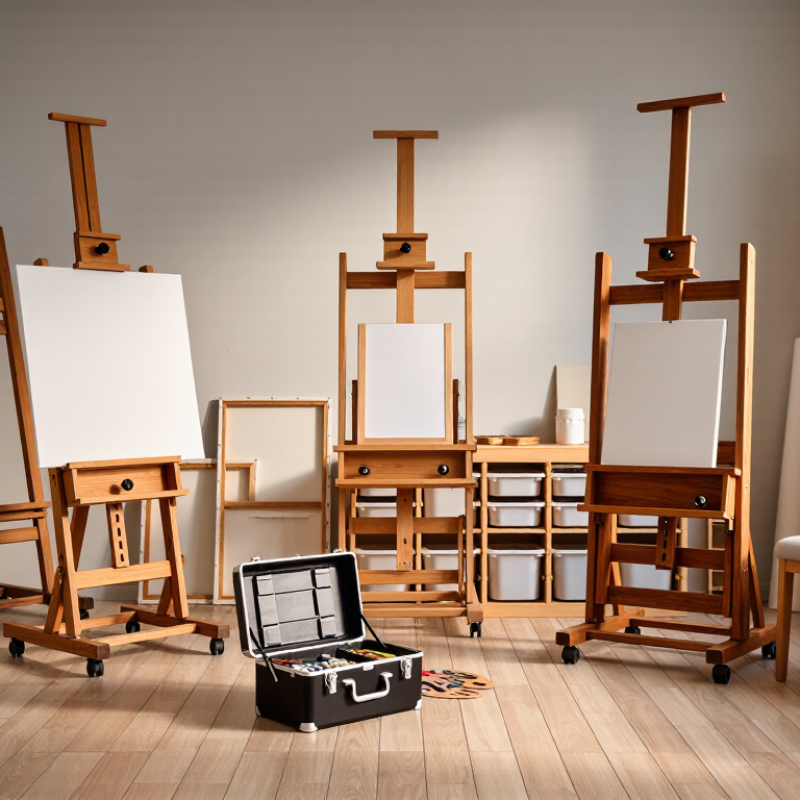
Wood floor easels usually fall into three useful types: tripod, H-frame, and convertible. Tripod models fold easily and suit workshops, small rooms, and outdoor sketching. H-frame easels offer stronger support for heavy canvases and detailed oil painting. Convertible designs can shift from vertical to horizontal, making them practical for watercolor, varnishing, and mixed media. Your main use matters more than appearance.
The 2024 Art Basel and UBS Global Art Market Report estimated 2023 art sales at 65 billion dollars, while online sales reached 11.8 billion dollars. Those figures show how often artists now compare equipment remotely. Check exact dimensions, wood thickness, hardware quality, and maximum canvas height before buying. A broad base reduces movement. A ratchet or screw mechanism should adjust smoothly, without sudden drops. Test the easel with a loaded canvas if possible.
The 2024 Art Basel and UBS Global Art Market Report estimated 2023 art sales at 65 billion dollars, while online sales reached 11.8 billion dollars.
In practical studio use, H-frame models feel steadier, but they consume valuable floor space. Tripods save space, yet their center support can obstruct feet and storage. I would not choose untreated wood for a damp workspace. It may look warm, but moisture can twist the frame. The International Building Code commonly recognizes wood movement as a design concern, although an easel is not a building component. That comparison is imperfect, but useful. Small details matter: felt feet protect floors, and a rear brace prevents annoying wobble.
How to Choose the Best Wood Floor Easel?
Easel size should match both your canvas and working space. Measure the largest canvas diagonally, then add clearance for clamps and frame depth. A practical floor easel often needs 20–30 centimeters of spare height. Too little clearance forces awkward adjustments. I have found that a broad lower shelf also helps with heavy, wet canvases. It prevents tools from crowding the floor.
Height affects posture more than appearance. ANSI/BIFMA G1-2013, an ergonomics guideline, emphasizes adjustable work surfaces for different users and tasks. Set the canvas center near your elbow or slightly below it when standing. Your shoulders should stay relaxed. A seated painter needs a different range. This is easy to overlook. Measure your actual working position, not just the easel’s advertised maximum height.
Stability depends on footprint, wood thickness, joints, and load placement. Test the easel with a canvas installed, then gently press each corner. A lifted foot signals poor stability. Weight capacity also needs careful interpretation. The NIOSH Revised Lifting Equation uses 51 pounds as a load constant under ideal lifting conditions, but that figure is not an easel rating. Real capacity falls with height, uneven loading, and repeated movement. Choose a verified capacity above your heaviest canvas and supplies, preferably by 25–50 percent. That margin may seem excessive, yet wooden joints can loosen over time. Check them regularly.
Evaluating easel size, height, stability, and weight capacity
These practical, non-branded benchmarks compare common wooden floor easel profiles. Larger easels generally support taller canvases and heavier artwork, while a wider base improves stability. Choose an easel whose maximum load capacity exceeds the combined weight of the canvas, artwork, and accessories.
A wood floor easel should feel steady before it looks beautiful.
In my workshop, I check the timber first. Kiln-dried beech, ash, or maple usually offers dependable strength. Dense grain resists dents from repeated adjustments. Avoid boards with wide cracks, loose knots, or twisting. Hold the easel on a flat surface. Rocking feet often reveal poor seasoning or careless assembly. Moisture matters, too. Wood that is too wet may shrink indoors.
The finish should protect without hiding the wood’s character. A water-based clear coat dries cleanly and limits strong workshop odors. Oil finishes can deepen color, but they need more curing time. Look for an even surface around hinges and lower rails. Rough patches can catch fabric or cause splinters. I prefer satin finishes because glare can distract while painting. That preference is not universal. Some artists want a warmer, more reflective appearance. Looks can mislead.
Construction quality decides whether the easel remains useful after months of movement. Test the leg joints, knobs, and canvas supports with gentle pressure. They should move smoothly, then lock firmly. Mortise-and-tenon joints or reinforced screws generally outperform weak staples. Check whether replacement hardware is available. Test it carefully. I once chose an attractive easel with a loose center hinge. It looked fine in the shop. Later, the frame shifted during a large canvas study. I should have tested it under realistic weight. Ask for load limits, repair guidance, and clear material information.
Choosing a wood floor easel starts with the artwork, not the product photograph. A large oil painting needs a broad, stable base and a mast that adjusts smoothly. For watercolor or charcoal, a lighter frame may offer better angle control. I have found that an easel built for oversized canvases can feel awkward with a small study. Its lower ledge may hide the paper and make close work uncomfortable. Scale matters more than appearance.
Measure the studio before selecting the design. Leave enough room behind the easel for the back legs and your own movement. In a narrow room, a compact A-frame can reduce interruptions, though it may limit height adjustments. A four-leg studio easel suits heavier work, especially when the floor is uneven. Check the feet carefully. Rubber pads help protect wood flooring and reduce small shifts while you paint. Still, no adjustment is perfect; mine once rocked because I ignored a slight floor slope.
Match the working position to your habits. If you paint standing, choose a crank or sliding mechanism that keeps the canvas near eye level. If you sit, confirm that the bottom tray will not touch your knees. Look for solid joints, clear locking points, and an accessible tilt control. These details support safer, more consistent handling over long sessions. Test the easel with a board or canvas of similar weight before committing. A beautiful design can fail in daily use.
Choosing the best wood floor easel starts with your working space and daily habits. I have found that portability matters more than expected. A lighter easel moves easily between a studio corner and a sunlit room. However, very light frames can wobble during firm brushwork.
Check the folded size before buying. A compact easel may fit beside a cabinet, while a wide base needs more floor space. Adjustable height and canvas angles also deserve close attention. Smooth knobs save time when changing from a seated sketch to a standing painting. Test each joint gently. Loose hardware becomes frustrating quickly.
Maintenance is usually simple, but unfinished wood can absorb paint and moisture. Wipe spills promptly with a soft, slightly damp cloth. Avoid soaking the frame or using harsh cleaners. Inspect hinges and screws every few months. A small drop of suitable lubricant may prevent stiff movement, although excess oil can stain wood. Price often reflects timber quality, joint design, and adjustment hardware. An inexpensive model may work well for occasional practice. Daily users may need stronger construction and replaceable parts. I once chose a cheaper easel and regretted its narrow base. Still, expensive does not always mean better. Compare weight, stability, adjustment range, maintenance needs, and warranty details before paying.
| Easel Type | Typical Weight | Folded / Packed Size | Maximum Canvas Height | Portability | Adjustability | Maintenance Needs | Typical Price Range | Best Use |
|---|---|---|---|---|---|---|---|---|
| Compact Tripod Floor Easel | 2–4 kg | 90–125 cm long when folded | 75–120 cm | ★★★★★ Excellent | ★★★☆☆ Moderate | Occasional tightening of wing nuts; wipe dust from joints and wooden legs. | US$35–80 | Artists who move between rooms, studios, classes, or outdoor locations. |
| Folding A-Frame Easel | 3–6 kg | 80–115 cm long when folded | 80–140 cm | ★★★★☆ Very Good | ★★★★☆ Good | Check folding hinges, remove paint splashes promptly, and keep the wood away from prolonged moisture. | US$45–110 | General painting, beginners, and artists needing a stable but movable setup. |
| Studio H-Frame Easel | 8–18 kg | Usually remains assembled; some models reduce to about 150–190 cm | 150–250 cm | ★★☆☆☆ Limited | ★★★★★ Excellent | Regularly inspect sliding tracks, screws, and canvas supports; protect unfinished wood from humidity. | US$120–350 | Large canvases, detailed work, and permanent or semi-permanent studio use. |
| Convertible Sitting/Standing Easel | 5–12 kg | 100–160 cm long when folded or partially collapsed | 90–180 cm | ★★★☆☆ Moderate | ★★★★★ Excellent | Lubricate metal adjustment hardware when needed and check that height locks remain secure. | US$90–240 | Artists who alternate between seated and standing positions or work on varied canvas sizes. |
| Tabletop-to-Floor Convertible Easel | 2–5 kg | 60–100 cm long when folded | 50–130 cm | ★★★★☆ Very Good | ★★★★☆ Good | Keep fold-out legs clean, tighten pivot points, and store flat in a dry location. | US$40–100 | Small apartments, travel-friendly studios, sketching, and moderate-size artwork. |
| Heavy-Duty Lyre Easel | 6–14 kg | Often folds to approximately 120–170 cm | 120–210 cm | ★★★☆☆ Moderate | ★★★★☆ Good | Inspect the central mast, tighten bolts periodically, and use a dry cloth rather than excess water. | US$100–280 | Medium-to-large canvases where traditional appearance and solid support are important. |
| Price ranges are typical retail estimates in US dollars for unbranded wooden easels and may vary by wood species, hardware quality, size, finish, and included accessories. Weight, folded dimensions, and canvas capacity also vary by construction. | ||||||||