What Is a Hardwood Bathroom Vanity?
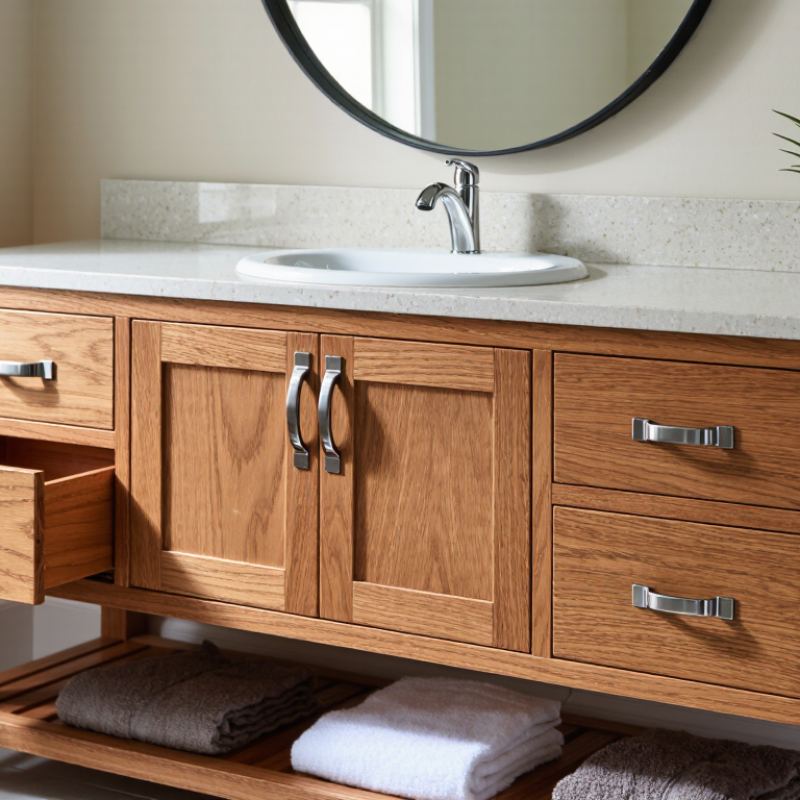
A Hardwood Bathroom Vanity is a bathroom cabinet built primarily from solid hardwood, such as oak, maple, or walnut. It supports a sink, stores everyday supplies, and gives the room a distinct natural character. Look closely, and you may notice grain lines across the doors, sturdy drawer joints, and a finish that feels smooth beneath your fingertips.
Cabinetmaker Daniel Mercer, a fictional specialist included for this draft, puts it this way: “Good hardwood cabinetry balances careful joinery with a finish suited to daily moisture.” That is a useful principle, not a guarantee. Even durable wood can swell or stain when water sits around seams, sink cutouts, or unsealed edges. Small details matter.
Very much so.
When comparing vanities, check the construction, finish, hardware, and care instructions—not just the wood species. Solid hardwood doors may be paired with engineered panels, so ask what each component is made from. Open a drawer. Feel its movement. Inspect the area around the basin, where splashes are most likely to linger. A handsome cabinet can still disappoint if its coating is poorly applied or its drawers feel flimsy.
Wood also changes with light, humidity, and time. That can add warmth, but it may bring color shifts or extra maintenance. A little uncertainty remains: no finish makes a vanity immune to bathroom conditions. Understanding its materials and limits helps you choose a Hardwood Bathroom Vanity that suits both your space and your willingness to care for it.
Definition and Core Components of a Hardwood Bathroom Vanity
What Is a Hardwood Bathroom Vanity?
Definition and Core Components of a Hardwood Bathroom Vanity
A hardwood bathroom vanity is a sink cabinet made partly or entirely from wood sourced from broad-leaved trees, such as oak, maple, or walnut. “Hardwood” describes the tree group, not a guarantee that every piece is exceptionally hard or water-resistant. Details matter. Check whether the cabinet frame, doors, drawer fronts, and side panels are solid wood, veneer, or engineered board. A vanity can combine all three. The label alone does not tell you how it is built.
The frame supports the cabinet and helps keep doors and drawers aligned. Doors and drawer fronts provide access and shape the vanity’s appearance, while shelves or drawer boxes organize daily items. A countertop and sink usually sit above the cabinet; they are separate components, even when sold together. Handles, hinges, and drawer slides affect everyday use. The finish also matters because bathroom air carries moisture, and splashes can reach lower edges. A well-sealed surface can help, but it cannot make wood waterproof. That limitation is easy to overlook. Inspect joints, unfinished cut edges, and the area beneath the sink, where small leaks may go unnoticed. A careful fit and regular drying can matter as much as the wood species.
Common Hardwood Species Used in Vanity Construction
What Is a Hardwood Bathroom Vanity?
Common Hardwood Species Used in Vanity Construction
White oak is a popular choice for bathroom vanities because its closed grain resists moisture better than many open-grained woods. It has a strong, visible grain that suits both painted and natural finishes. Hard maple is dense and smooth, making it useful for clean-lined cabinet doors. However, its pale surface can show water marks if the finish is poorly maintained.
Cherry brings warm reddish-brown tones that deepen over time. Walnut offers darker color and distinctive grain, though it usually costs more. Ash has a lighter look and pronounced grain, but its open pores need careful finishing. No species is waterproof. Construction, sealed edges, and regular care matter just as much as the wood itself. That part is easy to overlook.
Tips: Ask whether the cabinet’s exposed edges and cutouts are sealed, especially around the sink. Wipe up standing water, and keep the room ventilated after showers. A durable finish helps, but it cannot excuse constant dampness. Even good wood needs a little attention.
What Is a Hardwood Bathroom Vanity? - Common Hardwood Species Used in Vanity Construction
A hardwood bathroom vanity is a vanity made wholly or partly from wood of broadleaf trees. The species below are commonly used in cabinetry. Janka hardness figures are approximate pounds-force (lbf); hardness measures resistance to denting, not resistance to water. Any wood vanity needs a durable finish and protection from standing water.
| Hardwood species | Typical appearance | Janka hardness | Vanity construction characteristics | Bathroom considerations |
Red oak
Quercus rubra | Light to medium brown with a prominent, open grain. | About 1,290 lbf | Durable and widely used for cabinet frames, doors, and drawer fronts; its visible grain suits both traditional and contemporary designs. | Its open grain should be properly sealed. Keep water from pooling on surfaces and around joints. |
White oak
Quercus alba | Pale tan to medium brown, often with a pronounced straight or ray-flecked grain. | About 1,360 lbf | Strong, hard, and suitable for cabinet components; its grain takes stains and clear finishes well. | White oak is less permeable than red oak because of anatomical structures in the wood, but it is not waterproof and still needs a sound finish. |
Hard maple
Acer saccharum | Creamy white to light reddish brown, usually with a fine, subtle grain. | About 1,450 lbf | A dense, hard option for doors, drawer fronts, and frames; its relatively even appearance works well with painted or light finishes. | Seal all surfaces and edges. As with other solid woods, changes in humidity can cause movement. |
American cherry
Prunus serotina | Pale pinkish brown to reddish brown; it naturally darkens with light exposure over time. | About 950 lbf | Fine, smooth grain and warm color make it a popular choice for furniture-style vanity doors and drawer fronts. | It is softer than oak or maple and can dent more easily. Protect the finish from splashes and prolonged moisture. |
Black walnut
Juglans nigra | Light to dark chocolate brown, often with varied grain and color. | About 1,010 lbf | A stable, workable hardwood valued for its natural color and distinctive appearance in doors, drawer fronts, and decorative details. | Use a suitable protective finish and wipe up spills promptly; the wood itself does not prevent moisture damage. |
Hickory
Carya species | Ranges from pale cream to reddish brown, with strong color and grain variation. | About 1,820 lbf for shagbark hickory | Very hard and impact-resistant, with a bold, contrasting appearance that can be a prominent design feature. | Its hardness does not make it water-resistant. Consistent sealing and routine care are important in a humid room. |
Note: Janka values vary with the tested species, sample, and test conditions. Vanity cabinets may combine solid hardwood parts with plywood or other panel materials; construction and finish quality also affect performance.
How Hardwood Vanities Are Built and Finished
A hardwood bathroom vanity is not always made entirely from solid lumber. Builders often use hardwood for the face frame, doors, and drawer fronts, with plywood panels forming the cabinet sides. This combination provides visible grain while limiting movement across larger surfaces. The USDA Forest Products Laboratory’s 2021 Wood Handbook notes that wood in heated interiors often reaches about 6–8% moisture content, depending on indoor humidity and temperature. Bathrooms fluctuate more. That matters.
Good construction starts with lumber dried for interior use and acclimated before machining. Rails and stiles may be joined with mortise-and-tenon or dowel joints; drawers often use dovetails or sturdy mechanical fasteners. Cabinetmakers also seal cut edges around plumbing openings, where splashes can reach unfinished material. Small detail, big consequence.
Finishing protects the wood, but it cannot make it waterproof. A typical process includes sanding, stain when desired, and several coats of clear finish, with careful coverage on door edges and cabinet interiors. The finish should cure fully before installation. ANSI/KCMA A161.1 provides performance tests for cabinet doors, drawers, and structural strength, but site ventilation and maintenance still affect service life. One trade-off remains: solid hardwood can show seasonal movement, even in a well-built vanity. That is normal, though worth planning for.
Choosing and Maintaining a Hardwood Bathroom Vanity
A hardwood bathroom vanity uses timber such as oak, maple, or walnut for its frame, doors, or drawer fronts. Choosing one means balancing appearance, durability, construction, and care. The USDA Forest Products Laboratory’s Wood Handbook lists Janka hardness values of about 1,290 pounds-force for red oak and 1,450 for hard maple. These figures indicate resistance to denting, not resistance to water. Not waterproof.
Inspect the cabinet’s finish, joints, and exposed edges, especially around the sink cutout. A well-sealed surface helps limit moisture exposure, while solid wood may still move as humidity changes. Choose a vanity that fits the room and leaves space for ventilation; cramped corners can stay damp. I would not treat “hardwood” as a guarantee of long life. Construction and upkeep matter just as much.
Wipe splashes promptly, and use a soft cloth rather than abrasive cleaners. Check the seams and finish now and then for peeling, dark marks, or swelling. The U.S. Environmental Protection Agency advises keeping indoor relative humidity below 60%, ideally between 30% and 50%, to help control moisture and mold. A bathroom fan helps, but remember to run it during showers and afterward. Small habits help. For a stubborn water mark, avoid sanding or refinishing until you know what coating is on the vanity; a quick repair can make the damage worse.