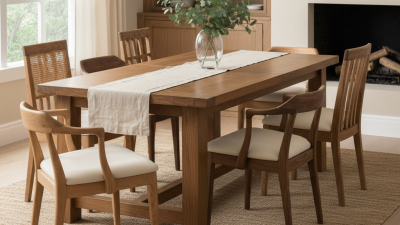
How to Choose the Best Wood Tables for Your Needs?

Choosing wood tables is less about finding the “best” species and more about matching a table to your room, routine, and budget. A dining table may face hot plates, spilled juice, and daily chair movement. A desk has different demands: a steady surface, useful legroom, and space for cables. Start with measurements. Leave enough room to pull out chairs and walk around them without squeezing past a wall.

Wood affects both appearance and upkeep. Oak is often chosen for its visible grain and sturdy feel; walnut tends to bring darker, warmer tones, while pine is lighter and can show dents more readily. These are tendencies, not guarantees. Construction, finish, and care matter too. Look beneath the tabletop for secure joints and a stable base, and check whether the finish suits your household. A glossy surface may be easy to wipe, but scratches can stand out. Solid wood can often be refinished, while veneer may need gentler repairs.

Think about the details you will notice after the first week. Will the table wobble on your floor? Is the edge comfortable against your forearms? Can a damp cloth handle ordinary spills? Ask sellers about materials, finish, assembly, and care rather than relying on a product photo. A photo can mislead. Even careful comparisons have a blind spot: wood changes with light, humidity, and use. Choose a piece whose practical trade-offs you understand, not one that merely looks perfect online.
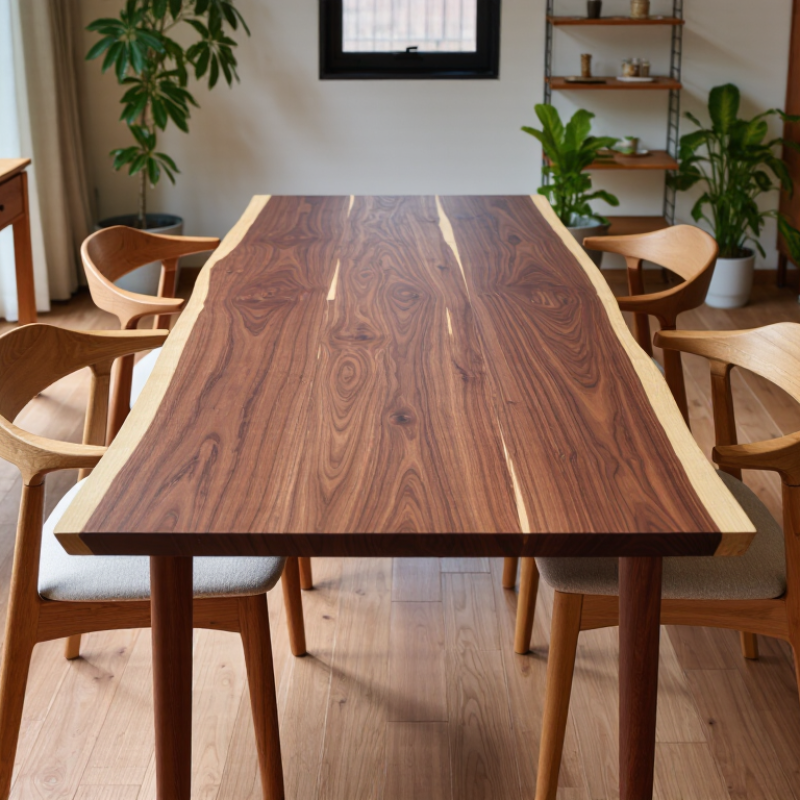
How to Choose the Best Wood Tables for Your Needs?

Identify Your Needs and How the Table Will Be Used

Before choosing a wood table, picture its busiest day. Will it hold family dinners, laptop work, homework, or all three? A dining table needs comfortable seating and clear paths around pulled-out chairs. A worktable needs a stable surface, useful legroom, and space for cables or supplies. Measure the room, then mark the table’s footprint with tape. It is easy to misjudge clearance by eye. Houzz’s 2024 U.S. Kitchen Trends Study found that 76% of renovating homeowners added a kitchen island. That finding reflects kitchens serving several roles; it does not mean an island can replace a dining table.

Think about what the surface will face. Spills, hot dishes, craft tools, and daily cleaning call for a durable finish and a wood species suited to wear. Also consider indoor conditions. The USDA Forest Products Laboratory’s Wood Handbook estimates wood’s equilibrium moisture content at about 6% at 30% relative humidity and 9% at 50%, at 70°F. Wood moves as moisture changes. A table near a sunny window or heating vent may need extra care. Small detail, big effect. I would also question whether a large table is truly useful: an expandable design may suit occasional guests better, though its leaves need somewhere to live. Choose for the routine, not just the special occasion.

How to Choose the Best Wood Table for Your Needs

Start with how you’ll use the table. Its typical height can help you compare options and find a comfortable fit for your room and seating.

Common planning ranges are approximate; check the table’s actual dimensions and pair it with suitable seating before you buy.

Compare Wood Types, Durability, and Maintenance Requirements

When comparing wood tables, match the species to daily use, not just appearance. Oak has a pronounced grain and good resistance to everyday wear, making it a practical choice for busy dining rooms. Maple is dense and usually handles bumps well, though its subtle grain may show scratches differently. Walnut offers rich color and a refined look, but often costs more and still needs protection from dents. Pine is lighter and generally less expensive; its softer surface can mark easily. That matters.

There is no perfectly tidy ranking. A table’s durability also depends on its construction, finish, and care. Solid wood can often be refinished, while veneer needs gentler sanding and careful repair. For patios or damp spaces, choose a wood and finish intended for outdoor exposure. Even then, sun and moisture can change the surface over time.

Maintenance is simple, but not optional. Wipe spills promptly with a soft, slightly damp cloth, then dry the surface. Use coasters under cold drinks and felt pads beneath rough objects. Avoid harsh cleaners unless the finish instructions allow them. Indoor humidity can also cause wood to expand or shrink, so keep tables away from heaters and direct sunlight where possible. I sometimes underestimate how much a sunny window can affect color; placement deserves a second look.

Choose the Right Table Size, Shape, and Design

Start with the room, not the showroom. Measure the floor area and mark the table’s footprint with painter’s tape. Measure twice. Leave roughly 30 to 36 inches around the table when possible, so chairs can pull out without scraping walls. In a narrow dining room, a slim rectangular table may fit better than a wide one. For smaller rooms, a round table can soften tight corners and make conversation easier.

Think about how many people usually sit down, not just how many you host once a year. A table that seats six may feel cramped if its legs block chairs or serving dishes. Check the leg position and tabletop width before choosing. Extendable designs offer flexibility, but confirm there is space to open them. It is easy to underestimate that extra length.

Let the shape and design suit both your room and your habits. Rounded edges can be practical in busy walkways, while a solid, simple profile often pairs well with different chairs. Consider the wood grain, finish, and how much care you are willing to give it. A darker surface may show dust; a pale one can reveal spills. There is no perfect choice. I once thought a statement table would anchor a room, but it made the space feel smaller. Look at the taped outline for a day before deciding.

How to Choose the Best Wood Tables for Your Needs? — Choose the Right Table Size, Shape, and Design

Compare common table dimensions, seating capacity, room requirements, and design considerations to find a wood table that suits your space and everyday use.

Table Type & Shape Typical Dimensions Approx. Capacity Suggested Room Space Best For Design & Wood Considerations
Rectangular dining table 60 × 36 in (152 × 91 cm) Seats 6 About 12 × 9 ft (3.7 × 2.7 m), allowing roughly 36 in (91 cm) of clearance around the table Everyday family meals and compact dining rooms A versatile shape that fits many layouts. Choose a durable finish for frequent use; visible grain can add warmth to the room.
Rectangular dining table 72 × 36 in (183 × 91 cm) Seats 6–8 About 13 × 9 ft (4.0 × 2.7 m), with approximately 36 in (91 cm) of clearance around the table Larger households and regular entertaining A longer tabletop offers extra serving space. Check that chairs can be pulled out without blocking doorways or walkways.
Round dining table 48 in diameter (122 cm) Seats 4 About 10 × 10 ft (3.0 × 3.0 m), with approximately 36 in (91 cm) of clearance around the table Small dining areas and conversation-focused meals No corners can make circulation easier in some layouts. A central pedestal can provide more legroom than multiple table legs.
Round dining table 60 in diameter (152 cm) Seats 6 About 11 × 11 ft (3.4 × 3.4 m), with approximately 36 in (91 cm) of clearance around the table Medium-sized rooms and shared meals Provides a broad central surface. Consider whether diners can comfortably reach shared dishes across the tabletop.
Square dining table 36 × 36 in (91 × 91 cm) Seats 4 About 9 × 9 ft (2.7 × 2.7 m), with approximately 36 in (91 cm) of clearance around the table Square rooms, breakfast nooks, and smaller households Creates a balanced, compact layout. Measure carefully if the table will sit near a wall or in a corner.
Square dining table 48 × 48 in (122 × 122 cm) Seats 4 comfortably; seating may vary by chair size About 10 × 10 ft (3.0 × 3.0 m), with approximately 36 in (91 cm) of clearance around the table Roomy meals for four and multipurpose dining spaces The larger surface suits serving dishes or work projects. A solid wood top is substantial, so check floor protection and table weight.
Writing desk 48 × 24 in (122 × 61 cm) 1 user Allow space for the desk chair to pull back and for any drawers or cabinet doors to open Home offices, study areas, and compact workspaces Look for a comfortable working height, commonly around 28–30 in (71–76 cm), and enough depth for the equipment you use.
Coffee table Approximately 48 × 24 in (122 × 61 cm) Designed for a seating group Leave a comfortable passage between the table and surrounding seating Living rooms and lounge areas Choose a height close to the seat height of the surrounding sofa or chairs. Rounded corners can be useful in tighter walkways.

Dimensions and seating capacities are general guidelines; chair width, leg placement, table supports, and individual comfort can change the number of people a table accommodates. For dining layouts, about 36 in (91 cm) of clearance around the table is a useful planning target, though more may be needed for a busy walkway.

Evaluate Construction Quality and Joinery

Construction quality is easier to judge when you inspect the joints, not just the finish. Press gently on opposite corners; rocking or a sharp creak can signal a loose connection. Look beneath the tabletop and inside drawers for clean, tight-fitting joints. Gaps, glue squeeze-out, or uneven edges deserve a closer look. Dovetails and mortise-and-tenon joints can be durable, but their names alone do not prove good workmanship.

Wood also responds to moisture, so the way a table is built matters. The USDA Forest Products Laboratory’s Wood Handbook (2021, Chapter 4) reports white oak shrinkage of 10.5% tangentially. Radial shrinkage is 5.6%. These figures describe movement from green to oven-dry wood, not expected movement in a finished home. Still, they show why well-designed joints must accommodate changing conditions. Check whether solid-wood panels can move across their width rather than being rigidly fixed. Screws should sit firmly, and glued surfaces should meet evenly. Look underneath. A neat finish can hide weak construction, and I would not judge a table by one joint alone.

Set a Budget and Compare Available Options

Before shopping, set a firm spending limit and reserve part of it for delivery, chairs, and floor protection. A table that fits the price tag may still strain your budget once those costs appear. Compare options at similar sizes and with similar features; otherwise, a cheaper model may only look like better value. Record each table’s dimensions, wood type, base construction, finish, and warranty. A 48-inch solid-wood table and a veneer table may differ in repair options, weight, and price, even when both look convincing online. Solid wood can often be refinished, but it may cost more and respond to changes in room humidity. Veneer can cost less, though deep damage may be harder to repair. Not always an easy trade-off.

If possible, inspect a table in person. Run your hand over the edges and check whether the legs feel steady on an uneven floor. Ask how an extension leaf is stored and whether the finish needs special care. Online photos can hide surface texture, so request close-up images or clear return terms before buying. I would not stretch a budget for a feature you may rarely use, such as an extra-large leaf. Still, the cheapest option is not automatically the wisest one. A little doubt is useful; compare the total cost with the table’s daily use, available space, and maintenance needs.