How to Choose the Best Solid Wood Sofa Table?
Choosing the best solid wood sofa table is not only a style decision. It is a practical investment in daily comfort, stability, and lasting value.
Experienced furniture makers examine more than grain appearance. They check timber moisture, joinery, leg strength, surface finishing, and movement caused by seasonal humidity. A well-built table should feel steady beside the sofa, not wobble when someone places down a ceramic mug. Its depth should leave enough walking space, while its height should align naturally with the sofa arm or seat. Small details matter.
As woodworker George Nakashima is widely quoted, “The tree is not dead; it is living in another form.” That idea changes how buyers evaluate a solid wood sofa table. Each board may contain knots, mineral streaks, or subtle color variation. These are not automatically defects. However, they should be inspected carefully. Some tables look beautiful online but feel rough, overly glossy, or poorly balanced in person.
This guide compares wood species, construction methods, finishes, dimensions, and maintenance needs. It also considers responsible sourcing and dependable seller information. A table made from responsibly harvested oak may suit one home better than a darker walnut design. Personal taste still matters. So does honest reflection.
Do you need beauty, storage, or both?
The right choice depends on how the table will actually be used. Measure your room, notice your habits, and examine the craftsmanship closely. A thoughtful decision will outlast a quick trend.
Define Your Sofa Table’s Purpose and Placement
How to Choose the Best Solid Wood Sofa Table?
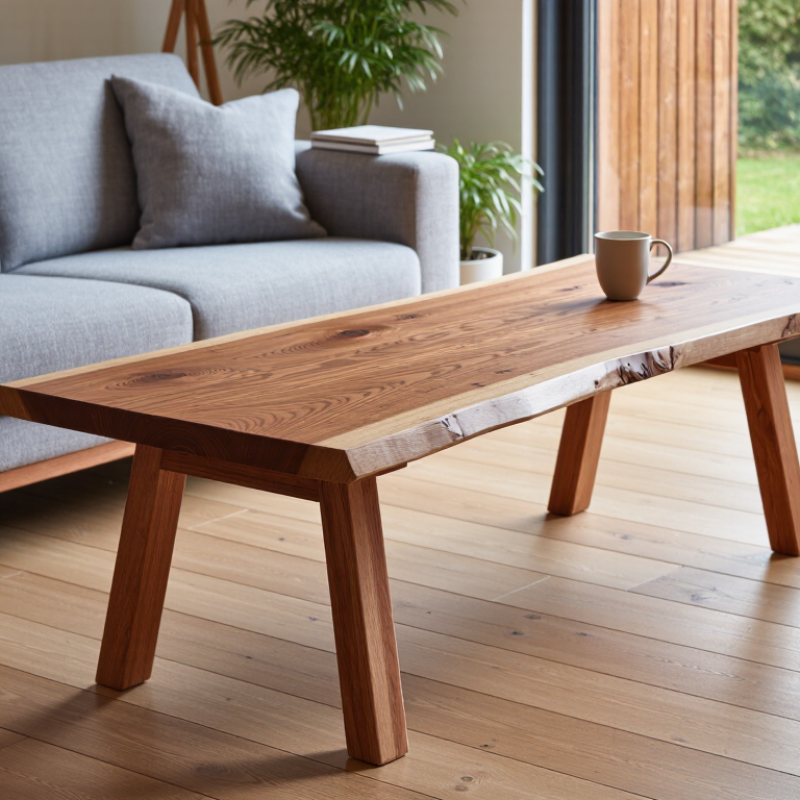
Define your sofa table’s purpose before choosing its style. A table behind the sofa can hold lamps, books, or daily essentials. If you need storage, select drawers or a lower shelf. For decoration, a slim tabletop may be enough. I have found that function changes quickly in busy homes. A beautiful table can become inconvenient when it collects clutter.
Measure the placement carefully. Leave enough walking space between the table and nearby furniture. About 30 to 36 inches often feels comfortable, but room shape matters. The table should usually sit slightly below the sofa back. This keeps the view balanced and prevents awkward bumps. Check the table’s depth, too. A deep design may block pathways or make a narrow room feel crowded. Solid wood adds warmth and durability, but its weight makes frequent moving difficult. I once chose a table that looked ideal in a showroom. At home, it made the walkway feel cramped.
Tips:
Mark the table’s footprint with painter’s tape before buying. Test the walking path. Place a lamp or basket there temporarily. Notice how the area works during real routines, not just during cleaning. Consider sunlight and heating vents, since wood can respond to changing conditions. A modest table that fits your habits may serve you better than a larger, more impressive piece.
Compare Solid Wood Species, Grain, and Durability
How to Choose the Best Solid Wood Sofa Table?
Choosing a solid wood sofa table starts with the wood species. Oak is a dependable choice for busy living rooms. Its open grain hides small scratches and daily dust. Walnut has a darker, richer color and a smoother visual grain. It feels refined, but it is softer than hard maple. Hard maple resists dents well and shows a cleaner, quieter grain. Ash resembles oak, yet its grain often appears longer and more dramatic. Pine costs less, but its softer surface marks more easily.
Durability depends on more than hardness. A Janka hardness rating offers a useful comparison, not a complete quality judgment. Joint construction, moisture control, and finish also matter. Look closely at the grain direction across the tabletop. Continuous grain usually suggests carefully selected boards. Avoid tables with wide splits, loose knots, or uneven seams. Small knots are not always defects. They can add character, though they may weaken a heavily used edge.
I once focused too much on color and ignored maintenance. That was a mistake. Dark walnut can reveal dust, while textured oak may require less frequent wiping. Check whether the wood is kiln-dried and properly sealed. Keep the table away from direct heat and wipe spills quickly. A solid wood table can last for years, but it still responds to humidity. That part is easy to forget.
Choose the Right Table Size, Shape, and Proportions
How to Choose the Best Solid Wood Sofa Table?
Choose the Right Table Size, Shape, and Proportions
A solid wood sofa table should support the room, not compete with the sofa. Measure the sofa first. A practical length is about two-thirds of the sofa’s width. For a 210-centimeter sofa, choose roughly 140 centimeters. Keep the table depth near 30–40 centimeters. Deeper tables can interrupt movement and make the room feel crowded. Height matters too. A table close to the sofa back, usually 70–80 centimeters high, looks visually connected.
Room clearance deserves careful attention. The National Kitchen and Bath Association’s Planning Guidelines commonly recommend 36 inches for main traffic paths and 30 inches for secondary paths. These guidelines are not written specifically for living rooms, but they offer a useful safety reference. Grand View Research valued the global home furniture market at over 550 billion dollars in 2023. That scale suggests many choices, yet size still matters more than fashion. I sometimes misjudge this. A beautiful table can still be awkward.
Tips: Use a rectangular table for long sofas and narrow rooms. Choose a round or oval shape near sharp corners or compact seating. Leave at least 30 inches behind the sofa when people walk there. Check door swings, lamps, and outlet access before buying. Use painter’s tape to mark the tabletop footprint. Live with it for one evening. If the taped shape feels intrusive, reduce the depth. A rule is not a verdict.
How to Choose the Best Solid Wood Sofa Table?
Choose a table that is shorter than the sofa, leaves comfortable walking space, and follows the visual proportions of the room. The examples below use common sofa widths and a practical table-length target of approximately 75% of the sofa width.
Size
A sofa table around 65%–80% of the sofa width usually looks balanced. Avoid a table that extends beyond either sofa arm.
Shape
Use a rectangular table behind a straight sofa. Choose a round or oval top when circulation space is limited or the room has many hard angles.
Proportions
Keep the table depth practical for the walkway, commonly about 12–18 inches, and choose a height close to or slightly below the sofa back.
Planning examples shown in inches. Sofa widths represent common loveseat, standard sofa, and large sofa dimensions; table lengths use a 75% proportion target.
Evaluate Construction Quality, Joinery, and Stability
A solid wood sofa table should feel quiet under pressure. In my workshop, I test each corner by pressing down slowly. A table that rocks on a hard floor often reveals uneven legs, weak stretchers, or poor leveling. The USDA Forest Products Laboratory’s Wood Handbook reports that indoor wood commonly reaches about 6–8% moisture content. It also explains that tangential movement can be roughly twice radial movement. That difference matters. A wide tabletop may cup or split when its grain is trapped.
Look underneath before admiring the finish. Stronger tables often use mortise-and-tenon, loose-tenon, or well-fitted dowel joints. The joints should close tightly, without visible gaps or excessive glue. Screws can help, but they should support a joint rather than replace it. The Architectural Woodwork Standards identify joint fit, alignment, and surface quality as key inspection points. Those checks are practical, not decorative.
Stability needs a simple field test. Push the tabletop from each corner, then pull the table gently toward you. Movement should be minimal, and the feet should remain planted. The U.S. Consumer Product Safety Commission’s furniture safety data repeatedly links instability with preventable tip-over injuries, although those reports focus mainly on storage furniture. That limitation deserves attention. A sofa table is different, yet the mechanical warning still applies. Check leg spacing, stretcher placement, and the center of gravity. A heavy top cannot rescue a narrow base. Expect small natural grain changes. Reject serious rocking.