How to Choose the Best Screen Printing Textile Ink?
Choosing the right Screen Printing Textile Ink affects color accuracy, fabric comfort, production speed, and wash durability. The decision is rarely as simple as selecting the brightest color.
Industry data shows why ink selection deserves careful attention. Grand View Research reports that the global digital textile printing market was valued at approximately USD 2.5 billion in 2022, with continued growth expected through 2030. Although digital and screen printing use different processes, this growth reflects rising demand for customized, efficient textile decoration. Smithers’ report, The Future of Digital Textile Printing to 2028, also highlights increasing pressure for shorter production runs, improved sustainability, and consistent quality. These trends influence screen printers too.
Fabric behavior must guide the choice. A soft cotton T-shirt may require water-based ink for a lighter hand feel. Polyester sportswear may need low-bleed or dye-migration-resistant ink. Dark garments often demand stronger opacity, but excessive ink can create a heavy, plastic surface. Test the ink on the actual fabric. Check curing temperature, stretch recovery, color strength, and wash performance.
Small details matter.
A practical evaluation should include supplier technical sheets, safety information, and controlled sample testing. ASTM colorfastness methods and AATCC textile testing references can support more reliable comparisons. However, laboratory results may not perfectly match every production line. That limitation deserves attention. A sample can look excellent under workshop lighting and fail after repeated washing. The best Screen Printing Textile Ink balances technical performance, environmental requirements, print feel, and realistic production conditions.
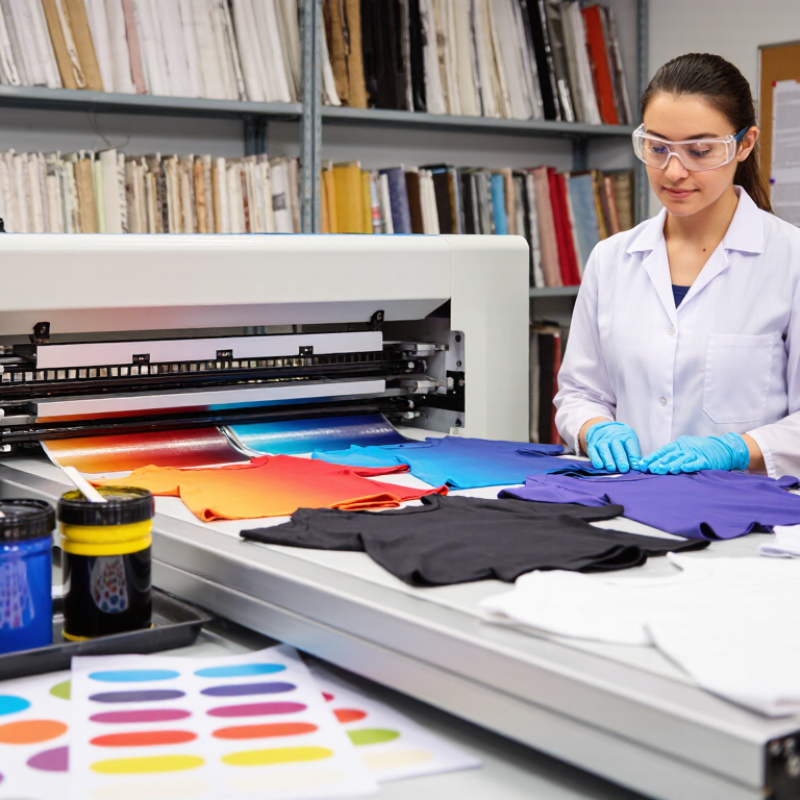
Understanding Screen Printing Textile Ink Types
Choosing textile ink starts with understanding its chemistry, finish, and curing needs. Plastisol ink offers strong opacity and reliable coverage on dark cotton garments. It stays on the surface, creating a raised, durable print. Water-based ink penetrates fibers and produces a softer hand feel. However, it needs accurate drying and careful humidity control. Discharge ink removes the garment dye before adding color. Results can look exceptionally soft, but fabric chemistry may cause inconsistent shades.
Silicone ink suits synthetic sportswear because it stretches well and resists repeated washing. Acrylic and hybrid inks can balance softness, brightness, and production speed. According to Smithers’ The Future of Digital Textile Printing to 2028, digitally printed textile output is expected to grow at roughly 10% annually. This shift increases pressure on screen printers to improve feel, curing, and color accuracy. The report also highlights shorter runs and faster customization. Screen printing still performs strongly for bold, repeatable artwork. That is my experience, though fabric blends can challenge even skilled operators.
Tips: Match ink to fiber content, not only garment color. Test a small print first. Check opacity under white light. Measure curing temperature with a probe, not guesswork. After curing, perform a wash test and stretch test. I still test twice. One fabric can surprise you. Keep records of mesh count, squeegee pressure, ink deposit, and cure time. These details make troubleshooting more reliable and reduce avoidable rework.
Matching Ink Properties to Fabric and Print Requirements
How to Choose the Best Screen Printing Textile Ink?
Matching ink properties to fabric and print requirements begins with identifying the textile. Cotton absorbs water-based ink well and often produces a soft, breathable print. Polyester needs careful testing because heat can cause dye migration. Blended fabrics add uncertainty, especially when cotton and synthetic fibers react differently. Stretch garments require flexible ink that moves without cracking. The fabric’s color, texture, and thickness also affect opacity and coverage.
Water-based ink suits lightweight cotton and creates a smooth hand feel. It can dry in the screen, though, which demands controlled working conditions. Plastisol-style ink provides strong coverage on dark fabrics and remains workable during printing. It may feel heavier on the garment. For elastic textiles, choose an ink designed for stretch and test it after curing. Temperature matters. Excessive heat can damage sensitive fabric or shift its color.
I have found that a beautiful print can still fail after washing. Test the actual fabric, not only a similar swatch. Print small samples and record the mesh count, squeegee pressure, flash time, and curing temperature. Check wash resistance, stretch recovery, opacity, and surface feel. Some fabrics need a primer or underbase, but extra layers can reduce softness. No ink performs perfectly on every textile. A rushed test can hide problems until production.
Comparing Color, Opacity, Texture, and Fabric Compatibility
How to Choose the Best Screen Printing Textile Ink?
Color is only the starting point. On dark cotton, a bright red may look muted without a strong underbase. On pale fabric, that same ink can appear too intense. Textile Exchange’s 2024 Materials Market Report recorded 124 million tonnes of global fiber production in 2023. Polyester represented about 57%, while cotton accounted for roughly 22%. This mix makes fabric compatibility essential, not optional.
Opacity should match the garment’s color and the artwork’s detail. High-opacity ink covers dark fabric well, but it can feel heavier and reduce fine-line clarity. Low-opacity ink creates a softer appearance, yet it may fade visually on uneven knits. Texture also matters. A smooth print suits detailed graphics, while a raised or soft-hand finish can support simple designs. I have learned that a technically perfect color may still feel wrong when the print becomes stiff. That is an easy mistake to overlook.
Tips: Test a small fabric swatch first. Print the ink at the planned mesh count, curing temperature, and layer order. Check color under daylight and indoor lighting. For polyester, use an ink system designed to reduce dye migration, then confirm performance with wash testing. ISO 105-C06 laundering methods can provide a repeatable reference, although real customer washing habits remain less predictable. Record opacity, hand feel, stretch, and wash results. No formula wins every time.
Evaluating Curing Methods, Durability, and Production Efficiency
Choosing textile ink starts with the curing method, not the color chart. In my production trials, a print can look dry yet remain undercured inside. Heat-cured inks usually need a controlled time-temperature profile. Water-based systems demand careful moisture removal before final curing. Follow the technical data sheet, but verify its instructions on your equipment. Measure ink film, fabric type, and dryer temperature together. Do not trust the display alone. A surface probe may read 160°C while the print center remains cooler. Test a small batch first.
Durability depends on more than cure temperature. Check wash resistance, stretch recovery, abrasion, and hand feel. A cotton shirt may tolerate heavier ink deposits, while synthetic fabric can expose migration or adhesion problems. Use the recommended mesh and squeegee pressure, then record actual settings. After curing, wash samples repeatedly and inspect cracking, fading, and edge lifting. A simple pull test helps, but it cannot replace controlled testing. I once approved a soft print too quickly. It failed after several washes. That mistake changed our inspection routine.
Production efficiency comes from stable curing, not merely faster conveyor speed. Track warm-up time, belt speed, ink deposit, and energy use. A slower pass may reduce rejects and improve total output. Automatic monitoring can help, but operators still need judgment. Fabrics vary between lots. Curing windows also shift with humidity and garment thickness. Leave room for doubt. Verify results at the start of each shift and after maintenance. Choose curing settings that match real fabric behavior, not just the machine display.
Selecting the Best Ink Through Testing and Quality Checks
How to Choose the Best Screen Printing Textile Ink?
Selecting the right textile ink should begin with controlled testing, not color preference alone. I test each ink on the actual fabric whenever possible. A cotton swatch may behave differently from a polyester blend. Record the fabric type, mesh count, squeegee pressure, print passes, and curing temperature. Small details matter.
Check the print immediately after curing. The surface should look even, without pinholes, cracking, or unwanted stickiness. Measure the curing temperature with a probe, rather than trusting the dryer display. Then perform a stretch test and a dry-rub test. For washable garments, run several wash cycles using consistent water temperature and detergent. Inspect fading, peeling, bleeding, and fabric distortion after every cycle. Do not judge durability too early.
Keep the failed samples too. They reveal useful patterns. A heavy ink deposit may improve opacity but create a stiff hand. Lowering the temperature may protect the fabric, yet leave the ink under-cured. I once approved a sample because it looked excellent under bright workshop lights. It failed after washing. That mistake changed my inspection process. Now I check samples under normal indoor light and natural daylight. A simple test log also improves reliability. Include dates, batch details, measurements, and photographs. If results conflict, repeat the test before changing the ink or production settings.