How to Choose Natural Wood Dining Chairs for Your Home
Choosing natural wood dining chairs is not just a style decision. It affects comfort, durability, and how your dining space feels every day. Wood grain, seat height, joinery, and finish all matter. So does the room around them. A chair that looks elegant online may feel stiff after a long meal.
Furniture maker and designer George Nakashima captured wood’s character in the often-quoted line, “The tree is a living thing, and its wood is a material that has a life of its own.” That idea is useful when comparing natural wood dining chairs. Oak often shows a bold grain and handles daily use well. Walnut brings deeper color, while maple tends to look lighter and more even. These are tendencies, not guarantees; construction and care matter too.
Start with the practical details. Measure your table height and the space between chairs. Check whether the seat supports you comfortably, and inspect joints for a secure fit. A smooth finish should feel pleasant, not plastic-like. Small marks and variations can be part of real wood’s appeal. They can also bother some owners. Be honest about that.
This guide explores wood types, chair shapes, comfort, finishes, and everyday maintenance. It will help you compare choices for your home, rather than chase a perfect showroom look. Real rooms are messier. That is worth remembering.
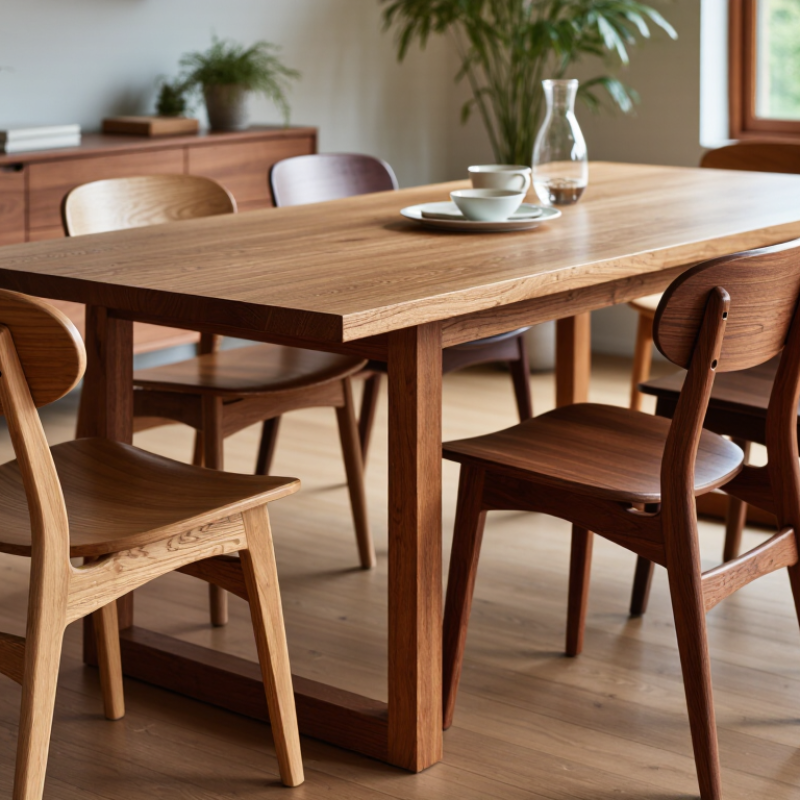
Define “Natural Wood” and Compare Species by Janka Hardness (Maple: 1,450 lbf; Oak: 1,360 lbf)
“Natural wood” can mean solid lumber, wood veneer, or a mix of both, so check the chair’s construction before comparing species. Solid-wood parts show grain across their edges; veneer is a thin wood layer bonded to a core. Neither is automatically better, but the distinction affects repair options and how wear may appear. Look beneath the seat and around the legs, where construction details are easier to see.
Janka hardness measures the force needed to press a steel ball halfway into wood. Hard maple rates about 1,450 lbf, while oak is commonly listed at 1,360 lbf. That small gap suggests maple resists denting somewhat better, but it does not make a chair indestructible. Janka values vary by species and test source, and they say little about joinery, finish, or a loose screw. Real homes are less tidy than test labs.
For dining chairs, consider daily habits as well as the number. A child’s chair may meet dropped cutlery, while chair legs may scrape across a hard floor. Maple’s tighter grain can look smooth and understated; oak often has more visible grain. Finish also changes the look and can help limit stains, though it will not prevent every mark. Hardness matters. It just isn’t the whole story.
Measure Seat and Table Heights Using 28–30-Inch Dining-Table Dimensions
For a dining table 28–30 inches high, measure the distance from the floor to the underside, not just to the tabletop. Most dining chairs have seats about 17–19 inches high, leaving roughly 10–12 inches for your thighs and comfortable movement. Table aprons can reduce that space. Measure around them, too.
Check the chair’s seat height with any cushion in place. A thick cushion may compress when you sit, so the listed height can feel different in use. Leave room to slide the chair beneath the table without scraping its back. If the chair has arms, measure from the floor to the armrests; they must clear the apron. Small details matter.
Numbers help, but they are not the whole test. Sit in the chair and rest your forearms on the table. Your shoulders should feel relaxed, not lifted. I would also place a chair beside the table and check the fit from several angles; this can feel fussy, but it catches awkward gaps. Natural wood chairs vary in seat shape and construction, so a comfortable measurement on paper may still feel wrong at home.
Check Indoor Wood Moisture Against USDA Forest Products Laboratory Guidance
Natural wood dining chairs behave best when their moisture content suits the room where they will live. The USDA Forest Products Laboratory’s Wood Handbook (FPL-GTR-282, 2021) lists equilibrium moisture content near 6.2% at 70°F and 30% relative humidity, rising to about 9.2% at 50% humidity and 13% at 70%. These figures describe wood gradually balancing with surrounding air, not a strict pass-or-fail test. Still, they offer a useful reference when assessing a chair for a heated or humid home.
Use a reliable pin-type moisture meter on an inconspicuous underside, and check more than one spot. Follow the meter’s species and temperature settings; readings can vary across a chair, especially near joints or end grain. In a dry winter room, wood around 6–8% may be reasonable, while a more humid room may support a higher reading. The room matters. A chair measured in a warehouse may change after weeks beside a sunny window or heating vent. Look for persistent gaps, tight joints, or fresh cracks, but do not judge moisture from appearance alone. The handbook’s equilibrium values are helpful, not a guarantee—and real rooms rarely hold steady humidity.
Assess Joinery, Load Capacity, and Stability Before Choosing a Chair
When choosing natural wood dining chairs, inspect the joints, not just the finish. Turn the chair over and look for tight connections with no visible gaps or shifting parts. Mortise-and-tenon joints and well-fitted dowels can provide durable connections when properly made. Corner blocks beneath the seat may add support. Glue squeeze-out alone proves little. A neat finish can distract from a joint that needs closer inspection.
Ask for the chair’s stated load capacity and check that it suits the people who will use it. Capacity figures vary, so compare them with your household’s needs rather than assuming all wooden chairs are alike. A chair should feel firm under normal, careful use, without being tested by standing or bouncing on it. Labels and specifications matter.
Set each chair on a level floor and press gently on the seat and back to check for rocking or creaking. Then sit down normally and shift your weight slightly. Listen for clicks, and watch whether the legs stay planted. A small wobble may come from an uneven floor, but don’t ignore it. Even a careful inspection has limits.
Compare Finish, Maintenance Needs, and FSC-Certified Sourcing Options
Natural wood dining chairs can look similar in a showroom, but their finishes behave differently at home. An oil finish leaves the grain tactile and is often easier to refresh, though it may need periodic care. A clear lacquer or varnish offers a more sealed surface against spills, but scratches can be harder to blend. Small marks matter. Check the maker’s care instructions before using household cleaners; some products can dull or soften a finish. At the table, wipe spills promptly and use coasters under damp glasses. A little maintenance is less charming than the grain, but it is part of owning real wood.
Ask for proof. FSC-certified sourcing indicates that the wood comes through a supply chain assessed under Forest Stewardship Council standards. Look for a clear FSC claim on the product or its documentation, and check which components it covers. A chair may combine certified wood with fabric, glue, or metal from other sources. That distinction is easy to miss. Compare the certification details, finish type, and repair guidance before buying, rather than relying on a vague “responsibly sourced” description. Even then, labels do not tell you whether the chair feels comfortable after a long dinner. Sit in it, if possible, and check that the legs sit evenly on the floor.