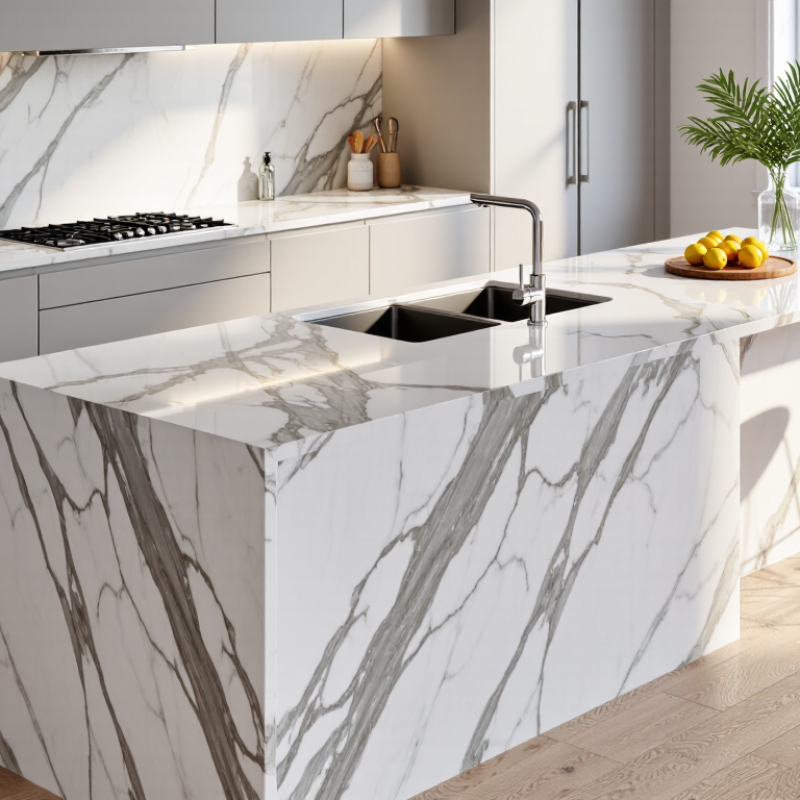
| Slab and appearance | Stone type, color, veining, surface finish, and the specific slab selected. | Natural marble varies from slab to slab. View the actual slab when possible, and check how its veining will appear across the planned countertop and any seams. | Can the selected slab be reserved? Where will seams fall, and how will the veining be oriented? |
| Measurements and template | Cabinet dimensions, wall angles, sink and cooktop openings, faucet holes, and countertop overhangs. | Have the fabricator template the cabinets after they are installed and leveled. Confirm appliance specifications and sink details before cutting begins. | Who takes the final measurements? Which fixtures and appliances must be on site or specified before templating? |
| Thickness and support | Stone thickness, cabinet support, seams, and any required reinforcement. | Common nominal marble slab thicknesses include about 2 cm and 3 cm. Support needs depend on the slab, layout, overhang, cutouts, and cabinet construction; follow the fabricator’s specifications. | Will the chosen thickness need a built-up edge or extra support? How will seams and cutouts be supported? |
| Edge profile | Profile shape, edge thickness, corners, and consistency with the room’s style and use. | Common options include eased, rounded, beveled, and ogee edges. A simpler eased edge has a clean appearance, while more decorative profiles add visual detail. Rounded edges can reduce sharp corners. | Can I review a physical edge sample? Does the selected profile change the finished thickness or price? |
| Sealing and care | Whether the stone needs sealing, the recommended product, and the care instructions. | Sealer can reduce liquid absorption but does not make marble stain-proof or prevent etching from acids. Follow the stone supplier’s guidance; test absorbency and reseal only as recommended. | Will the countertop be sealed after fabrication? What product and care routine are recommended for this stone and finish? |
| Everyday performance | Exposure to acidic foods, oils, spills, heat, and abrasive cleaners. | Marble is calcite-based and can etch when exposed to acidic substances such as lemon juice or vinegar. Wipe spills promptly, use cutting boards and trivets, and clean with a stone-safe product. | What marks or changes are typical for this finish? Which cleaners should be avoided? |
| Installation logistics | Access route, cabinet readiness, plumbing disconnection, seam placement, and installation schedule. | Confirm that cabinets are secure, level, and ready before templating and installation. Large stone pieces are heavy; the installer should plan handling, access, and any necessary supports. | Who is responsible for removing the old countertop and reconnecting plumbing? How will the slab be carried into the home? |
| Final inspection | Fit, seams, edge finish, cutouts, surface condition, and cleanup. | Inspect the installed work under normal room lighting. Review seam alignment and the finished areas around sinks, walls, and appliances before signing off. | How should chips, fit concerns, or installation issues be reported, and within what period? |