China has become a major sourcing destination for buyers seeking well-made chairs at competitive prices. Its factories produce dining chairs, office seating, outdoor furniture, and custom commercial designs. Yet “made in China” is not a quality guarantee by itself. Factory capability, material selection, workmanship, and quality control still require careful evaluation.
Experienced buyers usually examine more than catalog photos. They request material samples, confirm load-bearing requirements, and review production details before placing large orders. A showroom may display a polished chair with smooth welds, tight joints, and consistent stitching. The production line must deliver the same result. Pre-shipment inspections can check dimensions, surface finishing, packaging strength, and functional performance. Clear drawings and approved samples reduce avoidable misunderstandings.
Small details matter.
This guide explores how global buyers can evaluate Chinese made chairs with greater confidence. It considers supplier experience, factory communication, customization ability, testing documentation, and export support. Reliable suppliers should explain their materials honestly, identify production limits, and respond clearly when problems appear. A low quotation may hide weaker foam, thinner metal, or higher replacement costs later. That possibility deserves attention.
No factory is perfect. Even experienced manufacturers can face color variation, shipping delays, or packaging damage. The stronger partners are not those promising zero problems. They are those documenting risks, correcting defects, and maintaining consistent communication. With practical verification and realistic expectations, buyers can select made chairs that balance comfort, durability, design, and long-term value.
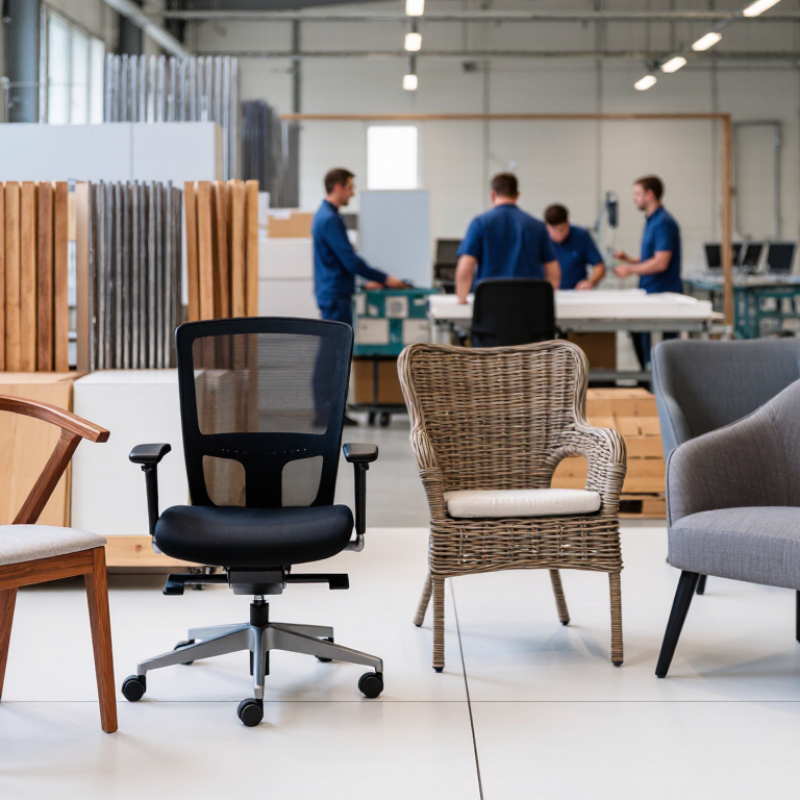
China’s chair manufacturing industry has become a major force in the global furniture market. Its strength comes from broad production capacity, practical engineering, and mature supplier networks. In coastal manufacturing areas, factories can source steel tubing, molded foam, fabrics, timber, and hardware within short distances. This structure helps global buyers compare specifications, control lead times, and adjust order volumes.
Quality depends on more than a low quotation. Experienced buyers usually inspect welding points, foam density, fabric abrasion, fastener strength, and carton protection. They also request sample approval before mass production. International projects may require fire performance, chemical testing, or load certification for specific markets. Reliable manufacturers should provide traceable materials, inspection records, and clear tolerances. Small details matter. A chair arriving with scratched legs can damage a whole shipment’s value.
China’s global position is strong, but it is not perfect. Shipping costs, changing labor patterns, and uneven factory management can create pressure. Some suppliers still focus too heavily on appearance and overlook long-term comfort. That weakness deserves attention. Global buyers should assess production consistency, communication speed, after-sales procedures, and ethical sourcing practices. Factory visits, independent inspections, and staged payments can reduce avoidable risk. The best partnership is not always the cheapest one. It is the one that delivers stable performance across repeated orders.
China’s chair industry serves many international buying needs, from home dining to contract seating. CSIL’s World Furniture Outlook 2024 estimates China produces about 37% of global furniture output. UN Comtrade data for HS 9401 also places China among the world’s leading seat exporters, with exports near US$12 billion in 2023. These figures explain the broad supplier base, but they do not guarantee consistent quality.
Main types include wooden dining chairs, upholstered lounge chairs, metal café chairs, office task chairs, bar stools, folding chairs, and outdoor models made from aluminum, steel, or treated plastic. Wooden chairs often suit restaurants and residential projects, with oak, rubberwood, and plywood used for different cost levels. Upholstered models require checks on foam density, seam strength, and fabric abrasion ratings. Office chairs need closer attention to gas lifts, castors, tilt mechanisms, and load testing. Outdoor chairs may look durable, yet ultraviolet exposure can reveal weak finishes within one season.
A practical buyer should request a technical sheet, material samples, carton dimensions, and test records before placing volume orders. ISO 7173 and ANSI/BIFMA methods are commonly referenced for seating performance, although requirements vary by market. I have found that a perfect showroom sample can hide uneven stitching or unstable packaging. That deserves skepticism. Smaller trial orders, third-party inspections, and drop tests can expose problems early. Freight cost also matters; bulky chairs may lose their price advantage when nested poorly.
China-made chairs can serve global buyers well when materials, craftsmanship, and quality controls are examined together. A polished sample is only the beginning.
In factory evaluations, I check the material specification before judging appearance. Solid wood should show consistent moisture levels and clean, stable joints. Plywood edges need full bonding, without visible gaps or peeling layers. For metal chairs, welds should be even, smooth, and free from sharp residue. Upholstery deserves equal attention. I press the seat repeatedly, inspect stitching tension, and check whether the foam quickly loses shape. Small details matter.
Quality standards must match the destination market. Buyers should request test reports for load strength, stability, flammability, and restricted substances. The documents should identify the exact chair model, test date, and laboratory. Production samples also need comparison against approved specifications. Color, dimensions, hardware, and packaging can drift during large orders. That happens more often than buyers expect.
A reliable supplier welcomes third-party inspections and keeps batch records. I also recommend checking cartons after vibration or drop testing. A strong chair with damaged packaging is still a costly problem. No inspection method is perfect. My own weakness is trusting familiar production teams too quickly. Clear checklists, random sampling, and written corrective actions reduce that risk. A chair should feel stable, not merely look refined.
Typical material density provides a useful procurement reference for comparing chair frames, shells, and panels. Density is a physical property, not a direct quality ranking; final performance also depends on design, joinery, surface treatment, and testing.
Values shown are typical engineering ranges at approximately 20°C: plywood 500–700 kg/m³, solid hardwood 600–900 kg/m³, polypropylene 900–920 kg/m³, aluminum 2,600–2,800 kg/m³, and carbon steel 7,800–7,900 kg/m³. Buyers should request applicable test reports such as ISO 7173, EN 1335, or ANSI/BIFMA X5.1 according to the chair category and destination market.
Global buyers rarely judge Chinese chair suppliers by price alone. They examine evidence, consistency, and practical communication. The China National Furniture Association reported that China’s furniture exports exceeded US$70 billion in 2023. This scale suggests strong manufacturing depth, but it does not guarantee every factory performs equally.
Experienced buyers usually request material specifications, load-test results, factory audit records, and recent production samples. A chair may look stable in a showroom but wobble after repeated use. That detail matters. Testing should match the intended market and usage environment. Relevant standards may include EN 12520, BIFMA, or ISO 7173, depending on the chair category and destination.
Delivery reliability also deserves close attention. The World Bank’s Logistics Performance Index 2023 ranked China 19th globally, showing solid logistics capability, though port delays can still affect project schedules. Buyers should compare confirmed lead times with actual shipment records. Ask for defect-rate data, corrective-action reports, and packaging photographs.
Short replies are not always good replies. A supplier who admits a sampling problem may be more trustworthy than one promising perfection.
Sustainability claims also need documents, not attractive wording. Factory visits, independent inspections, and small trial orders remain useful safeguards. No evaluation method is flawless.
China remains a serious chair-sourcing base, not simply a low-cost option. CSIL reported that China supplied about 37% of global furniture exports in 2022. That scale supports varied materials, tooling, and production experience. Still, “best” depends on application, testing, and after-sales reliability.
Request a pre-production sample with the exact frame, foam density, fabric, dimensions, and carton design. Custom colors may require minimum order quantities, while new molds can add several weeks and significant tooling fees. Compare landed cost, not factory price. Include packaging, inspection, inland transport, insurance, duties, and destination delivery. The World Bank’s 2023 Logistics Performance Index gave China a score of 3.7 out of 5, showing strong logistics capacity, but port delays can still disrupt small shipments.
For commercial seating, verify load testing, flammability requirements, chemical documentation, and applicable regional standards. Ask for batch records and photos from random inspections. UN Comtrade data under HS 9401 can help benchmark trade values, but product categories are broad and often hide meaningful quality differences. A quotation 20% lower may use thinner tubing or weaker joinery. I have seen attractive samples fail after repeated movement. That lesson is expensive. Build a written specification, approve a golden sample, and recheck production before shipment. Mistakes happen, even with experienced factories.
| Category | Typical Data for Chinese Chair Export Orders | Buyer Considerations |
|---|---|---|
| Common Chair Types | Dining chairs, lounge chairs, office chairs, bar stools, outdoor chairs, folding chairs, and school or auditorium seating. | Select the category according to required ergonomics, load capacity, environment, stacking needs, and retail or contract use. |
| Main Materials | Solid wood, plywood, steel, aluminum, polypropylene, molded foam, genuine leather, and synthetic or textile upholstery. | Request material specifications, thickness, grade, moisture resistance, surface treatment, and upholstery composition before approval. |
| Indicative Factory Price | Basic metal or plastic chairs: approximately US$8–25 per piece; standard dining chairs: about US$15–60; upholstered or specialized chairs: commonly US$35–180+. | These are indicative ex-factory ranges, not quotations. Material grade, order volume, packaging, testing, and design complexity can change the price substantially. |
| Typical MOQ | Stock or standard models may start at approximately 20–100 pieces; customized production often requires about 100–500 pieces or more. | Confirm whether the MOQ applies per color, material, finish, size, or total order quantity. |
| Customization Options | Dimensions, frame color, wood stain, powder coating, upholstery fabric, logo placement, stitching, packaging, and structural modifications. | Use approved drawings, Pantone or RAL references, material samples, and a signed specification sheet to control production consistency. |
| Sample Development | A standard sample may take about 7–15 days; a customized prototype commonly requires 15–30 days, excluding shipping time. | Ask whether the sample charge is refundable against a confirmed bulk order and inspect the sample before mass production. |
| Production Lead Time | Standard orders commonly require 25–45 days after deposit and specification approval; complex or peak-season orders may take longer. | Include time for material procurement, pre-shipment inspection, labeling, consolidation, and port schedules in the project plan. |
| Quality Control Points | Frame stability, weld quality, joint strength, seat dimensions, load performance, coating adhesion, color consistency, stitching, and packaging condition. | Define acceptable quality limits and inspection procedures in the purchase contract rather than relying only on product photographs. |
| Safety and Performance Testing | Possible requirements include static-load testing, durability testing, flammability testing, chemical restrictions, and stability testing, depending on market and use. | Testing standards differ by destination and application. Specify the applicable standard before production and request current test reports. |
| Packaging Options | Export cartons, foam protection, corner guards, plastic wrapping, honeycomb paper, nested packing, knock-down packing, and palletization. | Balance product protection against dimensional weight, container utilization, disposal requirements, and damage-claim procedures. |
| Container Planning | Chair loading depends on size, stackability, nesting design, carton dimensions, and whether products are shipped assembled or knocked down. | Request a confirmed carton size, pieces per carton, gross weight, and loading plan before calculating landed cost. |
| Common Trade Terms | EXW, FOB, CFR, CIF, and DDP are frequently discussed in international chair transactions. | Compare the complete landed cost, including inland transport, freight, insurance, duties, customs clearance, delivery, and local taxes. |
| Shipping Documents | Commercial invoice, packing list, bill of lading or sea waybill, certificate of origin when required, and applicable test or compliance documents. | Make sure product descriptions, quantities, weights, tariff classification, and consignee details match across all documents. |
| Tariff Classification | Chairs are generally classified within HS Chapter 94, but the precise subheading can vary by construction, upholstery, material, and intended use. | Verify the exact tariff code and import duty with the destination-country customs authority or a licensed customs broker. |
| Sustainability Documentation | Potential documents include recycled-content declarations, timber legality documentation, material composition records, and restricted-substance test reports. | Environmental claims should be supported by traceable evidence and should match the legal requirements of the destination market. |
| Payment Structure | A common arrangement is a deposit before production with the balance due before shipment, although terms vary by supplier, order size, and buyer history. | Use a written sales contract covering specifications, delivery dates, inspection rights, warranty, remedies, and payment milestones. |
| Warranty and After-Sales Support | Commercial arrangements often define coverage for structural defects, hardware failure, finish problems, or manufacturing defects for a stated period. | Clarify exclusions, evidence requirements, spare-part availability, replacement procedures, and responsibility for international freight. |
Note: Price, MOQ, lead-time, and testing information is indicative and should be confirmed against the final design, order quantity, destination market, and written supplier quotation.