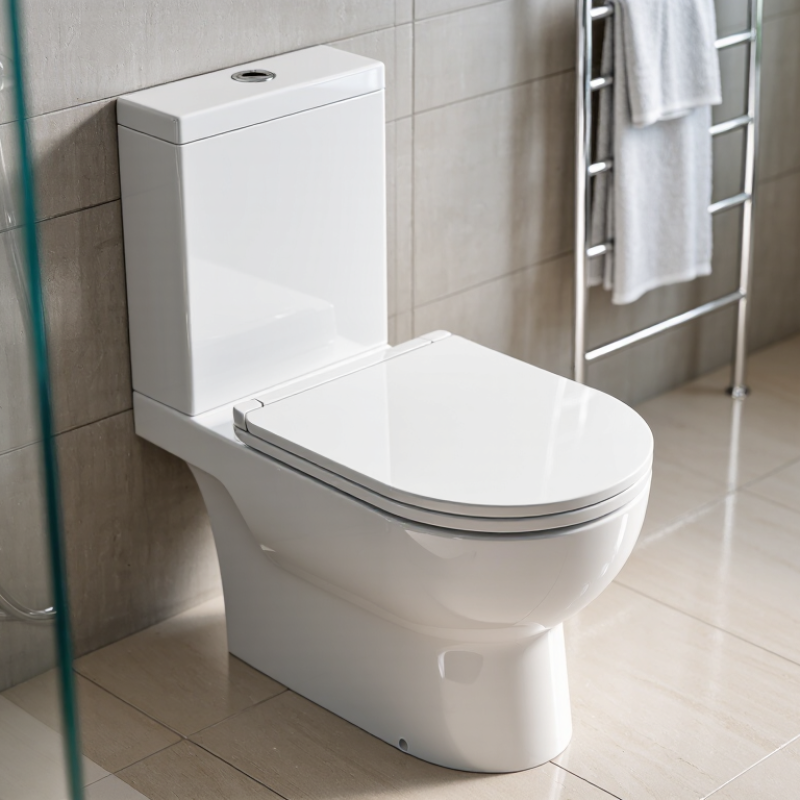
A Ceramic Toilet Pan is more than a white bathroom fitting. It is a daily contact point between water, waste, hygiene, and household maintenance. Its glazed ceramic surface resists staining, absorbs little moisture, and usually tolerates strong cleaning routines. Yet appearance alone proves very little. Poor flushing design, uneven installation, or weak rim geometry can create problems within months.
The WHO and UNICEF Joint Monitoring Programme reported that 3.5 billion people lacked safely managed sanitation in 2022. That figure gives bathroom choices a wider meaning. Water efficiency matters too. The U.S. Environmental Protection Agency states that WaterSense-labeled toilets use 1.28 gallons per flush or less. Replacing an older toilet can save nearly 13,000 gallons annually in a typical household. Small fixture. Serious impact.
Richard Trethewey, a plumbing and heating expert known from This Old House, once noted, “The toilet is the most used fixture in the house.” That practical observation should guide product selection. Check the trapway, flush performance, pan dimensions, rim height, glaze quality, and certification marks. Measure the rough-in before buying. A beautiful pan may not fit. A cheaper model may also demand more cleaning, water, or repair. This guide examines what a Ceramic Toilet Pan is, how it is manufactured, and which specifications deserve attention. Some recommendations remain subjective. Bathroom space, user mobility, local water pressure, and installation skill can change the best choice. That is worth remembering.
A ceramic toilet pan is the bowl-shaped part of a toilet that receives waste and directs it into the trapway. It is usually made from fired vitreous ceramic, then covered with a smooth glaze. The glaze helps resist stains, odors, and moisture. It also makes routine cleaning easier.
Look closely at the pan’s rim, bowl depth, outlet, and trapway design. Water should spread evenly around the bowl during flushing, although no model cleans perfectly in every bathroom. Some pans use less water but may need a stronger flush system. That trade-off is easy to overlook. A ceramic pan should feel dense, stable, and free from visible cracks, pinholes, or uneven glazing. Tap it gently. A dull sound may suggest hidden damage, though this check is not conclusive.
Choosing one requires accurate measurements. Check the rough-in distance from the finished wall to the waste outlet. Confirm the pan matches the cistern, seat, connector, and floor fitting. A few millimeters can create installation problems. I have seen buyers focus on appearance and forget the outlet position. That mistake can cause leaks or expensive changes. The bathroom’s available space also matters, especially around the door and nearby fixtures. Look for documented water-use data and compliance information from the seller. Professional installation is sensible when the drainage layout is unusual or the floor is uneven.
A ceramic toilet pan is made from carefully prepared mineral materials, usually clay, feldspar, and quartz. These ingredients are mixed with water and milled until the body becomes smooth and consistent. The liquid mixture is then shaped by casting or pressing. At this stage, small air pockets can create serious weaknesses later.
The formed pan must dry slowly and evenly. Uneven drying may cause warping or fine cracks. After drying, workers apply a glaze to create the smooth, water-resistant surface. The pan is fired in a kiln, often at temperatures above 1,200°C. During firing, the minerals bond and become hard ceramic. Experienced inspectors check the rim, trapway, mounting holes, glaze coverage, and dimensions. A bright surface alone is not enough. A pan can look attractive while having poor alignment or a rough internal passage. That is an easy detail to miss.
Tips: When choosing one, inspect the glaze under strong light. It should look even, without pinholes, bubbles, or dull patches. Tap the ceramic gently and listen for a clear, consistent sound. Measure the outlet position before installation. Also, check the pan’s water efficiency and compatible flushing system. Specifications can vary between models, so relying on appearance may lead to an expensive mistake. Real quality is found in both the visible finish and the hidden structure.
A ceramic toilet pan is a fired sanitary fixture made from clay-based material and covered with a protective glaze. Its smooth surface resists stains, odors, and everyday scratching when cleaned correctly. During installation checks, I look for an even glaze, clean drain opening, and no hairline cracks around the rim. Small defects can become expensive leaks.
No pan is perfect.
Water efficiency is a key feature. The U.S. EPA WaterSense specification allows labeled toilets to use no more than 1.28 gallons per flush, while standard models use about 1.6 gallons. That difference matters in busy homes. The European Commission’s EU Ecolabel criteria set a maximum flush volume of 6 liters for toilets. Still, lower water use should not weaken flushing performance. Check the flush test, trapway design, and bowl clearance.
Fit and comfort need equal attention. Measure the bathroom space, outlet position, rough-in distance, and seat height before purchasing. A glazed ceramic pan is easier to maintain, but harsh abrasives may dull its finish. I prefer a pan with stable mounting points and a wide, accessible cleaning area. Dual-flush controls can reduce water use, yet poorly adjusted buttons may feel loose over time. That is an overlooked detail. Always review installation instructions and independent performance data, not just appearance.
A ceramic toilet pan is a fired vitreous-china bowl with a smooth, non-porous surface. Its dense glaze resists staining and makes daily cleaning easier. The U.S. Environmental Protection Agency reports that toilets account for nearly 30% of indoor household water use. Therefore, pan design affects both hygiene and long-term consumption.
Close-coupled pans place the cistern directly above the bowl. They are compact and usually simpler to install. Back-to-wall models hide the cistern behind a panel, giving bathrooms cleaner lines. Wall-hung pans save floor space and make mopping easier, but they need a strong supporting frame. I would avoid choosing one only for appearance. Wall access and repair planning matter.
Shape changes comfort. Elongated pans offer more sitting space, while round pans suit smaller rooms. Rimless designs reduce hidden areas where residue may collect, although flushing performance still depends on water pressure and engineering. Washdown pans use a direct, forceful flow; siphonic pans generally provide quieter operation and stronger water movement. The wrong flush type can disappoint.
According to EPA WaterSense guidance, efficient toilets use 1.28 gallons per flush or less, compared with older models using much more. Check the certified flush volume, trapway size, seat height, and rough-in measurement. The WHO and UNICEF Joint Monitoring Programme’s 2023 report also shows that billions still lack safely managed sanitation, reminding us that reliability is not a luxury. A small measurement error can become an expensive installation problem.
| Ceramic Toilet Pan Type | Basic Configuration | Typical Overall Size | Common Rough-In or Installation Requirement | Cleaning and Maintenance | Main Advantages | Points to Check Before Buying | Suitable Applications |
|---|---|---|---|---|---|---|---|
| Close-Coupled Two-Piece Pan | The ceramic bowl and ceramic cistern are manufactured as separate pieces and connected during installation. | Approximately 650–750 mm deep, 360–400 mm wide, and 750–850 mm high, depending on the cistern design. | Usually requires a floor waste connection and a standard floor outlet position. The rough-in must match the pan outlet and drainage layout. | More joints and external surfaces than a one-piece model can create additional areas for dust and cleaning. | Generally easier to transport, widely available, and often simpler to replace or repair by component. | Confirm cistern compatibility, water inlet position, outlet direction, seat shape, and available bathroom depth. | Most standard residential bathrooms and replacement projects. |
| One-Piece Ceramic Pan | The bowl and cistern are formed as one integrated ceramic unit. | Approximately 650–750 mm deep, 360–400 mm wide, and 650–800 mm high. | Requires a compatible floor waste connection and sufficient clearance for the larger, heavier single unit. | Fewer external seams make the surface easier to wipe and reduce places where dirt can collect. | Compact appearance, fewer connection points, and a generally streamlined design. | Check the product weight, access route, replacement parts, seat dimensions, and the position of the water supply. | Contemporary bathrooms where easy surface cleaning and an integrated appearance are priorities. |
| Wall-Hung Ceramic Pan | The ceramic bowl is fixed to a concealed support frame, while the cistern is installed inside the wall or a service cabinet. | The pan commonly projects about 500–600 mm from the finished wall; height is adjustable during installation. | Needs a suitable concealed frame, reinforced wall structure, concealed cistern, access panel, and wall drainage connection. | The floor beneath the pan is open and easier to mop; the concealed cistern needs service access. | Creates a visually light appearance, allows flexible seat height, and can make a small room feel more spacious. | Confirm wall structure, frame load rating, finished-wall depth, service access, and compatibility of flush components. | Modern renovations, accessible bathrooms, and compact spaces planned for concealed plumbing. |
| Back-to-Wall Ceramic Pan | The rear of the pan sits directly against a wall or duct, concealing the cistern and most plumbing connections. | Approximately 550–650 mm deep and 360–400 mm wide; total height depends on the cistern arrangement. | May use a concealed cistern or a low-profile rear cistern. The finished wall and floor waste positions must be accurately prepared. | Few exposed plumbing surfaces are visible, although the rear gap and service panel must remain accessible where applicable. | Neat appearance, useful use of wall space, and less exposed pipework than a conventional close-coupled installation. | Measure the finished wall position, outlet location, cistern access, and clearance around the pan before ordering. | Bathrooms that need a clean, fitted appearance without a fully wall-hung installation. |
| Rimless Ceramic Pan | The bowl uses a rim-free internal design that directs flush water around the bowl without a conventional enclosed rim. | Commonly about 520–700 mm deep and 360–400 mm wide, depending on the pan shape. | Can be floor-mounted or wall-hung; the installation requirement depends on the selected pan configuration and flush system. | Usually easier to clean because there is no hidden rim channel where residue and bacteria can accumulate. | Improved access to the bowl interior and a more hygienic-looking, easy-clean design. | Check the tested flush performance, splash control, water distribution, seat compatibility, and required cistern settings. | Households prioritizing easy cleaning and modern bowl hygiene features. |
| S-Trap Floor-Outlet Pan | The waste outlet connects through the floor, with the trapway turning downward inside the ceramic pan. | Usually about 600–750 mm deep and 360–400 mm wide. | Requires the correct floor outlet position and rough-in measurement. The existing waste location must align with the pan outlet. | External cleaning is straightforward when the pan is close to the wall, but access to the floor connection may be limited after installation. | Suitable for many conventional floor-drain bathroom layouts and common replacement work. | Measure the floor outlet centerline, wall distance, pan height, and available side clearance before selecting a model. | Homes with an existing floor waste connection and bathrooms where the drainage route runs downward. |
| P-Trap Wall-Outlet Pan | The waste outlet runs horizontally through the rear wall rather than vertically through the floor. | Typically about 600–700 mm deep and 360–400 mm wide. | Requires a correctly positioned wall waste connection and sufficient cavity space behind the pan or wall. | External surfaces are easy to access, but the rear connection should remain reachable for inspection and maintenance. | Can preserve floor space and is useful when the drainage system is designed for a horizontal wall outlet. | Confirm wall outlet height, pan projection, wall thickness, plumbing access, and whether the existing drainage system is compatible. | Bathrooms with wall drainage or renovation layouts that cannot use a floor outlet. |
| Raised-Height Ceramic Pan | A floor-mounted or wall-hung pan positioned higher than a standard model to reduce bending when sitting or standing. | The bowl rim is often around 460–480 mm above the finished floor, excluding the seat; exact height varies by design. | May use a floor or wall outlet, depending on the underlying pan configuration. Clear transfer space should be planned around the toilet. | Cleaning requirements are similar to other ceramic pans; the surrounding clearance is important for safe access. | Can improve comfort and accessibility for taller users, older adults, and people with limited mobility. | Check seat height, side-transfer space, grab-rail locations, door swing, and compliance with applicable accessibility standards. | Accessible bathrooms, assisted-living areas, and homes designed for long-term comfort. |
| Dual-Flush Ceramic Pan and Cistern Set | A ceramic pan is paired with a cistern offering separate reduced-volume and full-volume flush options. | Dimensions vary by pan style; many floor-mounted sets are approximately 600–750 mm deep and 360–400 mm wide. | Requires a compatible cistern, flush valve, water inlet, and drainage connection. Water-efficiency ratings vary by market. | Cleaning depends on the bowl design; internal flush valves should remain accessible for servicing. | Allows users to select a lower flush volume for liquid waste and a higher volume for solid waste, which can reduce water use. | Check the certified flush volumes, local water-efficiency requirements, minimum operating pressure, and replacement valve availability. | Residential and commercial bathrooms where water conservation is an important design objective. |

A ceramic toilet pan is the glazed bowl that receives waste and directs it into the drainage system. Its hard surface resists stains, odors, and everyday scratching. Quality depends on more than appearance. The clay body, glaze coverage, trapway design, and firing process all affect performance. A smooth, evenly glazed pan is easier to clean. Look closely around the rim and outlet. Uneven areas may collect water and residue.
Measure your bathroom before choosing a model. Check the rough-in distance from the finished wall to the waste outlet. Confirm the pan’s width, projection, and height against the available space. A compact pan may suit a narrow room, while a higher model can improve comfort for some users. Do not guess. I once measured the room but forgot the skirting board, which caused an awkward gap. Door clearance matters too.
Examine the trapway and flushing design. A wider, glazed passage can reduce blockages and improve cleaning. Ask for verified water-use data, then compare it with local plumbing requirements. Certification documents are more reliable than vague sales claims. Test the seat position if possible, especially for children or older adults. Check fixing points, outlet compatibility, and replacement parts before purchase. The most attractive pan may still be unsuitable. I still recheck every measurement before installation.
Measure the rough-in distance from the finished wall to the center of the waste outlet before choosing a ceramic toilet pan. The most common residential rough-in sizes are 10, 12, and 14 inches.
Selection guide: Choose a pan that matches your rough-in measurement, then check the available bathroom space, bowl shape, seat height, waste outlet position, and certified flush performance. A 12-inch rough-in is widely used, but the existing plumbing should always be measured rather than assumed.