What Is the Best Type of Outdoor Giant Pole Flag Banner?
Choosing the best Outdoor Giant Pole Flag Banner depends on where it will stand, how long it must last, and what people need to read from a distance. A broad feather shape can catch attention near a storefront, while a rectangular banner offers more room for a clear message. There is no universal winner. “Choose the fabric and pole for the wind you actually face, not the weather you hope for,” says outdoor display specialist Daniel Reed. Treat that as a useful rule, not a substitute for checking the site.
A strong choice starts with practical details. Polyester is a common option for outdoor display; its weight, stitching, and finish affect how it hangs and handles repeated use. Check that the pole sections fit securely and that the base suits the surface, whether it is pavement, grass, or a trade-show lawn. Look closely at the printed area, too. Tiny lettering may disappear across a busy parking lot. It happens. A bright graphic can still disappoint if the message is hard to read or the banner twists around its pole.
This guide compares popular shapes, fabrics, pole materials, and base styles, then considers visibility, setup, and upkeep. It also points out the trade-offs buyers sometimes miss: the tallest flag is not always the clearest, and a lightweight kit may be easier to carry but less steady in exposed locations. The right answer depends on your setting. Measure the space, consider typical wind exposure, and check the manufacturer’s care instructions before choosing. A little doubt is useful here; real sites are rarely as tidy as product photos.
Types of Outdoor Giant Pole Flag Banners
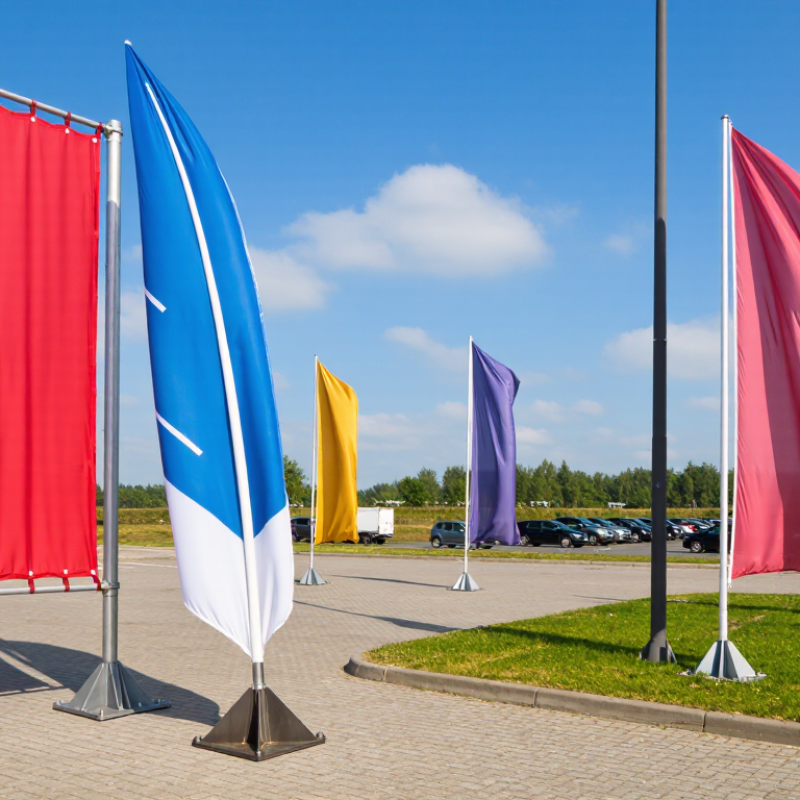
Outdoor giant pole flag banners come in several useful shapes. Rectangular banners offer a broad area for large lettering, dates, or simple graphics. They work well beside entrances and along open walkways. Their flat shape can catch strong gusts, though, so fabric and mounting hardware matter.
Feather and teardrop banners have curved edges that help keep their shapes visible in light breezes. They suit roadside displays and event grounds where people view them from a distance. Single-sided versions are lighter and often more economical, but reverse-side lettering may show through backward. Double-sided banners use an inner layer or separate panels, giving clearer reading from both directions. Sleeved banners slide over a pole, while grommet-mounted styles attach at selected points. I would not choose by appearance alone; pole height and local wind conditions can change what works.
Tips: Measure the full display height, including the pole base. Check that the fabric is rated for outdoor use and that the pole can rotate freely. A rotating arm may reduce twisting. Inspect seams after storms. Small details matter. If wind exposure is uncertain, ask the supplier for fabric weight and care guidance before ordering.
Key Materials and Construction Features
For an outdoor giant pole flag banner, fabric choice affects how it handles sun, rain, and repeated movement. Woven polyester is a common option because it is relatively light and dries quickly after a shower. For exposed, windy locations, a mesh-style fabric can let some air pass through, reducing strain on the banner and pole. It may look less solid, though, especially when viewed from a distance. No fabric is perfect.
Construction matters just as much. Look for double-stitched hems and reinforced corners, where flapping can pull hardest. A pole sleeve should fit the intended pole without bunching; loose fabric can twist, while an overly tight sleeve can make installation difficult. Check that the stitching is even and that attachment points feel secure, not merely decorative. UV-resistant inks can help preserve color, but prolonged direct sunlight will still fade many prints over time. That is worth remembering.
Before choosing a banner, consider its actual setting: a sheltered courtyard has different demands from an open roadside area. A heavier fabric may feel durable in hand but can place more load on the pole during gusts. Specifications help, yet real performance also depends on installation, exposure, and upkeep. Minor wear can be easy to miss until a seam begins to open.
Choosing a material: Knitted polyester is a durable, versatile choice for many outdoor flags. Nylon is lightweight and often displays colors vividly. Mesh polyester allows more air to pass through its open structure, which can be useful in windy locations. These ratings are a qualitative comparison, not standardized test results; actual performance depends on fabric weight, construction, weather, and installation.
How to Choose the Right Flag Size and Shape
What Is the Best Type of Outdoor Giant Pole Flag Banner?
How to Choose the Right Flag Size and Shape
The right flag size depends on viewing distance, pole height, and nearby obstacles. A banner beside a doorway needs less fabric than one meant to catch attention across a parking lot. Measure the usable pole height, then check the ground clearance. The lower edge should not brush people, plants, or passing equipment. Small details matter.
Shape affects how the flag moves and what remains visible. Feather-shaped flags offer a tall, narrow display and often suit sidewalks or event entrances. Teardrop shapes hold a curved outline in light wind, while rectangular flags provide more space for broad lettering. Very long words can become difficult to read on narrow banners. Keep the message brief.
Wind is worth considering, too. A larger flag may seem more noticeable, but it can pull harder on its pole and may be awkward in exposed locations. Check the manufacturer’s size guidance for the specific pole system, since dimensions are not always interchangeable. If possible, view a sample at the intended distance before ordering.
I once assumed bigger meant clearer; from across the lot, the extra fabric did not help much. A quick site test can prevent that mistake.
Wind Resistance, Mounting, and Safety Considerations
What Is the Best Type of Outdoor Giant Pole Flag Banner?
Wind Resistance, Mounting, and Safety Considerations
The best banner is not simply the largest or heaviest; it must suit local wind exposure and its mounting system. A mesh banner can let some air pass through, reducing the solid surface catching gusts, though its performance depends on fabric, stitching, and installation. NOAA’s Beaufort wind scale describes 13–18 mph winds as strong enough to move small branches, while 19–24 mph winds can sway small trees. These are useful observations, not safe operating limits for a particular pole. Check the pole maker’s rated wind conditions, then lower or remove the banner when forecast gusts exceed them. A sunny day can still turn rough.
Mounting matters just as much. Set the pole in a stable base suited to its height, banner area, and ground surface; a small patio base may be inadequate for a tall banner outdoors. Inspect clamps, ropes, seams, and fasteners for looseness or fraying before use. Keep the banner clear of overhead wires, walkways, and vehicle routes. If the pole flexes sharply, the base shifts, or fabric snaps hard in gusts, take it down. I would not rely on a single calm-weather test.
Tips: Follow the pole’s documented wind rating, not a guess. NOAA wind observations help explain conditions, but they do not certify banner safety. After rain or repeated gusts, check the base again; saturated soil can loosen an anchor. One detail is easy to miss: wear on a small connector can matter more than a new banner.
Best Uses and Maintenance Requirements
A giant pole flag banner works best when its fabric matches the site. Polyester is a practical choice for many outdoor displays because it dries relatively quickly and handles regular use. In exposed, gusty locations, a lighter open-weave fabric may reduce wind strain, though it can look less solid from a distance. Choose a size the pole is rated to support, and leave enough clearance from trees, signs, and walkways. A banner that looks impressive in a showroom can be awkward beside a narrow entrance.
Placement matters. Use large banners to mark event grounds, guide visitors toward an outdoor entrance, or make a temporary display visible across a parking area. Check the pole, clips, and stitching before raising it. Small frays matter. After strong wind or heavy rain, lower the banner if it is twisting, snapping, or pulling unevenly; continuing to display it can damage both fabric and hardware. Cleaning is simple but not instant: follow the fabric’s care instructions, use mild soap when appropriate, and let the banner dry fully before storage. Never pack it away damp. Inspect seams and attachment points every few weeks during frequent use. I would not assume a banner is ready for another season just because its colors still look bright. The fittings may tell a different story.