
Choosing the right Cosmetic Bed affects comfort, treatment precision, hygiene, and your clinic’s daily workflow. It is not simply a matter of selecting the softest cushion or the lowest price. A practical evaluation should examine the backrest range, working height, lifting capacity, upholstery seams, motor noise, and cleaning resistance. Small details matter. A narrow gap can trap disinfectant residue. A slow actuator can interrupt a busy appointment.
Dr. Michael H. Gold, a board-certified dermatologist and cosmetic medicine educator, captures this principle clearly: “Patient comfort is part of treatment quality.” That idea should guide every purchasing decision. A stable base helps practitioners work accurately. Smooth electric adjustment reduces unnecessary patient movement. High-density foam supports longer procedures without creating pressure points. Medical-grade upholstery makes routine disinfection easier, although no material eliminates the need for careful cleaning.
The best Cosmetic Bed should also match the treatments you actually provide. Facial procedures may need a flexible backrest and comfortable head support. Body treatments may require stronger load capacity and wider access. Check the warranty, replacement-part availability, and service response before signing an order. These details are easy to overlook.
Price still matters. It should not lead alone.
A thoughtful buyer may even discover an inconvenient truth: an attractive design can hide poor ergonomics, while a plain model may perform better. This guide, “7 Tips for Choosing the Best Cosmetic Bed,” focuses on practical evidence, realistic clinic needs, and the small decisions that protect both patients and practitioners.
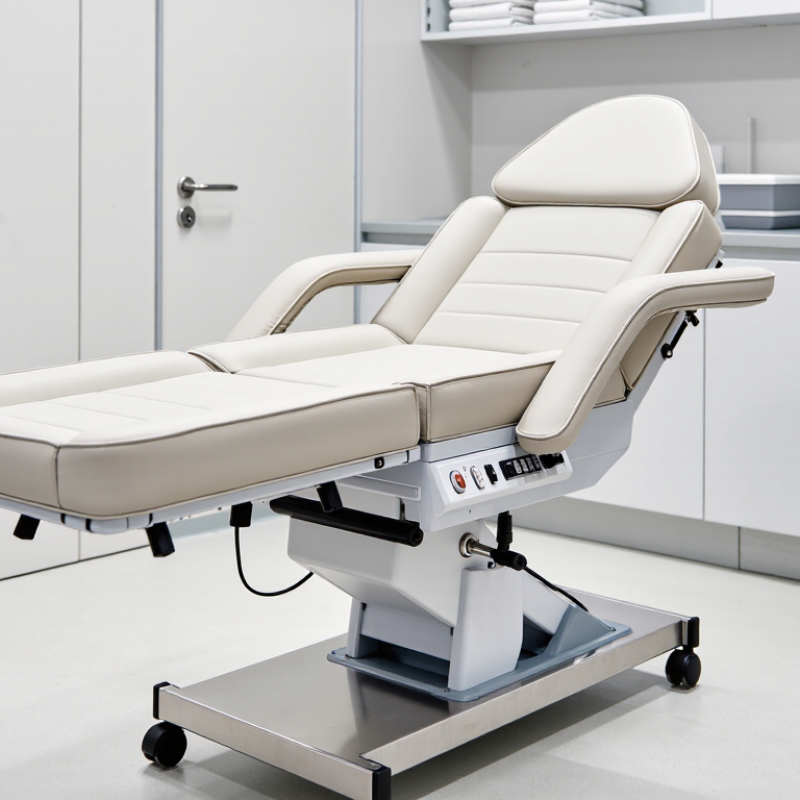
Choosing the best cosmetic bed starts with the treatment, not the upholstery color. Define each procedure you plan to perform. Facials may need a stable, slightly raised surface. Injectable treatments often require precise head positioning and easy access around the patient. Body treatments may need a longer, wider bed with stronger weight support.
Write down the intended use. Will the bed serve one specialist or several? Will patients climb onto it independently? If mobility is limited, an electric height adjustment can reduce transfer risks. Check the working height, backrest range, cushioning, and maximum load in the technical specifications. A bed that feels comfortable for ten minutes may become unsuitable during a two-hour treatment.
Think about daily workflow. The controls should be reachable without interrupting sterile preparation or patient communication. Smooth, sealed surfaces support consistent cleaning between appointments. Removable cushions can help, but gaps may collect product residue. That detail is easy to overlook. Also measure the room with drawers, stools, and equipment in place. A bed can fit on paper and still restrict movement.
I would not choose the most adjustable model automatically. Extra functions can increase maintenance and training needs. A simpler bed may work better for a focused service menu. However, my first assumption might be wrong if your treatments change seasonally. Review the bed after observing real appointments, including patient entry, repositioning, and cleaning time. Check local safety requirements and follow the manufacturer’s care instructions.
A cosmetic bed should feel stable before it feels luxurious. During treatment trials, I check pressure points after sitting and lying for several minutes. Thin padding can look elegant, yet it may create discomfort during longer procedures. Choose layered cushioning that supports the back without sinking excessively. The upholstery should feel warm, resist fluid absorption, and allow careful cleaning between patients. Small details matter. Rounded edges, quiet hinges, and a face opening can reduce strain for both patient and practitioner.
Adjustability deserves practical testing, not just a list of features. Raise and lower the bed while observing noise, speed, and smoothness. Test the backrest, leg section, and height controls with a person lying still. A hand control should be easy to find, even with gloves. Check whether the lowest position helps shorter patients step on safely. Also verify the working height for the practitioner, because repeated bending can affect precision and fatigue. I once focused too much on motor power and overlooked awkward control placement. That was a useful mistake.
Patient support includes more than a soft mattress. A stable face cradle, supportive arm areas, and removable bolsters can improve positioning. The frame should remain steady when the patient turns or sits up. Ask for documented load limits and maintenance guidance from the supplier. Inspect welds, hinges, cables, and locking points before purchase. If possible, invite several staff members to test the bed. One person’s ideal firmness may be another patient’s complaint.
A cosmetic bed should support safe, comfortable work, not merely look attractive. In my experience, the best starting point is a nonporous upholstery material, such as professional-grade vinyl or sealed polyurethane. It should resist oils, water, stains, and approved disinfectants. Check the seams closely. Loose stitching can trap residue.
The frame also matters. Choose strong, rust-resistant metal with stable joints and a weight rating suitable for daily treatments. Dense foam usually keeps its shape longer, although overly firm padding can reduce client comfort. Look for rounded edges and a surface without deep buttons or decorative gaps. Simple designs clean faster. That matters between appointments.
Hygiene depends on routine, not appearance. Wipe the bed after every client and follow the disinfectant’s stated contact time. Never assume a quick spray is enough. Removable covers can help, but only if they fit tightly and tolerate repeated washing. Read the care instructions before using alcohol, bleach, or abrasive cleaners. I once overlooked a small surface crack, thinking it was harmless; it later became difficult to sanitize properly. That mistake changed my inspection routine. Check hinges, cables, lifting parts, and upholstery weekly. Keep a maintenance log, replace damaged components promptly, and ask the supplier for cleaning guidance and spare-part support. A beautiful bed is still a poor choice if its maintenance demands are unrealistic.
7 Tips for Choosing the Best Cosmetic Bed
Compare Safety Features, Stability, and Weight Capacity
A cosmetic bed should feel secure before a client lies down. Check the frame, hinges, lifting system, and locking mechanisms carefully. Look for an emergency stop, protected cables, and controls that prevent accidental movement. Gaps around moving parts should not trap fingers or clothing. Ask whether the bed has passed documented safety testing, not merely a sales inspection.
Stability becomes obvious during everyday treatment. A wide base, strong casters, and reliable wheel locks help prevent unwanted movement. Press each corner and observe whether the frame rocks or twists. Test the bed at its highest position, where instability may become more noticeable. A smooth adjustment is useful, but quiet operation does not always mean dependable construction.
Weight capacity needs careful reading. Confirm whether the stated limit includes the client, technician, accessories, and treatment equipment. Choose a bed with a sensible safety margin rather than operating near its maximum rating. A client shifting position can create more stress than a motionless load. I once underestimated the effect of a heavy device placed near one edge; the bed felt less balanced than expected. That experience changed my inspection routine. I now test the surface, base, and controls under realistic working conditions. Manufacturer instructions still matter, because similar-looking beds can have very different load limits.
Compare common cosmetic-bed categories using a 10-point safety score, a 10-point stability score, and rated load capacity normalized to a 300 kg reference.
Portable folding beds are easier to transport but typically provide lower load capacity and stability. Hydraulic and electric beds usually offer stronger frames and more adjustment options. Before purchasing, verify the manufacturer's rated working load, locking mechanisms, anti-slip feet, pinch-point protection, emergency controls, and compliance documentation.
7 Tips for Choosing the Best Cosmetic Bed
Measure the treatment room, including doorways, storage, and operator movement. Measure twice. Leave room. A bed that fits tightly may obstruct cleaning and client access. Check the height range, backrest movement, and weight capacity against daily procedures. Test the controls in person if possible. A smooth motor matters when clients remain still for long sessions.
Set a complete budget, not just a purchase price. Include delivery, assembly, electrical work, protective covers, and future repairs. Compare upholstery, frame strength, foam density, and adjustment mechanisms. Cheaper materials can crack, flatten, or stain sooner than expected. This is where my own judgment can be imperfect; attractive finishes sometimes hide weak construction. Ask how easily surfaces can be disinfected without damaging them. Request written specifications.
Study the warranty carefully. Check its duration, covered components, labor terms, exclusions, and response process. Read every clause. Ask whether replacement parts remain available after the warranty ends. A supplier with clear technical documents and trained service support offers stronger evidence of reliability. Consider downtime as a real cost, especially when one failed actuator can cancel several appointments. Calculate expected use over five years, then compare repairability, comfort, stability, and resale potential. Long-term value is not always the lowest price; it is dependable performance with fewer avoidable interruptions.
| Tip | Decision Area | Key Dimension to Assess | Practical Planning Benchmark | What to Verify Before Buying |
|---|---|---|---|---|
| 1 | Measure the Available Space | Bed footprint and movement area | Many cosmetic beds are approximately 70–80 inches long and 25–32 inches wide. Plan for at least 24 inches of working clearance along the sides and about 36 inches at the head or foot where staff must move frequently. | Measure doorways, elevators, treatment-room walls, power outlets, and storage areas. Include the bed’s maximum reclined position and the space required for a stool, trolley, or technician. |
| 2 | Set a Complete Budget | Purchase price plus setup and ownership costs | Create separate allowances for delivery, assembly, electrical work, accessories, cleaning supplies, repairs, and downtime. A lower purchase price may not represent the lowest total cost over the equipment’s service life. | Request a written quote showing freight, installation, taxes, accessories, return fees, and replacement-part costs. Compare the complete delivered price rather than the listed bed price alone. |
| 3 | Match the Bed to Treatments | Adjustment range and operating position | A suitable bed should support the positions required for the intended services, such as flat, raised-back, leg-elevated, or face-down use. Electric adjustment can improve positioning consistency, while manual adjustment can reduce purchase and maintenance cost. | Test every adjustment with a user on the bed. Check control accessibility, movement noise, speed, stability, headrest flexibility, footrest support, and whether the bed can be positioned safely for each planned treatment. |
| 4 | Check Capacity and Stability | Working load, frame strength, and stability | Compare the manufacturer’s stated working load with the combined weight of the client, practitioner pressure, equipment, and accessories. Do not treat the client’s body weight alone as the required capacity. | Look for a clearly stated working-load rating, a stable base, secure locking points, minimal side-to-side movement, and an emergency-lowering method for powered models. Follow local safety and electrical requirements. |
| 5 | Evaluate Hygiene and Materials | Upholstery durability and cleanability | Non-porous, fluid-resistant upholstery with sealed or minimally exposed seams is generally easier to disinfect. Rounded edges and removable cushions can reduce cleaning time and help prevent buildup around joints. | Confirm compatibility with the disinfectants used in the practice. Inspect stitching, underside panels, gaps around hinges, cushion attachment points, and the availability of replacement upholstery or cushions. |
| 6 | Review Warranty and Service | Coverage period, exclusions, and support response | Warranty terms commonly differ by frame, motor, upholstery, and accessories. Longer coverage is useful only when parts, labor, transport, and service procedures are clearly defined in writing. | Confirm the warranty start date, covered components, labor coverage, exclusions, claim process, expected response time, availability of replacement parts, and whether servicing can be completed locally. |
| 7 | Calculate Long-Term Value | Five-year ownership cost and daily usability | Use this comparison: five-year cost = purchase price + delivery and setup + expected maintenance + replacement parts − expected resale value. Also consider setup time, cleaning time, energy use, staff comfort, and treatment capacity. | Choose the option that supports frequent treatments without excessive adjustment time, discomfort, instability, or difficult cleaning. Record expected annual usage and compare the estimated cost per treatment across shortlisted beds. |
| Buying reminder: Dimensions, load ratings, prices, warranty coverage, and regulatory requirements vary by model and region. Confirm the latest specifications in the written documentation before placing an order. | ||||