
Choosing the right Sheet Stock Stained Glass supplier is more complicated than comparing color charts. A beautiful sample may arrive with uneven texture, slight color variation, or edges damaged during transport. Buyers need dependable material, careful packaging, accurate product descriptions, and responsive service. This guide examines seven suppliers through those practical details, not through polished promises alone.
Robert Oddy, a respected stained-glass author and educator, offers a useful workshop principle: “Choose the glass for the light, not only for the color.” That advice matters when selecting translucent cathedral glass, dense opalescent sheets, or textured architectural stock. A red sheet can appear warm beside a window but look muddy under artificial lighting. Thickness also affects cutting control, assembly, and final weight. Small differences become obvious on a large panel.
The suppliers below are assessed for sheet variety, consistency, sample availability, minimum orders, shipping protection, and technical guidance. These factors help buyers reduce waste and plan production more confidently. Some vendors excel in handcrafted character, while others provide stronger inventory depth or faster fulfillment. No ranking can predict every shipment. Even experienced buyers should request current samples and confirm specifications before placing a substantial order. That extra step may feel slow, but it can prevent an expensive box of unsuitable glass from reaching the workbench. Reliability is not perfection. It is clear information, repeatable service, and honest support when something goes wrong.
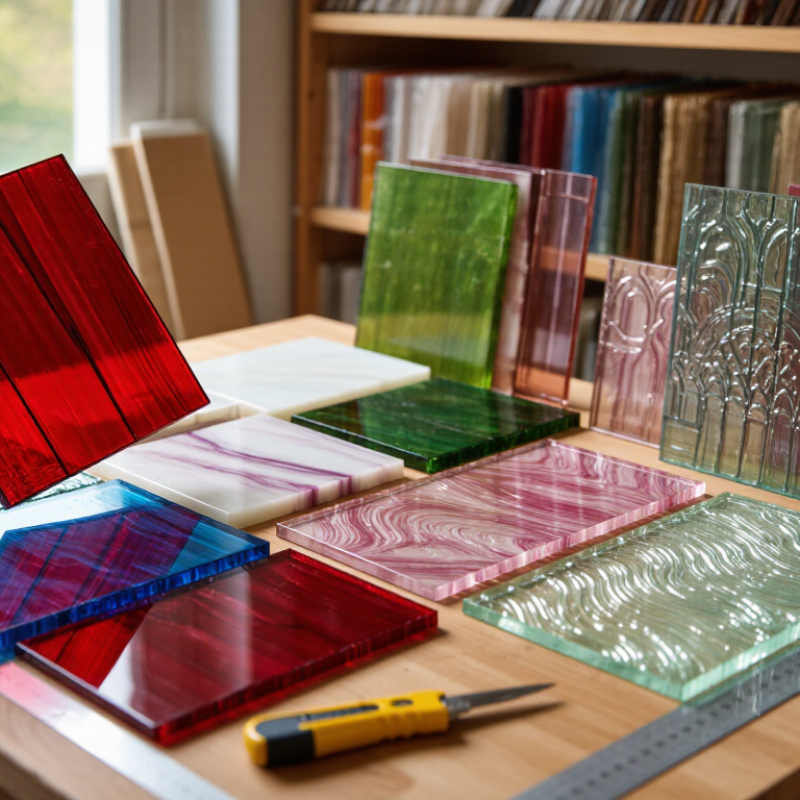
Sheet stock is flat stained glass sold in workable panels, often sized for cutting, foiling, leading, or kiln forming. It may be transparent, opalescent, textured, laminated, or colored throughout. Thickness, surface texture, and light transmission can vary between production runs.
Supplier selection matters because sheet stock is not merely decorative material. A 3 mm panel can arrive with edge chips, internal stress, or inconsistent color. Those defects affect cutting accuracy and project yield. The U.S. Geological Survey’s Mineral Commodity Summaries 2024 reported global soda ash production at roughly 79 million metric tons in 2023. Soda ash supports glassmaking, but raw-material scale does not guarantee artistic consistency. Ask for batch information, technical sheets, and protective packaging details. Request small samples before ordering full cartons.
Energy and logistics also influence supply reliability. The International Energy Agency’s 2023 report on the glass industry identifies high-temperature melting as a major energy demand within glass production. That matters when fuel prices, furnace outages, or transport delays affect lead times. I have found that a beautiful catalog image can hide practical weaknesses. Not ideal, but common. Check whether the supplier states actual panel dimensions, allowable thickness variation, color continuity, and breakage policies. Reliable sellers also explain storage conditions and provide traceable invoices. Compare delivered cost, not just the listed sheet price. A slightly higher price may reduce waste, but only when quality records support it.
Sheet stock is flat glass sold in individual sheets for cutting, shaping, and assembly. Thickness is an important supplier-selection factor because it affects handling, cutting behavior, packaging requirements, shipping cost, and the weight of the finished panel.
Approximate values are calculated using a typical glass density of 2,500 kg/m³: mass per square metre equals thickness multiplied by density. Actual product weight may vary slightly by glass composition, texture, and manufacturing tolerance.
7 Best Sheet Stock Stained Glass Suppliers for Buyers
When comparing stained glass sheet stock suppliers, inspect more than color cards. Ask for thickness tolerances, cut-size limits, texture consistency, and batch photographs. A supplier should identify the glass type, compatible firing range, and storage conditions. ASTM C1036 provides useful flat-glass quality language, even though it does not solve every stained-glass concern.
Material availability also deserves attention. The U.S. Geological Survey’s Mineral Commodity Summaries 2024 estimated U.S. industrial sand and gravel production at about 96 million metric tons in 2023. That large supply does not guarantee dependable sheet stock. Buyers still need evidence of traceability, protective packaging, and replacement policies. Request a small sample before ordering a full case. Hold it beside daylight, not only warehouse lighting.
Compare minimum order quantities, shipping damage rates, and realistic lead times. Ask whether the supplier records lot numbers. This matters when a repair requires a matching texture months later. Quality systems aligned with ISO 9001 can indicate controlled processes, but certification alone proves little. I have seen attractive samples differ from later shipments. That is an uncomfortable reminder. Written specifications should outrank friendly promises. Also check invoices for thickness, dimensions, quantity, and freight responsibility. A low unit price may hide high breakage, unusable offcuts, or slow claim handling.
Seven notable suppliers stand out through distinct product strengths. Supplier One focuses on cathedral sheets, offering clear color and visible light transmission. Supplier Two specializes in opalescent glass, useful for layered windows and softer daylight. Supplier Three carries textured sheets, including ripple, crackle, and hammered surfaces. These patterns can hide minor cutting marks.
Supplier Four serves restoration buyers with historically matched colors and thicknesses. Supplier Five offers broad wholesale inventories, helping studios reduce backorders and freight costs. Supplier Six develops heat-resistant sheets for kiln-forming projects, although compatibility must be tested before firing. Supplier Seven supports custom production, including unusual colors, surface finishes, and repeat orders. Custom work sounds ideal, but minimum quantities may challenge small workshops.
Grand View Research reports that the global stained-glass market is expanding as architectural decoration and renovation demand increase. The U.S. Department of Energy also notes that glass performance depends strongly on thickness, coating, and thermal properties. Buyers should therefore compare sheet dimensions, shade variation, cutting waste, and documented safety data. A practical check is simple: place two samples beside a window before ordering a full case. Color often changes dramatically outdoors. I have found supplier photographs unreliable at times. That deserves more skepticism. Availability, packing quality, and replacement policies can matter as much as artistic range.
Choosing among seven sheet stock stained glass suppliers requires more than comparing listed prices. Request small samples before placing a large order. Examine color consistency, surface clarity, edge quality, and thickness with a caliper. Hold each sheet near a window. Uneven texture and trapped bubbles become easier to notice. Confirm whether the material suits copper foil, lead came, or kiln work. Product descriptions can be incomplete.
Pricing needs a wider view. Compare the sheet price, cutting fees, packing costs, freight, taxes, and possible breakage replacements. A cheaper quote may become expensive after shipping. Ask for current stock levels and a written delivery window. Reliable suppliers explain batch differences and alert buyers about delays. Customer service matters too. Send the same questions to each supplier, then compare response speed, technical detail, and willingness to solve problems. A polished website proves little.
Tips: Order samples from shortlisted suppliers. Check packaging before signing for delivery. Photograph damaged corners immediately. Ask how claims are handled and how quickly replacements ship. Keep every quotation and measurement in one file. Do not judge quality from color alone. Lighting changes it. My own evaluation would include one small test panel, although this adds time and material. That inconvenience is worthwhile. Suppliers should also provide clear invoices, consistent units, and realistic lead times. Vague promises deserve careful reconsideration.
When choosing a sheet stock stained glass supplier, begin with the material, not the catalog photograph. Experienced buyers request samples before placing large orders. Hold each sample against daylight and indoor lighting. Colors can shift noticeably. Check the sheet’s thickness, surface texture, transparency, and compatibility with your cutting method. Some textured sheets require slower scoring and firmer support.
A dependable supplier should provide clear specifications, current stock information, and realistic delivery estimates. Ask how sheets are packed, especially when shipping across long distances. Strong corner protection and rigid separators can prevent costly cracks. Review the return policy for broken or incorrectly described material. Communication matters too. A supplier who answers technical questions carefully usually understands the craft better.
Batch consistency deserves attention. I once matched two blue sheets that looked identical online, yet their tones differed under sunlight. The finished panel felt uneven. That mistake changed how I order materials. I now keep supplier samples, record batch numbers, and buy extra sheets for repairs. It adds expense, but replacement glass rarely matches perfectly. Smaller suppliers may offer more personal guidance, while larger distributors may provide wider stock and faster processing. Neither option is automatically better. Compare evidence, not promises. A short test panel can reveal cutting stress, foil adhesion, and color changes before your main project begins.
| Supplier Profile | Best For | Typical Sheet Selection | Common Thicknesses | Typical Order Size | Custom Cutting | Indicative Dispatch Time | Buyer Checkpoint |
|---|---|---|---|---|---|---|---|
| Specialist Stained Glass Distributor | Regular hobbyists, studios, and restoration work | Opalescent, cathedral, wispy, textured, streaky, and clear sheet glass | Approximately 2–4 mm | Individual sheets to mixed cartons | Often available; confirm cut-size charges | 1–5 business days for stocked material | Ask about packing methods, breakage claims, and color consistency between batches |
| Direct Sheet-Glass Manufacturer | Large projects, repeat production, and color matching | Factory-produced decorative, rolled, textured, and specialty glass | Usually around 2–6 mm, depending on product | Packs, cases, or pallet quantities are common | Limited on standard stock; production runs may be customized | Several days to several weeks | Confirm minimum order quantity, batch variation, and technical specifications |
| Regional Wholesale Glass Distributor | Schools, community studios, and high-volume buyers | Mixed decorative glass, clear sheet, mirror, and related flat-glass products | Approximately 2–6 mm | Multiple sheets, cartons, or trade orders | Frequently available for standard sizes | Same day to 7 business days when locally stocked | Compare trade pricing with delivery fees and check local pickup options |
| Online Craft-Material Retailer | Beginners, small projects, and convenient mixed orders | Precut squares, small panels, sampler packs, and popular decorative styles | Commonly around 2–4 mm | Single pieces, packs, and small assortments | Usually limited to listed sizes | 2–10 business days, depending on inventory | Review actual piece dimensions, color photographs, return terms, and shipping protection |
| Architectural and Specialty Glass Supplier | Architectural panels, commercial interiors, and demanding specifications | Laminated, cast, textured, fire-rated, or custom decorative sheet products | Often 4–12 mm or more, depending on construction | Project quantities and fabricated panels | Yes, subject to drawings and fabrication limits | 2–8 weeks is common for project work | Verify safety standards, edgework, tolerances, and whether the product is suitable for soldering |
| Local Glass Studio or Fabricator | Custom colors, local collection, and technical guidance | Studio-made, kiln-formed, fused, or locally cut sheet pieces | Typically 3–6 mm, depending on the process | Single panels to small production runs | Yes; design consultation is often available | 1–4 weeks for custom work | Request a physical sample and confirm compatibility with the intended kiln or copper-foil process |
| Reclaimed or Salvage Glass Dealer | Restoration, vintage designs, and one-of-a-kind projects | Recovered antique, textured, patterned, and architectural sheet glass | Commonly 2–6 mm, but dimensions can vary significantly | Individual pieces or limited lots | Usually limited; cutting may be available by arrangement | Same day to several weeks, depending on sourcing | Inspect for scratches, edge damage, lead paint risk, contamination, and inconsistent thickness |
Buyer note: Before placing an order, confirm sheet dimensions, glass compatibility, thickness tolerance, packaging, insurance, breakage replacement policy, and the supplier’s return conditions.