2026 Top Motorized Pergola Brands for Global Buyers
The 2026 Top Motorized Pergola Brands for Global Buyers guide examines a rapidly evolving outdoor-living category. Motorized Pergola systems now combine adjustable louvers, rain sensors, LED lighting, and smartphone controls. These features can transform a sunny terrace into a shaded dining room within seconds.
Grand View Research valued the global smart home market at approximately USD 121.59 billion in 2023. It also forecasts strong growth through 2030, supported by connected devices and automated controls. This wider trend matters because premium pergolas increasingly function as outdoor smart-home products. Market reports differ, however. Pergola-specific figures remain less consistent, so buyers should question impressive market claims.
Paul Renson, CEO of Renson, has described outdoor living as “not a trend, but a way of life.” That perspective helps explain the demand for weather-responsive spaces across Europe, North America, the Middle East, and Asia-Pacific. Yet automation alone does not prove quality. Motor torque, powder-coating performance, drainage design, wind ratings, installation support, and replacement-part access deserve closer attention.
This guide compares leading brands through those practical details. It considers product engineering, regional availability, warranty clarity, customization, and long-term service. A pergola may look elegant in a showroom. Its real test arrives during heavy rain, coastal humidity, or a winter power failure. Some brands perform brilliantly in one climate but disappoint elsewhere. That limitation deserves honest attention. Global buyers should compare certified specifications, local installers, and total ownership costs before choosing a supplier.
Definition and Key Features of Motorized Pergolas
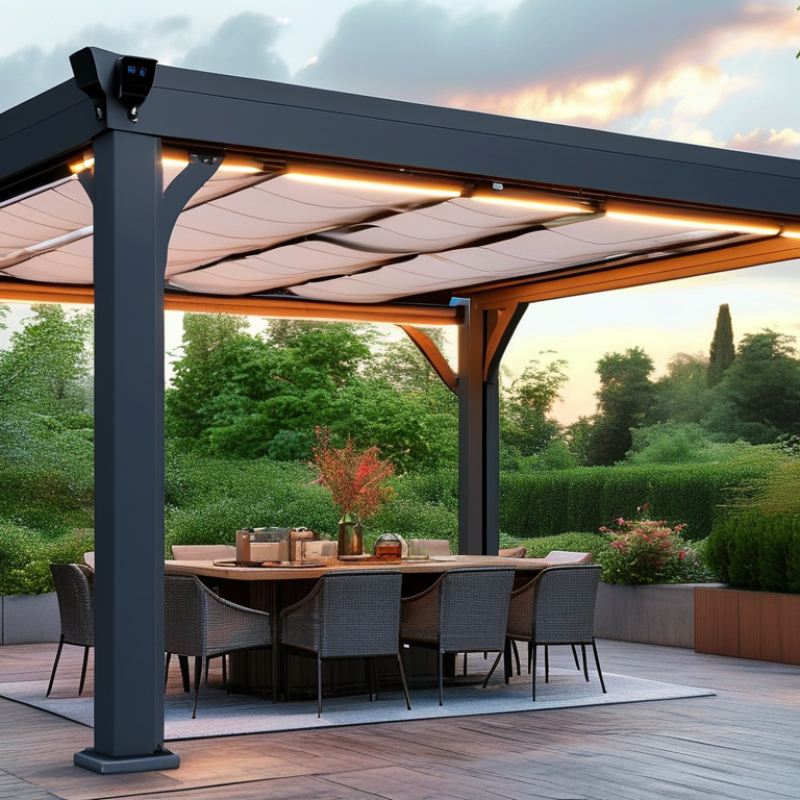
A motorized pergola is an outdoor shade structure with powered louvers, screens, or retractable roofing. Users control these parts with a wall switch, remote, or mobile system. When louvers rotate, they manage sunlight, airflow, and light rain. The frame commonly uses aluminum, while sealed motors support regular outdoor exposure. For global buyers, dimensions, drainage design, power requirements, and local weather conditions deserve careful review.
Reliable systems should offer smooth movement, manual backup, and protection against overheating. Wind and rain sensors can close the roof automatically, but sensors are not magic. Poor installation can still cause leaks, noise, or uneven movement. In field evaluations, I would inspect fasteners, wiring protection, water channels, and service access. A strong warranty matters, yet clear maintenance instructions matter more. Some designs look elegant but make motor replacement difficult. That weakness is easy to miss.
Tips: Ask for load ratings and wind-test evidence. Confirm voltage compatibility before ordering. Check whether replacement parts are available locally. Keep drainage outlets free of leaves and dust. Test the structure during installation, not months later. A small error in leveling can become a daily annoyance. Review privacy screens carefully, because fabric quality varies between suppliers and climates. Also, do not assume a smart-control feature improves comfort; a simple, dependable switch may serve better.
2026 Motorized Pergolas: Definition and Key Features for Global Buyers
A motorized pergola is an outdoor shade structure with a powered roof system operated by a remote control, wall switch, or smart-home controller. This chart compares the inherent capabilities of the two main motorized roof formats: louvered and retractable-fabric pergolas.
Score meaning: 1 indicates that the capability is inherent to the roof format; 0 indicates that it is not an inherent capability and may require an optional or specially engineered solution. Actual weather resistance, automation, and structural performance depend on the selected materials, motor, drainage design, installation, and local building requirements.
How Motorized Pergola Systems Work
A motorized pergola uses an electric motor to rotate adjustable roof louvers. When the louvers open, sunlight and airflow enter the outdoor space. When they close, overlapping blades help guide rain toward hidden gutters and downspouts.
The system usually includes a motor, drive shaft, control unit, and remote or wall switch. Some models connect to smart-home controls. Rain and wind sensors can trigger automatic movement, but sensors are not flawless. Strong gusts, dust, or poor calibration may cause delayed responses. A manual override remains valuable.
During installation, the frame must sit level and resist movement. Even a small alignment error can increase noise and motor strain. Installers should check drainage paths, wiring protection, and the available power supply. Global buyers also need to confirm voltage compatibility and local installation requirements before ordering.
A practical inspection includes cleaning the louvers, checking fasteners, and removing leaves from gutters. Motors generally need less attention than the roof structure, yet neglect can still shorten service life. In coastal areas, salt exposure deserves extra care. The mechanism may look simple, but water management and structural accuracy often decide whether the pergola performs well.
Criteria for Evaluating Global Pergola Brands
Evaluating motorized pergola brands requires more than comparing canopy prices. Global buyers should examine engineering, documentation, service, and site performance. Grand View Research identifies outdoor living as a growing construction segment, driven by climate adaptation and residential renovation. Market forecasts vary widely, so buyers should question dramatic growth claims.
Start with material and motion quality. Inspect aluminum alloy grades, coating thickness, drainage channels, and motor noise. Ask for load ratings, wind-test methods, and corrosion results. IEC 60529 ingress ratings help compare protection against dust and water. However, an IP rating does not prove complete weather resistance. That distinction matters.
Compliance evidence should match the destination market. Request electrical certifications, installation manuals, wiring diagrams, and warranty conditions. ISO 9001 certification can indicate controlled production, but it cannot replace independent testing.
The U.S. Department of Energy reports that exterior shading can reduce solar heat gain through windows substantially, especially during intense sunlight. Yet pergola performance depends on orientation, fabric, ventilation, and installation quality. A specification sheet may look impressive. Poor drainage can still ruin a terrace.
Service deserves equal attention. Check spare-part availability, remote-control replacement, technician response times, and language support. The International Energy Agency’s buildings research shows cooling demand is rising as temperatures increase, making shade increasingly practical.
Still, buyers should calculate maintenance, freight, assembly, and local electrical work. I would not trust the cheapest quote automatically. Nor would I accept a premium price without measurable testing, transparent data, and customer references from similar climates.
2026 Leading Motorized Pergola Brands by Market Strength
In 2026, market strength matters more than polished product photography. For global buyers, leading motorized pergola suppliers prove their position through repeat installations, stable supply, and responsive technical support. Those signals matter. An experienced buyer should examine production capacity, motor sourcing, weather testing, spare-part availability, and installer training. One impressive showroom is not enough.
Regional performance also separates durable suppliers from temporary contenders. Strong companies adapt frame sizes, drainage details, controls, and fabric choices to local climates. Coastal projects need corrosion-conscious materials, while snowy regions require careful load planning. Service coverage is equally practical. A supplier with technicians across several markets can shorten installation delays and resolve control faults faster.
Clear warranty terms, documented test methods, and traceable components strengthen buyer confidence. Still, market data can be uneven. Some growth claims rely on distributor estimates rather than audited figures.
That weakness deserves attention. Buyers should compare completed projects, customer references, delivery records, and support response times. Independent verification improves the decision. Price alone can mislead, especially when cheaper systems use limited automation or difficult-to-replace parts. From field experience, integration often decides long-term satisfaction. Quiet motors, reliable sensors, manual override access, and simple maintenance influence daily use more than brochures suggest. Even top-performing suppliers may miss a regional preference or underestimate installation complexity. That is where careful local feedback becomes valuable.