2026 Best Pop Up Canopy for Events and Business Buyers
Choosing the 2026 Best Pop Up Canopy for Events and Business Buyers starts with the work the shelter must do. A Saturday market stall, a company product launch, and a school fundraiser place different demands on a canopy. Wind exposure, setup frequency, available storage, and the number of people helping all matter. A Pop Up Canopy that looks sturdy in a product photo may feel cumbersome after repeated loading and unloading.
This guide focuses on practical details buyers can compare: frame construction, canopy fabric, coverage, setup steps, portability, replacement parts, and warranty terms. Check the listed dimensions against your actual table layout, and consider how the canopy will be secured on the surfaces where you plan to use it. Shade is only part of the job. A clean roof, stable frame, and clear branding can make a booth easier to approach, but no canopy should be treated as protection from every weather condition.
Small details count. Does the carry bag fit the frame? Can one person raise it safely, or does the task need a second pair of hands? Those answers are easy to overlook. Product specifications can help narrow a shortlist, yet they cannot fully show how a frame behaves during a busy event. That is a limitation worth remembering. Compare your needs with current manufacturer information, then choose a model whose features match your actual schedule, transport, and budget—not simply the longest feature list.
What a Pop-Up Canopy Is and How It Serves Events and Businesses
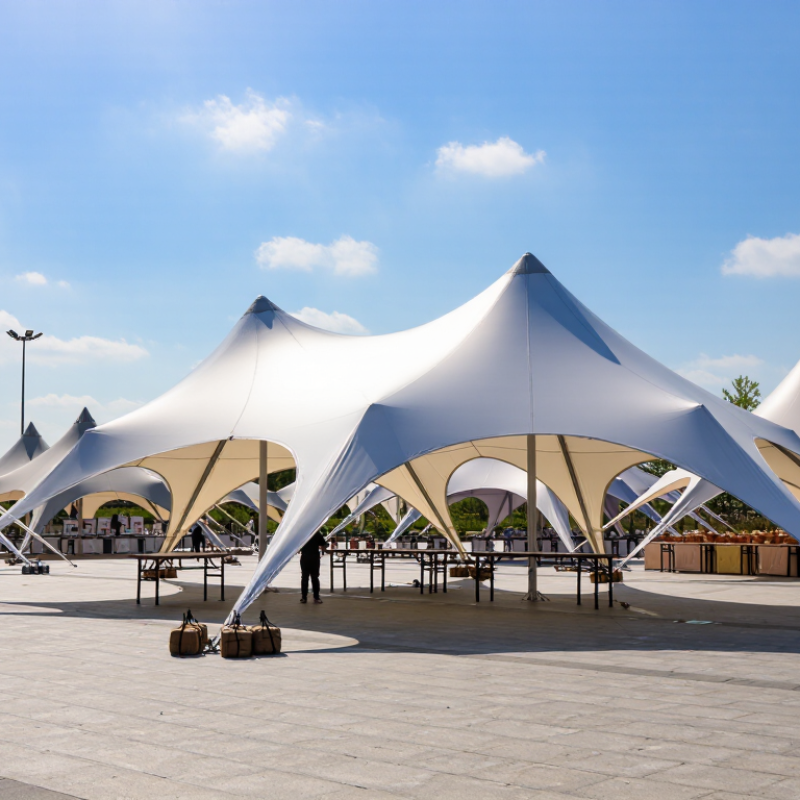
A pop-up canopy is a portable shelter with a folding frame and a fabric roof. The frame opens to create a covered area, then folds down for transport and storage. Many models use telescoping legs, so two people can usually adjust the height more easily than one. Setup is quick, but not effortless. Frame weight, locking parts, and packed size all affect how practical it is.
At an outdoor market, a canopy can shade a sales table and help keep products out of light rain. At a company event, it can mark a registration desk, demonstration area, or refreshment station. Clear side panels or open sides change airflow and visibility, so the right layout depends on the site. Small details matter: a table, display racks, and people moving around need more room than the canopy footprint alone suggests.
For event and business buyers, compare usable dimensions, fabric coverage, frame construction, setup instructions, and replacement-part availability. Check the forecast and secure the canopy as directed; a lightweight shelter can be vulnerable in strong wind. It is not a substitute for a permanent structure or severe-weather plan. Some buyers focus on price first, which is understandable, but a low-cost frame may become frustrating after repeated setups. A little extra planning helps.
2026 Best Pop-Up Canopy for Events and Business Buyers
What a Pop-Up Canopy Is and How It Serves Events and Businesses
A pop-up canopy is a portable, collapsible shelter designed for temporary outdoor use. Compare common canopy footprints when planning space for event booths, product displays, check-in areas, or temporary business operations. Coverage is calculated as width × length; actual usable space may be less because of the frame, supports, and setup clearance.
How to Choose the Right Canopy Size and Layout
2026 Best Pop Up Canopy for Events and Business Buyers
How to Choose the Right Canopy Size and Layout
Start with the activities, not the canopy dimensions. A 10-by-10-foot shelter may suit a check-in table and two staff members, but product displays or waiting visitors need more room. Measure tables, chairs, equipment, and the space people need to move comfortably. Then add a little clearance around the edges. A layout that works on paper can feel cramped once bags, signs, and people arrive. Measure twice.
Sketch the setup before ordering. Mark the canopy footprint, entrances, tables, and walking paths on paper or with tape on the ground. For a booth, keep the front open and place displays where visitors can see them without blocking staff. For a food or activity area, account for queues and equipment access. Check the venue’s permitted setup area, too; a canopy that fits your booth may still obstruct a shared walkway. Wind matters. Larger canopies also need suitable anchoring, so consider the surface and the event conditions. I’ve found that plans often miss one awkward corner.
Tips: Leave clear paths to entrances and exits. Bring a tape measure, and test the layout with real tables before event day. If attendance or equipment needs are uncertain, a slightly larger footprint may help, but confirm the site limits first.
2026 Best Pop Up Canopy for Events and Business Buyers - How to Choose the Right Canopy Size and Layout
| Canopy Size | Covered Footprint | Approx. Standing Capacity | Approx. Seated Capacity | Layout and Typical Use | Buyer Considerations |
| 10 × 10 ft | 100 sq ft | About 10 people | About 6 people | Compact vendor booth, check-in point, information desk, or small product display. Keep the front open for access. | A practical choice when transport and quick setup matter. Allow extra room if counters, display stands, or equipment will be placed inside. |
| 10 × 15 ft | 150 sq ft | About 15 people | About 10 people | Longer service counter, sampling station, or compact registration area. A front-facing counter can leave a clear staff aisle behind it. | Check the packed length and frame weight, since larger frames can be less convenient for one-person transport and setup. |
| 10 × 20 ft | 200 sq ft | About 20 people | About 13 people | Linear booth, catering service area, or product display with a staff work zone. Consider placing equipment along one side to preserve circulation. | Confirm that the event site permits the full footprint and that the canopy can be secured using approved weights or anchoring methods. |
| 20 × 20 ft | 400 sq ft | About 40 people | About 26 people | Small reception, multiple display stations, or a central seating arrangement. Keep entrances and walkways clear on more than one side where possible. | Larger pop-up systems may require more people to move, assemble, and secure. Verify frame design, setup instructions, and site requirements before purchase. |
| 20 × 30 ft | 600 sq ft | About 60 people | About 40 people | Mid-size gathering, dining layout, or several business display zones. A central aisle can help visitors move between tables or service points. | Check transport access, setup crew availability, anchoring rules, and whether the event organizer allows this size of structure. |
| 20 × 40 ft | 800 sq ft | About 80 people | About 53 people | Larger event or business area with distinct zones for seating, service, and displays. Plan clear entry points and unobstructed routes through the space. | Capacity estimates do not replace venue rules or safety requirements. Confirm the structure’s intended use, site conditions, and anchoring plan. |
Capacity estimates use approximately 10 sq ft per standing guest and 15 sq ft per seated guest. Actual usable capacity may be lower after accounting for tables, counters, equipment, aisles, accessibility, and local event requirements. Pop-up canopies are not suitable for every weather condition; follow the structure’s instructions and event-site safety rules.
Frame, Fabric, and Weather-Resistance Features to Compare
A pop-up canopy is only as dependable as its frame, fabric, and anchoring setup. Aluminum frames are easier to carry between venues, while steel frames often feel steadier but add weight. Inspect the joints, not just the legs: loose connectors can make a canopy wobble on a hard, gusty day. Small details matter.
Fabric labels deserve a closer look. Denier describes yarn thickness, but it does not prove that a canopy will resist fading or rain. Check for a stated water-resistance rating, reinforced corners, and UV-exposure testing. ASTM G154 describes a method for testing materials under fluorescent ultraviolet light; it is useful context, not a guarantee of years outdoors. I would not choose by fabric weight alone.
Weather planning matters for business buyers. NOAA’s 2023 U.S. Billion-Dollar Weather and Climate Disasters report recorded 28 events, each causing at least $1 billion in damage, with combined losses of $92.9 billion. That figure is not canopy-specific, but it reinforces the need to assess local exposure. Compare tested wind limits for the complete canopy, including its anchoring requirements. A sturdy frame cannot compensate for poor anchoring. Check setup instructions, expected surface conditions, and replacement-part availability before buying; these are easy details to overlook when a canopy looks solid in a showroom.
Safety, Setup, Transport, and Maintenance Considerations
For event and business buyers, a pop-up canopy must do more than look suitable on a sunny morning. Check the frame, fabric, and anchoring points before use. Place it on level ground, away from overhead cables and vehicle paths. Secure every leg with suitable weights or stakes for the surface. Wind can rise quickly. If gusts make the canopy unstable, lower or dismantle it; never assume a heavier table will hold it down. Allow enough room for people to move around the legs, especially near busy entrances.
Tips: Practice opening the frame before event day. Two people can guide the legs evenly and reduce strain. Keep fingers clear of sliding joints, and stop if a brace catches. Setup may take longer than expected, even with a familiar model.
Transport and maintenance affect how long a canopy stays reliable. Dry the fabric fully before packing to limit mildew, and brush off grit that can wear seams. Inspect stitching, connectors, and feet after each event. A small crack is easy to overlook when packing in a hurry. Store the canopy in its carry bag, but do not force a damp or bulky frame inside. Check the packed size against your vehicle’s cargo space, and lift with care. For frequent events, record repairs and missing parts so small issues do not surprise you on setup day.
How to Match a Canopy to Your Budget and Buying Needs
A pop-up canopy should fit the work it needs to do, not just the price on its tag. For a single weekend event, a basic model may be enough if setup is simple and replacement parts are not a concern. For frequent markets or business promotions, compare frame construction, fabric weight, repair options, and the supplier’s stated weather guidance. Measure the display area, too. A tent that crowds a table can make a busy booth feel even smaller.
Measure first. Then compare the full cost, including sidewalls, weights, transport bags, and spare parts. A low purchase price can become less attractive if a bent connector leaves the canopy unusable. Ask how quickly parts can be replaced and whether the fabric offers the sun protection your event requires. Follow the maker’s setup instructions, and take the canopy down when conditions exceed its guidance. No portable shelter is a safe bet in every kind of weather.
Buying for a team adds another practical question: who will set it up? A lighter frame may save time during repeated load-ins, while a sturdier one may suit a fixed crew and frequent use. It is easy to overvalue a large printed roof before checking how it fits in a vehicle. That detail gets missed. Set a realistic budget, list your must-haves, and leave room for one or two accessories you will actually use.